 Pocket Botanist
Plant guide
Wandflower.
Gaura lindheimeri
Pronounced ee-no-THEE-ruh lind-HY-mer-eye
Also known as Gaura lindheimeri, Lindheimer's beeblossom



Scan with your phone's camera to get the app
Or go to pocketbotanist.app/get on your phone

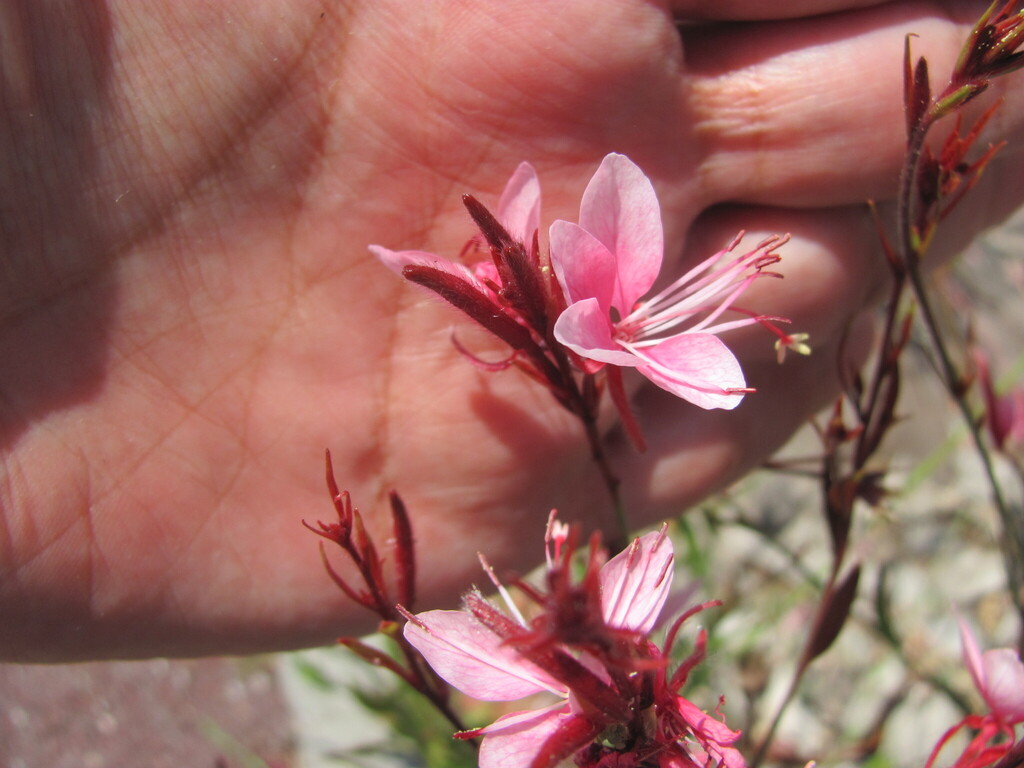
Wandflower is a charming perennial that adds a soft, airy feel to any garden border. It produces delicate, butterfly like blooms on long, slender stems that sway gracefully in the breeze. This plant is a favorite for pollinators and thrives in sunny, well drained spots.
At a glance
- Care level
- Easy
- Plant type
- Herbaceous perennial
- Light
- Full sun
- Indoor light
- Direct sun
- Water
- Every 7 to 14 days
- Mature size
- 120cm tall, 90cm wide
- Growth rate
- Fast
- Hardiness
- USDA 5 to 9
- Bloom time
- Late spring to early autumn
Care
Plant in a spot with plenty of sun and ensure the soil drains well to prevent root rot. Keep an eye out for aphids on the flower spikes and trim back spent stems to encourage a second flush of blooms. It is quite drought tolerant once established, so you don't need to worry about frequent watering.
- Watering
- Water deeply when the top few inches of soil feel dry to the touch.
- Feeding
- Apply a balanced, slow release fertilizer once in early spring.
- Pruning
- Deadhead spent flowers throughout the season to promote continuous blooming.
- Repotting
- Repot only if the plant becomes root bound or needs division.
- Soil
- Sandy, loamy, well drained
- Soil pH
- Neutral to slightly acidic
- Temperature
- -12 to 38°C
- Humidity
- 40 to 70%
- Drought tolerance
- High
- Lifespan
- Short lived perennial, typically 3 to 5 years.
- Deer and rabbits
- Moderate
Signs it needs repotting
- Roots growing out of the drainage holes.
- Water running straight through the pot without soaking in.
Safety
- People
- There are no reports of significant toxicity to humans.
- Children
- The stems can be slightly brittle, but there are no specific ingestion hazards for children.
- Edibility
- This plant is not considered edible and should not be consumed.
How to identify it
- Long, slender, arching flower spikes
- Delicate four petaled white or pink flowers
- Narrow, lance shaped grey green leaves
- Clump forming growth habit
- Height
- 0.6 to 1.5m
- Spread
- 0.45 to 0.9m
- Leaves
- green, deciduous
- Flowers
- white, pink, 2 to 3cm
Problems to watch for
- Powdery MildewCommon
- AphidsUncommon
- DehydrationUncommon
- Leaf SpotUncommon
- Root RotUncommon
Check your wandflower from a photo
Pocket Botanist looks at a photo of your plant and tells you what's wrong and what to try first.
Scan with your phone's camera to get the app
Or go to pocketbotanist.app/get on your phone
Growing it
- Propagation
- seed, cuttings, division
- When to plant
- spring, autumn
- Overwintering
- Cut back the foliage to the ground in late autumn after the first frost. In colder regions, apply a light layer of mulch to protect the crown.
- In containers
- It grows very well in pots, provided the container has drainage holes and is at least 30 centimeters wide.
Cuttings
- Take stem cuttings in late spring.
- Remove lower leaves.
- Dip in rooting hormone.
- Place in moist, well draining soil.
Pair this plant with other drought tolerant perennials to ensure they all thrive under the same watering schedule.
Grows well with
- Purple Coneflower · They share similar sun and water requirements while providing a nice color contrast.
- Russian Sage · The airy texture of both plants creates a beautiful, soft look in the garden.
Similar species
- Evening Primrose · It is a close relative with similar flower structures.
Science
- Family
- Onagraceae
- Genus
- Oenothera
- Order
- Myrtales
- Class
- Magnoliopsida
- Native range
- Louisiana and Texas in the United States, and Mexico.
- Conservation
- This species is secure and widely cultivated.
It thrives in open, sunny prairies and disturbed soils where it can outcompete smaller vegetation.
- Value to wildlife
- nectar source
- Pollinators
- bees, butterflies, moths
- Uses
- border plant, container gardening, pollinator garden
Through the year
Ecological indicators
- Salinity
- 2/9
- Soil reaction
- 6/9
- Light
- 8/9
- Temperature
- 6/9
- Moisture
- 3/9
- Nutrients
- 3/9
Taxonomy resolved against GBIF.
Questions people ask
- Does it need deadheading?
- Deadheading helps keep the plant tidy and encourages a longer bloom period.
- Can I grow it in a pot?
- Yes, it thrives in containers with excellent drainage.
Where the name comes from
The genus name Oenothera comes from Greek for wine seeking, while the species honors botanist Ferdinand Jacob Lindheimer.
Good to know
- It was formerly classified as Gaura lindheimeri.
- The flowers open in the evening and can last for several days.
- It is native to the southern United States and Mexico.
- The plant is highly drought tolerant once established.
Also in
Keep your wandflower growing
This page is a general guide. Save your plant in Pocket Botanist and you get care reminders timed for this plant, plus a care history that shows what worked.
Scan with your phone's camera to get the app
Or go to pocketbotanist.app/get on your phone
This guide was generated with AI on and checked against GBIF taxonomy. It is general information, not horticultural or veterinary advice. Read about how we build these guides.