 Pocket Botanist
Plant guide
Bog asphodel.
Narthecium ossifragum
Pronounced nar-THEE-see-um os-si-FRAY-gum
Also known as Asphodel, Bog Asphodel, bog-asphodel



Scan with your phone's camera to get the app
Or go to pocketbotanist.app/get on your phone
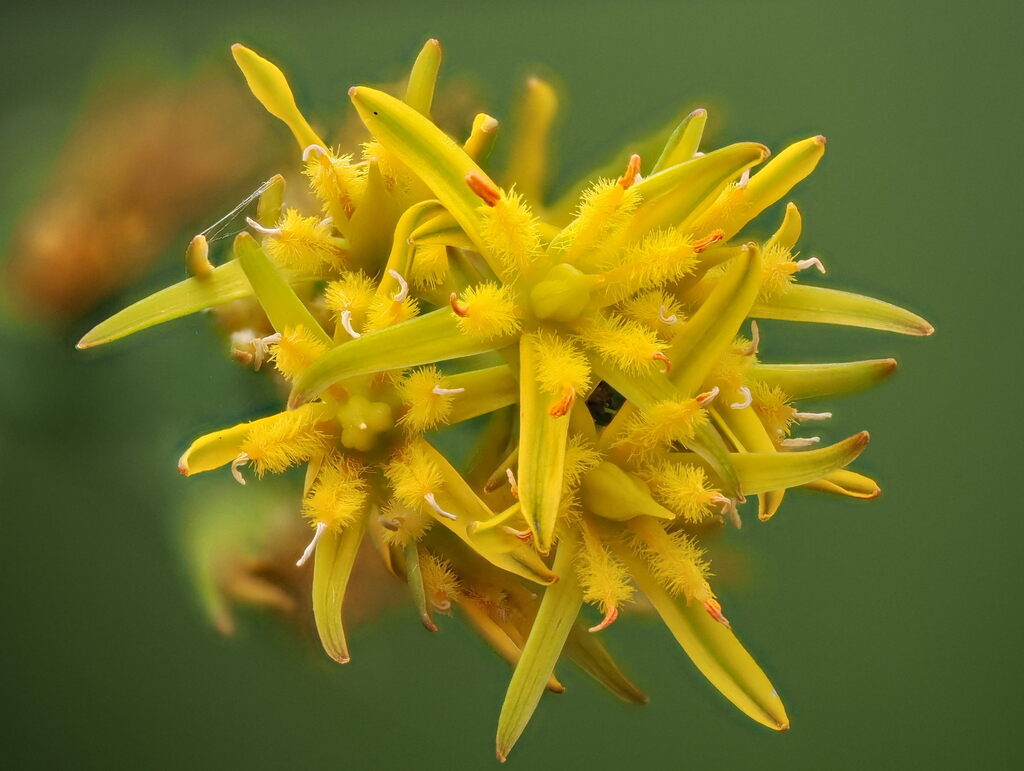
The bog asphodel is a charming perennial that thrives in wet, acidic moorlands and bogs. It produces bright yellow, star shaped flowers that really stand out against the damp landscape. It is a lovely choice if you have a naturally boggy spot in your garden.
At a glance
- Care level
- Moderate
- Plant type
- Perennial
- Light
- Full sun to partial shade
- Indoor light
- Bright indirect
- Water
- Every 1 to 3 days
- Mature size
- 30 cm
- Growth rate
- Medium
- Hardiness
- USDA 5 to 9
- Bloom time
- Mid to late summer
Care
Keep the soil consistently wet as this plant naturally grows in saturated conditions. Watch for drying out of the foliage which indicates the soil is not moist enough. It prefers acidic soil conditions to truly thrive.
- Watering
- Ensure the soil remains constantly damp or waterlogged.
- Feeding
- Generally does not require fertilizer in its natural boggy habitat.
- Pruning
- Remove dead foliage in late winter to make room for new spring growth.
- Repotting
- Repot only if the clump becomes too congested or starts to lose vigor.
- Soil
- Peaty and acidic
- Soil pH
- Acidic
- Temperature
- -20 to 25°C
- Humidity
- 60 to 95%
Safety
- People
- The plant is generally considered toxic if ingested and can cause skin irritation upon contact.
- Pets
- This plant is considered toxic to sheep and potentially other grazing animals if ingested.
- Children
- Keep this plant away from small children as ingestion may cause digestive distress.
- Contact allergens
- The sap may cause mild skin irritation in sensitive individuals.
- Airborne allergens
- There is no significant evidence of respiratory allergies associated with this plant.
- Edibility
- This plant is not considered edible and has a historical reputation for being toxic to livestock.
How to identify it
- Bright yellow star shaped flowers
- Narrow grass like basal leaves
- Orange red seed capsules in autumn
- Grows in tufted clumps
- Height
- 0.15 to 0.3m
- Spread
- 0.1 to 0.2m
- Leaves
- green, deciduous
- Flowers
- yellow, 1 to 2cm
- Fruit
- orange, red, Autumn
Problems to watch for
- Root rot · Occurs if the water around the roots becomes stagnant or the soil lacks proper aeration.
Check your bog asphodel from a photo
Pocket Botanist looks at a photo of your plant and tells you what's wrong and what to try first.
Scan with your phone's camera to get the app
Or go to pocketbotanist.app/get on your phone
Growing it
- Propagation
- division, seed
- When to plant
- spring, autumn
Group this plant with other moisture loving species that tolerate acidic soil to create a balanced bog garden.
Grows well with
- Sundew · They share the same requirement for wet, acidic bog conditions.
- Common butterwort · These plants naturally occur together in nutrient poor wetland habitats.
Similar species
- Bog Asphodel · It is a closely related North American species with similar growth habits.
Science
- Family
- Nartheciaceae
- Genus
- Narthecium
- Order
- Dioscoreales
- Class
- Liliopsida
- Native range
- Western and Northern Europe.
- Conservation
- It is common in its preferred boggy habitats and is not currently of conservation concern.
It is a specialized bog plant that survives in waterlogged, acidic soils by forming symbiotic relationships with mycorrhizal fungi.
- Value to wildlife
- nectar source
- Pollinators
- bees, butterflies
- Uses
- bog garden plant, wetland restoration
Through the year
Ecological indicators
- Salinity
- 1/9
- Soil reaction
- 3/9
- Light
- 7/9
- Temperature
- 4/9
- Moisture
- 9/9
- Nutrients
- 2/9
Taxonomy resolved against GBIF.
Questions people ask
- Does it need full sun?
- Yes, it prefers full sun to light shade to bloom well.
- Can I grow it in a normal garden bed?
- No, it requires consistently wet, boggy soil to survive.
Where the name comes from
The name Narthecium comes from the Greek word for a rod or staff, while ossifragum refers to the historical myth about bone fragility in livestock.
Good to know
- It is a member of the Nartheciaceae family.
- The bright yellow flowers are followed by attractive orange seed capsules.
- It thrives in acidic, nutrient poor soils where many other plants struggle.
Also in
Keep your bog asphodel growing
This page is a general guide. Save your plant in Pocket Botanist and you get care reminders timed for this plant, plus a care history that shows what worked.
Scan with your phone's camera to get the app
Or go to pocketbotanist.app/get on your phone
This guide was generated with AI on and checked against GBIF taxonomy. It is general information, not horticultural or veterinary advice. Read about how we build these guides.