 Pocket Botanist
Plant guide
Starry false lily of the valley.
Maianthemum stellatum
Pronounced my-AN-the-mum stel-LAY-tum
Also known as False Solomon's Seal, Little False Solomon's-seal, Star False Solomon's-seal, Star-flower Solomon's-seal, Star-flowered False Solomon's Seal, Star-flowered Lily-of-the-valley, Starflower-solomon's-seal, Starry False Lily Of The Valley



Scan with your phone's camera to get the app
Or go to pocketbotanist.app/get on your phone
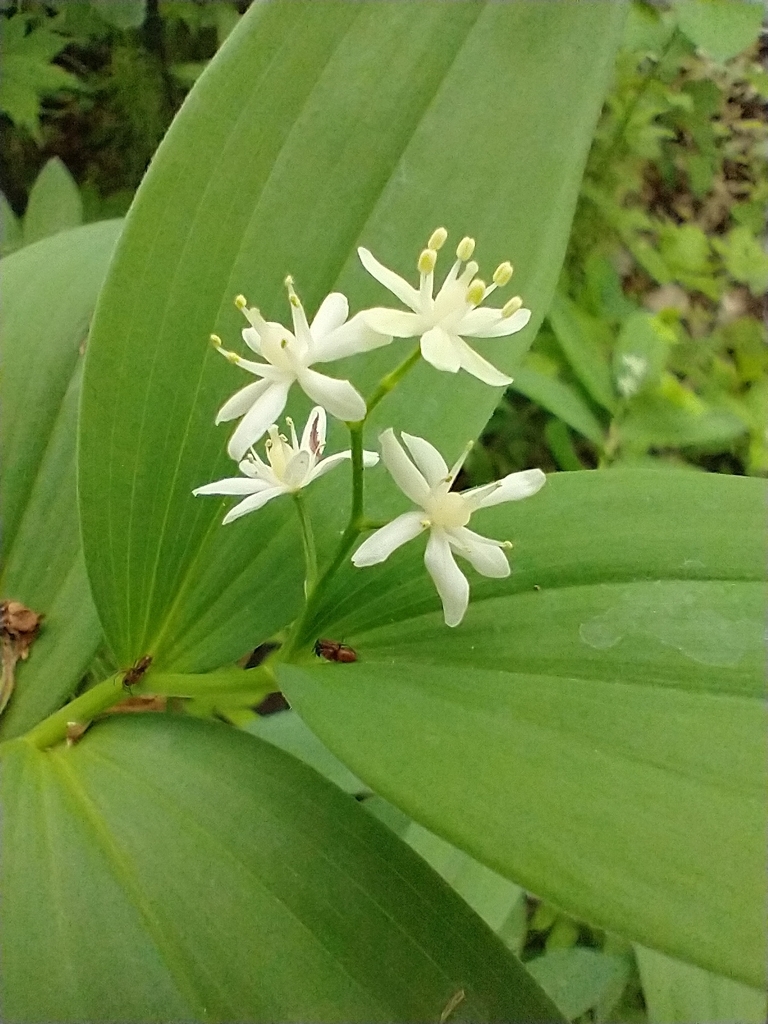
This lovely native perennial features arching stems and delicate white flowers that bloom in late spring. It spreads through underground rhizomes to form charming colonies in woodland settings. You will enjoy its subtle beauty as it naturalizes in shady garden spots.
At a glance
- Care level
- Easy
- Plant type
- Perennial
- Light
- Partial shade to full shade
- Indoor light
- Medium light
- Water
- Every 5 to 10 days
- Mature size
- 1 to 2 feet
- Growth rate
- Medium
- Hardiness
- USDA 2 to 8
- Bloom time
- Late spring to early summer
Care
Plant this in rich, moist soil that mimics a woodland floor. Keep an eye out for wilting during dry spells, as it prefers consistent moisture. It is quite hardy and needs very little intervention once established.
- Watering
- Keep the soil consistently moist but never waterlogged.
- Feeding
- Apply a light layer of compost in early spring to support growth.
- Pruning
- Cut back dead foliage in late autumn or early spring.
- Repotting
- Divide colonies every few years if they become too crowded.
- Soil
- Moist, well draining, organic rich soil
- Soil pH
- Acidic to neutral
- Temperature
- -35 to 25°C
- Humidity
- 40 to 70%
- Drought tolerance
- Low
- Lifespan
- Perennial, typically 10 plus years
- Fragrance
- Light
- Deer and rabbits
- Moderate
Safety
- People
- The plant is generally considered non-toxic, but the berries can cause stomach upset if eaten in quantity.
- Children
- The small berries may pose a choking hazard to very young children.
- Contact allergens
- No specific skin irritation is associated with this plant.
- Airborne allergens
- The pollen is not considered a major allergen.
- Edibility
- While the berries are technically edible, they have a laxative effect and are not recommended for consumption.
How to identify it
- Arching stems with alternate leaves
- Star shaped white flowers
- Red or dark striped berries
- Rhizomatous spreading growth habit
- Height
- 0.2 to 0.4m
- Spread
- 0.3 to 0.6m
- Leaves
- green, deciduous
- Flowers
- white, 0.5 to 1cm
- Fruit
- red, dark purple, Late summer
Problems to watch for
- Slugs · These mollusks may feed on the tender young foliage in spring.
Check your starry false lily of the valley from a photo
Pocket Botanist looks at a photo of your plant and tells you what's wrong and what to try first.
Scan with your phone's camera to get the app
Or go to pocketbotanist.app/get on your phone
Growing it
- Propagation
- division, seed
- When to plant
- spring, autumn
- Overwintering
- The foliage will die back naturally in autumn, so you can simply leave it to mulch the soil or clear it away if you prefer a tidy look.
- In containers
- It is not well-suited for containers as it prefers the consistent moisture and cool soil temperatures of the ground.
Division
- Dig up a section of the rhizome in early spring or autumn.
- Use a sharp knife to cut the rhizome into pieces with at least one bud each.
- Replant the pieces immediately in moist, shady soil.
Plant these in groups of three or more to create a naturalistic, flowing carpet effect in your shade garden.
Grows well with
Similar species
- False Solomon's Seal · It has a similar growth habit but features larger, plume-like flower clusters.
Science
- Family
- Asparagaceae
- Genus
- Maianthemum
- Order
- Asparagales
- Class
- Liliopsida
- Native range
- Across much of North America, from Canada down through the northern and western United States.
- Conservation
- It is widespread and not currently of conservation concern.
It survives by forming extensive rhizomatous networks that allow it to colonize shaded forest floors effectively.
- Value to wildlife
- nectar source, provides cover for small ground animals
- Pollinators
- bees, butterflies
- Uses
- woodland garden groundcover, native plant restoration, shade garden filler
Through the year
Ecological indicators
- Salinity
- 1/9
- Soil reaction
- 5/9
- Light
- 3/9
- Temperature
- 3/9
- Moisture
- 6/9
- Nutrients
- 5/9
Taxonomy resolved against GBIF.
Questions people ask
- Does it need full sun?
- No, it prefers partial to full shade and will struggle in hot, direct sun.
- How fast does it spread?
- It spreads at a moderate pace through rhizomes, making it a great groundcover.
Where the name comes from
The name Maianthemum comes from the Greek words for May and flower, referring to its spring bloom time, while stellatum refers to the star-shaped flowers.
Good to know
- It is often called Starry False Solomon's Seal because of its star-shaped flowers.
- The berries often have dark stripes that fade as they ripen to a solid red.
- It thrives in cool, moist woodland soils.
- It is a very hardy native that can survive harsh northern winters.
Also in
Keep your starry false lily of the valley growing
This page is a general guide. Save your plant in Pocket Botanist and you get care reminders timed for this plant, plus a care history that shows what worked.
Scan with your phone's camera to get the app
Or go to pocketbotanist.app/get on your phone
This guide was generated with AI on and checked against GBIF taxonomy. It is general information, not horticultural or veterinary advice. Read about how we build these guides.