 Pocket Botanist
Plant guide
Netted iris.
Iris reticulata
Pronounced EYE-ris reh-tik-yoo-LAY-tuh
Also known as golden netted iris, netted iris, winter iris



These charming little irises are some of the first signs of spring. They grow from small bulbs and produce vibrant, fragrant flowers before their leaves fully emerge. You'll love how they pop up through the late winter snow.
At a glance
- Care level
- Easy
- Plant type
- Bulbous perennial
- Light
- Full sun to partial shade
- Indoor light
- Bright indirect
- Water
- Every 7 to 14 days
- Mature size
- 6 inches
- Growth rate
- Slow
- Hardiness
- USDA 3 to 9
- Bloom time
- Late winter to early spring
Care
Plant these bulbs in a spot with excellent drainage to prevent rot during their summer dormancy. Keep an eye out for yellowing leaves, which often signal that the bulb is struggling with too much moisture. They prefer a cool, sunny spot to bloom their best.
- Watering
- Keep the soil moderately moist during the growing season but allow it to dry out significantly once the foliage dies back.
- Feeding
- Apply a balanced bulb fertilizer once in the fall or early spring as new growth appears.
- Pruning
- Wait until the foliage has turned yellow and withered completely before trimming it back to the ground.
- Repotting
- Divide and repot the bulbs every few years if they become too crowded or stop blooming well.
- Soil
- Well draining, gritty soil
- Soil pH
- Neutral to slightly alkaline
- Temperature
- -30 to 30°C
- Humidity
- 40 to 60%
- Drought tolerance
- Moderate
- Lifespan
- Perennial, typically 3 to 5 years if conditions are ideal.
- Fragrance
- Light
- Deer and rabbits
- Moderate
Signs it needs repotting
- Bulbs becoming crowded in the pot.
- Reduced flowering over consecutive years.
- Roots growing out of the drainage holes.
Safety
- People
- The bulbs and foliage contain irisin and other compounds that are poisonous to humans.
- Pets
- This plant is toxic to cats and dogs if ingested.
- Children
- Keep bulbs away from children as they look like small onions and are toxic if swallowed.
- Contact allergens
- Handling the bulbs or foliage can cause skin irritation or dermatitis in sensitive individuals.
- Airborne allergens
- The pollen is not typically considered a significant airborne allergen.
- Edibility
- All parts of this plant are considered toxic if ingested and can cause severe gastrointestinal distress.
How to identify it
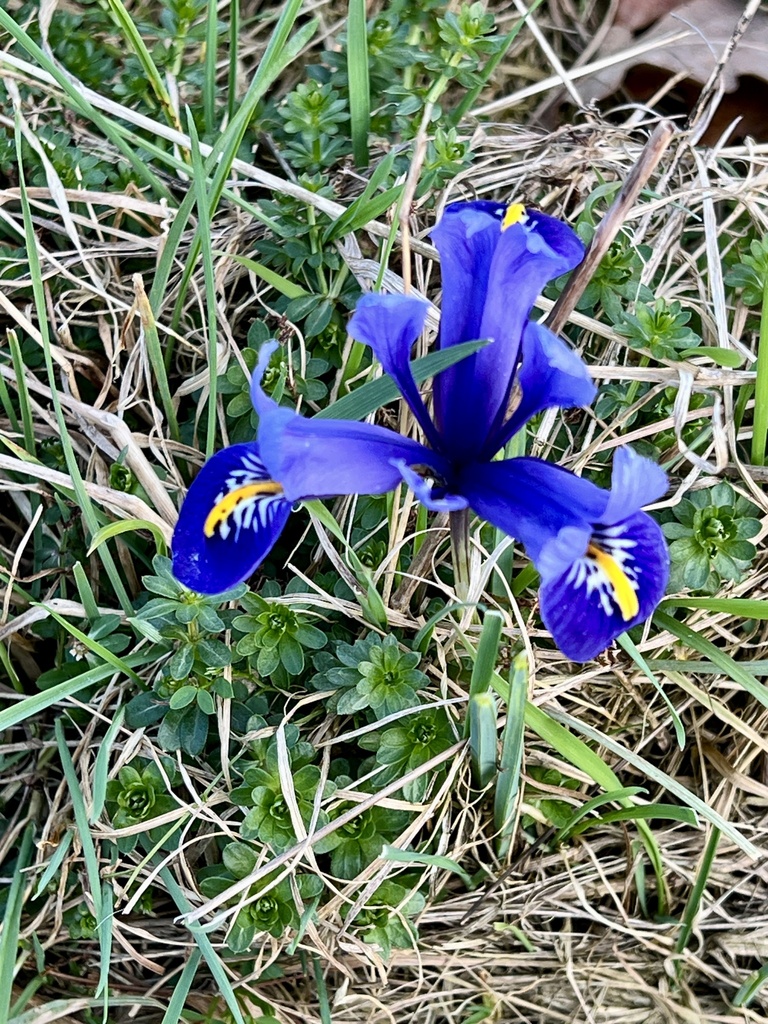
- Fragrant violet or blue flowers
- Bright yellow or white throat markings
- Narrow, grass like foliage
- Small bulbous growth habit
- Height
- 0.1 to 0.15m
- Spread
- 0.05 to 0.1m
- Leaves
- green, deciduous
- Flowers
- purple, blue, yellow, white, 5 to 8cm
Problems to watch for
- Iris ink spot — A fungal infection that causes black spots on the foliage.
- Bulb rot — Occurs when bulbs are planted in poorly drained soil that stays too wet.
By symptom
Check your netted iris from a photo
Pocket Botanist looks at a photo of your plant and tells you what's wrong and what to try first.
Growing it
- Propagation
- division, seed
- When to plant
- autumn
- Overwintering
- No special care is needed as they are fully hardy. Ensure the planting site remains well drained to prevent winter rot.
- In containers
- They grow very well in pots, provided the container has excellent drainage and is at least 15 cm deep.
Division
- 1. Wait for the foliage to yellow and die back in late spring.
- 2. Carefully lift the bulb clusters from the soil.
- 3. Gently separate the small offsets from the main bulb.
- 4. Replant the offsets at a depth of 8 to 10 cm.
Plant these in areas that stay dry in summer to ensure the bulbs do not rot.
Grows well with
- Snowdrop — They share the same early spring bloom time and soil preferences.
- Winter Aconite — The bright yellow flowers contrast beautifully with the deep blue iris blooms.
Similar species
- Dwarf Iris — A similar small bulbous iris with bright yellow flowers.
Science
- Family
- Iridaceae
- Genus
- Iris
- Order
- Asparagales
- Class
- Liliopsida
- Native range
- Caucasus and surrounding regions in Western Asia.
- Conservation
- Not currently of conservation concern.
They thrive in well drained, rocky slopes where they can bake in the sun during their summer dormant phase.
- Value to wildlife
- early nectar source
- Pollinators
- bees
- Uses
- rock gardens, containers, borders, naturalizing
Through the year
Ecological indicators
- Salinity
- 2/9
- Soil reaction
- 6/9
- Light
- 8/9
- Temperature
- 4/9
- Moisture
- 4/9
- Nutrients
- 5/9
Taxonomy resolved against GBIF.
Questions people ask
- Do I need to dig them up?
- No, they are hardy and can be left in the ground year round.
- Why didn't they bloom this year?
- They often fail to bloom if the soil is too wet during their summer dormancy.
Where the name comes from
The genus name honors Iris, the Greek goddess of the rainbow, while the species name describes the netted pattern on the bulb.
Good to know
- The name reticulata refers to the netlike pattern on the bulb tunic.
- These irises are often fragrant with a scent reminiscent of violets.
- They are perfect for forcing indoors in late winter.
Also in
Keep your netted iris growing
This page is a general guide. Save your plant in Pocket Botanist and you get care reminders timed for this plant, plus a care history that shows what worked.
This guide was generated with AI and checked against GBIF taxonomy. It is general information, not horticultural or veterinary advice. Read about how we build these guides.