 Pocket Botanist
Plant guide
Beach spider lily.
Hymenocallis littoralis
Pronounced hy-men-oh-KAL-liss lit-tor-AL-iss
Also known as Beach Spider Lily, Beach Spiderlily



Scan with your phone's camera to get the app
Or go to pocketbotanist.app/get on your phone
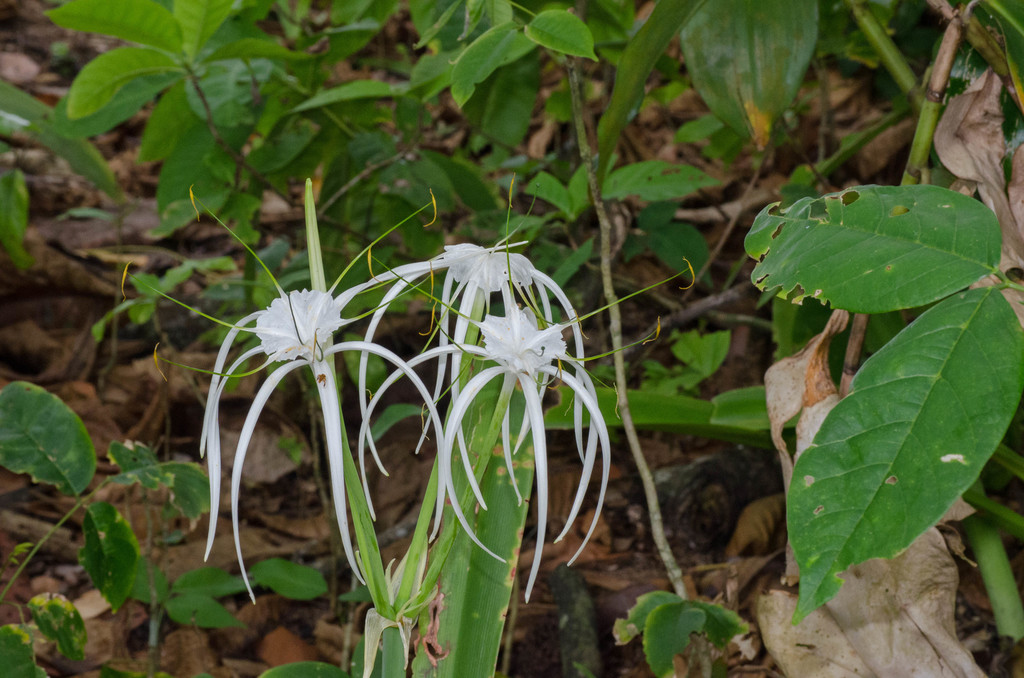
The beach spider lily is a stunning tropical bulb that produces fragrant, spidery white flowers. It thrives in warm, humid environments and adds a dramatic flair to any garden. You will love how its unique blooms stand out against the lush, strap like foliage.
At a glance
- Care level
- Moderate
- Plant type
- Bulbous perennial
- Light
- Full sun to partial shade
- Indoor light
- Bright indirect
- Water
- Every 3 to 7 days
- Mature size
- 2 to 3 feet
- Growth rate
- Medium
- Hardiness
- USDA 9 to 11
- Bloom time
- Late spring to summer
Care
Keep the soil consistently moist but never waterlogged to ensure the bulb stays healthy. Watch for yellowing leaves, which often signal that the soil is too dry or the plant needs more humidity. Provide plenty of warmth and bright light to encourage those beautiful blooms.
- Watering
- Keep the soil evenly moist throughout the growing season.
- Feeding
- Apply a balanced liquid fertilizer once a month during the active growing season.
- Pruning
- Trim back spent flower stalks and any yellowing foliage to keep the plant tidy.
- Repotting
- Repot only when the bulb becomes crowded in its container, usually every few years.
- Soil
- Rich, well draining organic soil
- Soil pH
- 6.0 to 7.5
- Temperature
- 10 to 35°C
- Humidity
- 60 to 90%
Safety
- People
- Ingestion of the bulb or foliage can cause significant gastrointestinal distress.
- Pets
- This plant is considered toxic to cats and dogs if ingested.
- Children
- Keep this plant away from children as the bulbs are poisonous if eaten.
- Contact allergens
- Handling the bulbs may cause skin irritation in sensitive individuals.
- Airborne allergens
- The heavy fragrance can be overwhelming for those with scent sensitivities.
- Edibility
- All parts of this plant are considered toxic if ingested.
How to identify it
- Fragrant white spidery flowers
- Long strap like green leaves
- Central cup shaped corona
- Large bulbous root system
- Height
- 0.45 to 0.75m
- Spread
- 0.3 to 0.6m
- Leaves
- green, evergreen
- Flowers
- white, 10 to 15cm
Problems to watch for
- Narcissus bulb fly · Larvae can tunnel into the bulb and cause plant decline.
- Stagonospora leaf scorch · Fungal infection causing red spots on foliage.
Check your beach spider lily from a photo
Pocket Botanist looks at a photo of your plant and tells you what's wrong and what to try first.
Scan with your phone's camera to get the app
Or go to pocketbotanist.app/get on your phone
Growing it
- Propagation
- division, seed
- When to plant
- spring
Plant these in moist, organic rich soil to mimic their natural waterside habitat.
Grows well with
- Canna Lily · They share similar moisture requirements and provide a bold tropical look.
- Blue Flag Iris · This iris thrives in the same damp soil conditions as the spider lily.
Similar species
- Hymenocallis caribaea · A closely related species with similar spider like flowers.
Science
- Family
- Amaryllidaceae
- Genus
- Hymenocallis
- Order
- Asparagales
- Class
- Liliopsida
- Native range
- Tropical Americas and the Caribbean.
- Conservation
- Not currently of conservation concern in its native range.
This plant naturally occurs in coastal areas and wetlands where it tolerates high moisture levels.
- Value to wildlife
- nectar source
- Pollinators
- moths, butterflies
- Uses
- ornamental garden plant, container specimen, fragrant border plant
Through the year
Ecological indicators
- Salinity
- 4/9
- Soil reaction
- 6/9
- Light
- 7/9
- Temperature
- 8/9
- Moisture
- 8/9
- Nutrients
- 6/9
Taxonomy resolved against GBIF.
Questions people ask
- Does it need full sun?
- It thrives in full sun to partial shade.
- Can I grow it in a pot?
- Yes, it makes an excellent container plant if kept moist.
Where the name comes from
The genus name Hymenocallis comes from the Greek words for membrane and beauty, referring to the delicate cup connecting the stamens.
Good to know
- The common name spider lily comes from the long, thin petals that resemble spider legs.
- It is highly adaptable to wet soils and can even grow in shallow water.
- The flowers are technically umbels that bloom in clusters.
Also in
Keep your beach spider lily growing
This page is a general guide. Save your plant in Pocket Botanist and you get care reminders timed for this plant, plus a care history that shows what worked.
Scan with your phone's camera to get the app
Or go to pocketbotanist.app/get on your phone
This guide was generated with AI on and checked against GBIF taxonomy. It is general information, not horticultural or veterinary advice. Read about how we build these guides.