 Pocket Botanist
Plant guide
Heartleaf Hoya.
Hoya kerrii
Pronounced HOY-uh KAIR-ee-eye
Also known as Heart Hoya



Scan with your phone's camera to get the app
Or go to pocketbotanist.app/get on your phone
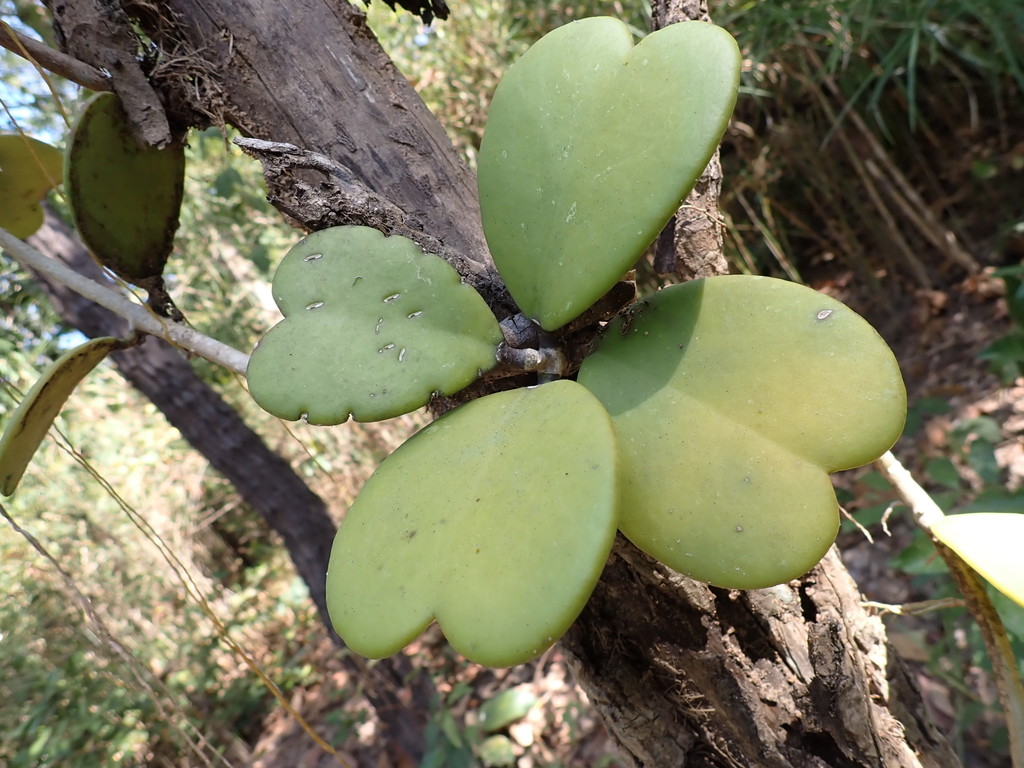
The Heartleaf Hoya is a charming succulent vine known for its distinctive heart shaped leaves. It is a slow growing epiphyte that thrives in warm, bright conditions. This plant is a favorite for its unique look and ease of care.

At a glance
- Care level
- Easy
- Plant type
- Succulent vine
- Light
- Bright, indirect light
- Indoor light
- Bright indirect
- Water
- Every 14 to 21 days
- Mature size
- Up to 4 meters long
- Growth rate
- Slow
- Hardiness
- USDA 10 to 12
- Bloom time
- Summer
Care
Allow the soil to dry out completely between waterings to prevent root rot. Provide plenty of bright, indirect light to encourage healthy growth. Watch for shriveling leaves, which often indicate the plant needs a drink.
- Watering
- Water thoroughly only when the soil has dried out entirely.
- Feeding
- Use a balanced liquid fertilizer diluted to half strength during the growing season.
- Pruning
- Prune only to remove dead stems or maintain shape after flowering.
- Repotting
- Repot only when the plant becomes root bound, as they prefer a snug pot.
- Soil
- Well draining succulent or orchid mix
- Soil pH
- 6.0 to 7.5
- Temperature
- 15 to 28°C
- Humidity
- 40 to 60%
- Drought tolerance
- High
- Lifespan
- Perennial, typically 10 to 20 years with proper care.
- Fragrance
- Light
- Deer and rabbits
- Moderate
Signs it needs repotting
- Roots growing out of the drainage holes.
- Water running straight through the pot without soaking in.
- The plant has stopped growing during the active season.
Safety
- People
- The plant contains milky latex sap that can cause mild skin irritation upon contact.
- Pets
- This plant is generally considered non toxic to cats and dogs.
- Children
- Keep out of reach of children as the leaves are firm and could pose a choking hazard if broken into pieces.
- Contact allergens
- The milky sap may cause skin irritation for sensitive individuals.
- Airborne allergens
- There are no known significant respiratory allergens associated with this plant.
- Edibility
- This plant is not considered edible and ingestion may cause gastrointestinal distress.
How to identify it
- Thick, succulent heart shaped leaves
- Vining growth habit
- Waxy leaf texture
- Small clusters of star shaped flowers
- Height
- 1 to 4m
- Spread
- 0.3 to 0.6m
- Leaves
- dark green, evergreen
- Flowers
- white, pinkish, yellow, 1 to 2cm
Problems to watch for
- MealybugsCommon
- Root RotCommon
- Scale InsectsUncommon
- Spider MitesUncommon
Check your heartleaf hoya from a photo
Pocket Botanist looks at a photo of your plant and tells you what's wrong and what to try first.
Scan with your phone's camera to get the app
Or go to pocketbotanist.app/get on your phone
Growing it
- Propagation
- cuttings
- When to plant
- spring, summer
- Overwintering
- Move the plant indoors if temperatures drop below 15 degrees Celsius. Reduce watering significantly during the winter months as growth slows down.
- In containers
- It thrives in containers and prefers a snug pot to encourage blooming, with a minimum size of 10 cm.
Stem Cuttings
- 1. Select a healthy stem with at least one node.
- 2. Cut just below the node using clean shears.
- 3. Place the cutting in a well draining potting mix or water.
- 4. Keep in bright, indirect light until roots form.
Group plants with similar water needs together to avoid overwatering your Hoya.
Grows well with
- Orchid · They share similar requirements for bright, indirect light and well draining media.
- Pothos · Both plants enjoy similar humidity levels and look great in hanging displays.
Similar species
- Wax Plant · It is a more common, faster growing relative with similar care needs.
- Hindu Rope Plant · It shares the same genus and vining habit but features twisted, curled foliage.
Science
- Family
- Apocynaceae
- Genus
- Hoya
- Order
- Gentianales
- Class
- Magnoliopsida
- Native range
- Southeast Asia, including Thailand and Vietnam.
- Conservation
- This species is not currently listed as endangered or threatened in its native range.
It grows as an epiphyte in tropical forests, clinging to trees for support while gathering moisture from the air.
- Value to wildlife
- nectar source
- Pollinators
- bees, moths
- Uses
- houseplant, gift plant, hanging basket
Through the year
Ecological indicators
- Salinity
- 1/9
- Soil reaction
- 6/9
- Light
- 7/9
- Temperature
- 8/9
- Moisture
- 3/9
- Nutrients
- 3/9
Taxonomy resolved against GBIF.
Questions people ask
- Will my single leaf cutting grow into a vine?
- It is very rare for a single leaf cutting to develop a node and grow into a vining plant.
- How often should I water it?
- Water only when the soil has dried out completely, as it prefers to be on the drier side.
Where the name comes from
The genus honors Thomas Hoy, a gardener to the Duke of Northumberland, while the species name kerrii honors the botanist Arthur Francis George Kerr.
Good to know
- It is commonly known as the Sweetheart Plant due to its distinct heart shaped leaves.
- The plant is a slow grower and can take years to produce its first bloom.
- It is a succulent vine that stores water in its thick leaves to survive dry spells.
- The flowers produce a sweet, subtle fragrance, especially in the evening.
Also in
Keep your heartleaf hoya growing
This page is a general guide. Save your plant in Pocket Botanist and you get care reminders timed for this plant, plus a care history that shows what worked.
Scan with your phone's camera to get the app
Or go to pocketbotanist.app/get on your phone
This guide was generated with AI on and checked against GBIF taxonomy. It is general information, not horticultural or veterinary advice. Read about how we build these guides.