 Pocket Botanist
Plant guide
Oceanspray.
Holodiscus discolor
Pronounced ho-lo-DIS-kus dis-KO-lor
Also known as Oceanspray, bush oceanspray, creambush, creambush oceanspray, glandular oceanspray, hillside oceanspray, mountain spray, ocean-spray



Scan with your phone's camera to get the app
Or go to pocketbotanist.app/get on your phone
Oceanspray is a lovely native shrub that puts on a show with its cascading clusters of creamy white flowers. It's a fantastic choice for supporting local pollinators in your garden. You'll find it thrives in a variety of conditions, making it quite a versatile addition to your landscape.

At a glance
- Care level
- Easy
- Plant type
- Deciduous shrub
- Light
- Full sun to partial shade
- Indoor light
- Bright indirect
- Water
- Every 7 to 14 days
- Mature size
- 10 to 15 feet
- Growth rate
- Medium
- Hardiness
- USDA 5 to 9
- Bloom time
- Late spring to mid summer
Care
Plant this shrub in well draining soil and provide enough space for its natural arching habit. Watch for wilting during extreme heat, which signals a need for a deep soak. Keep an eye out for aphids, though they rarely cause serious damage.
- Watering
- Water deeply once established, especially during dry summer months.
- Feeding
- Apply a balanced organic fertilizer in early spring if the soil is poor.
- Pruning
- Prune lightly after flowering to maintain shape and encourage new growth.
- Repotting
- Repot only if the plant is container grown and has become root bound.
- Soil
- Well draining loamy or rocky soil
- Soil pH
- 6.0 to 7.5
- Temperature
- -25 to 35°C
- Humidity
- 40 to 70%
- Drought tolerance
- High
- Lifespan
- Perennial, typically 20 to 50 years
- Fragrance
- Light
- Deer and rabbits
- Moderate
Signs it needs repotting
- Roots growing out of the drainage holes.
- Stunted growth despite proper care.
- Water running straight through the pot without soaking in.
Safety
- People
- There are no reports of significant toxicity to humans.
- Children
- The plant is generally safe, but the dry, woody stems can be sharp if broken.
- Contact allergens
- The fine hairs on the leaves and stems can cause mild skin irritation in sensitive individuals.
- Airborne allergens
- The pollen may cause mild respiratory symptoms in those with severe allergies.
- Edibility
- The plant is not considered edible and should not be consumed.
How to identify it
- Arching branches with creamy flower clusters
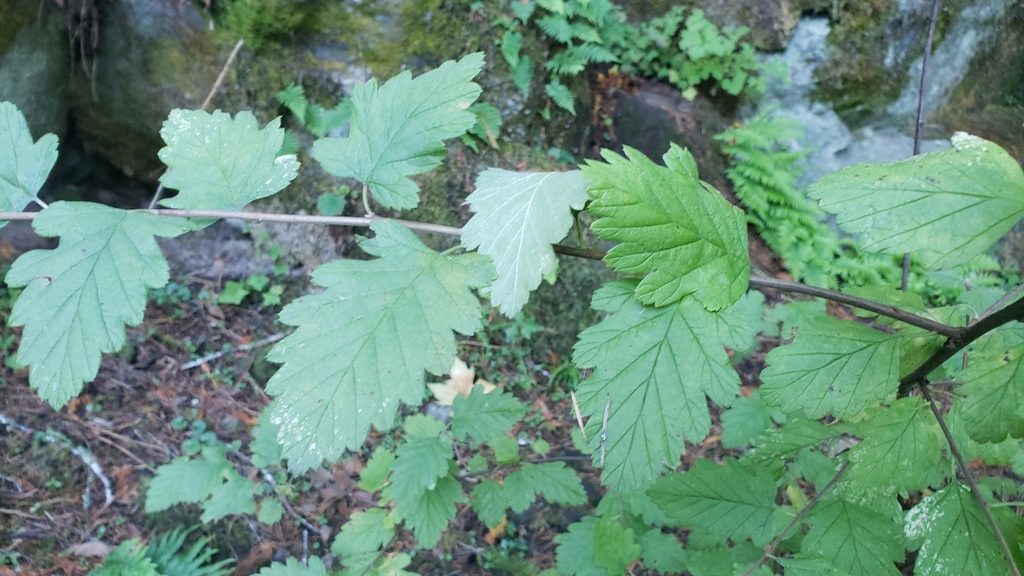
- Triangular leaves with serrated edges
- Deciduous shrub with peeling bark
- Small fuzzy leaves with prominent veins
- Height
- 1.5 to 4.5m
- Spread
- 1.5 to 3m
- Leaves
- green, deciduous
- Flowers
- white, cream, 0.5 to 1cm
- Fruit
- brown, Autumn
Problems to watch for
- Aphids · Small insects that may cluster on new growth during spring.
Check your oceanspray from a photo
Pocket Botanist looks at a photo of your plant and tells you what's wrong and what to try first.
Scan with your phone's camera to get the app
Or go to pocketbotanist.app/get on your phone
Growing it
- Propagation
- seed, cuttings
- When to plant
- spring, autumn
- Overwintering
- No special winter care is needed as it is fully hardy. Simply leave the dried flower heads for winter interest and wildlife food.
- In containers
- It is not well suited for long term container growth due to its large size and extensive root system.
Seed
- 1. Collect seeds in late autumn when pods are dry.
- 2. Sow seeds in a cold frame or unheated greenhouse during winter.
- 3. Transplant seedlings into individual pots once they have two sets of true leaves.
Softwood Cuttings
- 1. Take cuttings in late spring from new growth.
- 2. Dip the base in rooting hormone.
- 3. Place in a well draining medium and keep humid until rooted.
Plant in groups of three or five to mimic natural thickets and provide the best habitat for local birds.
Grows well with
- Snowberry · They share similar habitat requirements and provide layered wildlife cover.
- Oregon Grape · This evergreen shrub provides a nice color contrast to the deciduous ocean spray.
- Red Flowering Currant · Both are classic native shrubs that attract similar pollinators to the garden.
Similar species
- Creambush · It is a smaller, more compact relative often found in drier, higher elevation sites.
Science
- Family
- Rosaceae
- Genus
- Holodiscus
- Order
- Rosales
- Class
- Magnoliopsida
- Native range
- Western North America from British Columbia to California and east to the Rocky Mountains.
- Conservation
- This plant is common and secure throughout its native range.
It is a pioneer species that often colonizes rocky slopes and forest edges after disturbances.
- Value to wildlife
- nectar source, larval host plant, nesting cover
- Pollinators
- bees, butterflies, moths
- Uses
- ornamental shrub, erosion control, wildlife garden, native restoration
Through the year
Ecological indicators
- Salinity
- 1/9
- Soil reaction
- 6/9
- Light
- 6/9
- Temperature
- 5/9
- Moisture
- 4/9
- Nutrients
- 3/9
Taxonomy resolved against GBIF.
Questions people ask
- Does it need a lot of water?
- Once established, it is quite drought tolerant and prefers not to sit in soggy soil.
- How do I prune it?
- Prune lightly after flowering to maintain shape, or cut back older stems to the ground to rejuvenate the plant.
Where the name comes from
The name discolor refers to the two different colors of the leaf surfaces, with the underside being paler than the top.
Good to know
- It is commonly called ocean spray because the drooping flower clusters resemble sea foam.
- The genus name Holodiscus comes from Greek words meaning whole disk, referring to the flower structure.
- It is a very hardy shrub that thrives in rocky, well drained soils.
Also in
Keep your oceanspray growing
This page is a general guide. Save your plant in Pocket Botanist and you get care reminders timed for this plant, plus a care history that shows what worked.
Scan with your phone's camera to get the app
Or go to pocketbotanist.app/get on your phone
This guide was generated with AI on and checked against GBIF taxonomy. It is general information, not horticultural or veterinary advice. Read about how we build these guides.