 Pocket Botanist
Guide botanique
Blue Oat Grass.
Helictotrichon sempervirens
Prononciation hel-ik-toh-TRY-kon sem-per-VY-renz
Aussi appelée Blue Oat-grass, blue oat grass



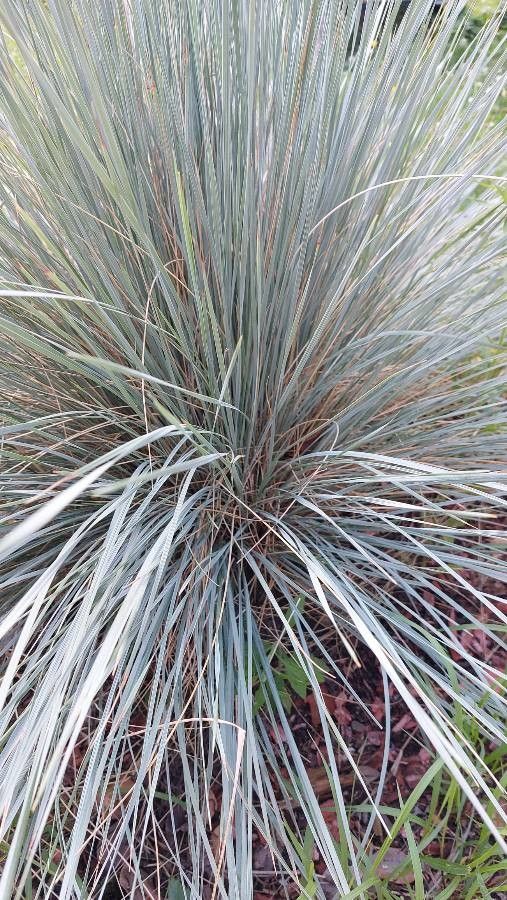
Blue Oat Grass is a lovely, cool season perennial that brings a cool blue tone to your garden. It forms neat, rounded clumps that look great in rock gardens or borders. You will love how its metallic foliage stands out against other green plants.
En un coup d'œil
- Niveau d'entretien
- Facile
- Type de plante
- Ornamental grass
- Lumière
- Full sun
- Lumière en intérieur
- Soleil direct
- Arrosage
- Tous les 7 à 14 jours
- Taille adulte
- 2 to 3 feet
- Croissance
- Moyenne
- Rusticité
- USDA 4 à 9
- Floraison
- Early to mid summer
Entretien
Plant this grass in well draining soil to keep the roots happy. Watch for browning tips which might mean the soil is staying too wet. Give it a good trim in early spring to clear out old foliage.
- Arrosage
- Water deeply but infrequently once the plant is established.
- Engrais
- Apply a balanced, slow release fertilizer once in early spring.
- Taille
- Cut back the entire clump to a few inches tall in late winter or early spring.
- Rempotage
- Divide the clumps every few years to keep the plant vigorous.
- Sol
- Well draining, sandy or rocky soil
- pH du sol
- Neutral to slightly alkaline
- Température
- -25 à 35°C
- Humidité
- 30 à 70%
- Résistance à la sécheresse
- Élevée
- Durée de vie
- Perennial, typically 5 to 10 years.
- Résistance aux chevreuils et lapins
- Moyenne
Signes qu'il faut rempoter
- Roots growing out of drainage holes
- Plant becomes root bound and stops growing
- Water drains through too quickly
Sécurité
- Humains
- There are no known toxic properties for humans.
- Enfants
- The sharp, serrated leaf edges can cut small fingers if handled roughly.
- Allergènes de contact
- The leaf edges can be sharp and may cause minor skin abrasions.
- Allergènes aéroportés
- The pollen may trigger mild seasonal allergies in sensitive individuals.
- Comestibilité
- This grass is not intended for human consumption.
Comment l'identifier
- Steel blue, arching leaf blades
- Clumping, mounded growth habit
- Tall, oat like flower panicles
- Semi evergreen foliage in mild climates
- Hauteur
- 0,6 à 1,2m
- Envergure
- 0,45 à 0,6m
- Feuilles
- blue, grey-blue, evergreen
- Fleurs
- tan, straw, 10 à 20cm
Problèmes courants
- Rust — Fungal infection causing orange or brown spots on the foliage.
La cultiver
- Multiplication
- division, seed
- Quand planter
- spring, autumn
- Hivernage
- Leave the foliage intact through winter to protect the crown. Clean up dead leaves in early spring before new growth begins.
- En pot
- It grows well in containers with excellent drainage, using at least a 30 cm pot.
Division
- 1. Dig up the clump in early spring.
- 2. Use a sharp spade to divide the root ball into smaller sections.
- 3. Replant immediately in well drained soil.
Pair with drought tolerant perennials to minimize water competition.
Bonnes associations
- Lavande d'Angleterre — Both plants enjoy similar sunny, well drained conditions.
- Sedum spectabile — The succulent texture contrasts beautifully with the fine grass blades.
Espèces similaires
- Blue Fescue — A smaller, more compact alternative for tight spaces.
Science
- Famille
- Poaceae
- Genre
- Helictotrichon
- Ordre
- Poales
- Classe
- Liliopsida
- Région d'origine
- Central and southwestern Europe.
- Préservation
- This plant is not of conservation concern.
It thrives in rocky, well drained soils typical of mountain slopes.
- Intérêt pour la faune
- provides cover for small insects
- Pollinisateurs
- abeilles, papillons
- Utilisations
- ornamental grass, rock garden specimen, container accent
Au fil des saisons
Repères écologiques
- Salinité
- 2/9
- Réaction du sol
- 6/9
- Lumière
- 8/9
- Température
- 4/9
- Humidité
- 3/9
- Nutriments
- 3/9
Taxonomie vérifiée avec le GBIF.
Ce qu'on demande souvent
- Does it need to be cut back?
- Yes, comb out dead foliage in late winter or early spring to keep it tidy.
- Will it grow in shade?
- It prefers full sun and may lose its blue color or become floppy in shade.
D'où vient le nom
The genus name comes from the Greek words for spiral and hair, referring to the twisted awns on the flowers. The specific epithet means always green.
Bon à savoir
- It is often called blue oat grass because its seed heads resemble cultivated oats.
- The blue color is a waxy coating that helps the plant retain moisture.
- It maintains its color best in full sun.
Aussi dans
Ta plante a mauvaise mine ?
Cette page est un guide général. Pocket Botanist diagnostique les problèmes directement à partir d'une photo de ta plante, adapte l'arrosage à sa luminosité et te prévient quand il faut t'en occuper.
Ce guide a été généré par IA et vérifié avec la taxonomie du GBIF. Il s'agit d'informations générales, et non de conseils horticoles ou vétérinaires. Découvre comment nous concevons ces guides.