 Pocket Botanist
Plant guide
Calathea Orbifolia.
Goeppertia orbifolia
Pronounced go-ep-ER-tee-a or-bi-FO-lee-a



Scan with your phone's camera to get the app
Or go to pocketbotanist.app/get on your phone
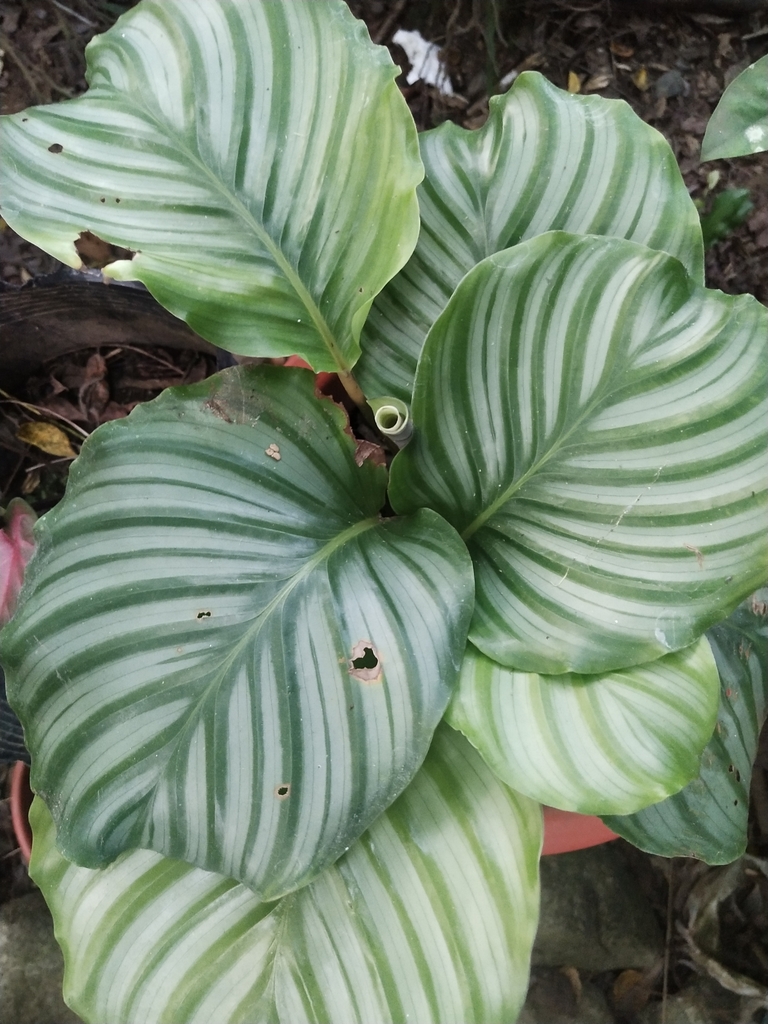
The Orbifolia is a stunning tropical plant known for its large, round leaves with striking silver stripes. It thrives in warm, humid environments that mimic its native rainforest floor. You will love how it adds a lush, architectural feel to any room.
At a glance
- Care level
- Moderate
- Plant type
- Tropical perennial
- Light
- Bright indirect light
- Indoor light
- Bright indirect
- Water
- Every 5 to 10 days
- Mature size
- 90 cm tall and 90 cm wide
- Growth rate
- Medium
- Hardiness
- USDA 10 to 12
- Bloom time
- Rarely blooms indoors
Care
Keep the soil consistently moist but never soggy to prevent root rot. High humidity is essential for keeping the leaf edges from turning brown and crispy. Wipe the leaves occasionally to keep them free of dust and looking their best.
- Watering
- Water when the top inch of soil feels slightly dry to the touch.
- Feeding
- Use a balanced liquid fertilizer diluted to half strength during the growing season.
- Pruning
- Trim away any yellow or damaged leaves at the base of the stem.
- Repotting
- Repot only when the roots have filled the current container.
- Soil
- Well-draining peat-based mix
- Soil pH
- 6.0 to 7.0
- Temperature
- 15 to 27°C
- Humidity
- 60 to 90%
- Drought tolerance
- Low
- Lifespan
- Perennial, typically 5 to 10 years
- Deer and rabbits
- Moderate
Signs it needs repotting
- Roots growing out of drainage holes
- Water running straight through the pot
- Stunted growth during the growing season
Safety
- People
- This plant is non-toxic to humans.
- Pets
- This plant is non-toxic to cats and dogs.
- Children
- The large leaves are sturdy, but they are not a choking hazard unless torn into small pieces.
- Edibility
- This plant is not intended for consumption.
How to identify it
- Large round leaves
- Striking silver pinstripe pattern
- Underside is pale green
- Leaves fold up at night
- Height
- 0.6 to 0.9m
- Spread
- 0.6 to 0.9m
- Leaves
- dark green, silver, evergreen
- Flowers
- white, 1 to 3cm
Problems to watch for
- Brown Leaf EdgesCommon
- Leaf SpotCommon
- Spider MitesCommon
- Fungus GnatsUncommon
- MealybugsUncommon
- Root RotUncommon
- ThripsUncommon
Check your calathea orbifolia from a photo
Pocket Botanist looks at a photo of your plant and tells you what's wrong and what to try first.
Scan with your phone's camera to get the app
Or go to pocketbotanist.app/get on your phone
Growing it
- Propagation
- division
- When to plant
- spring, summer
- Overwintering
- Keep the plant away from cold drafts and heating vents. Maintain consistent warmth and humidity throughout the winter months.
- In containers
- It grows very well in containers and prefers a pot that is only slightly larger than its root ball.
Division
- Gently remove the plant from its pot.
- Separate the root ball into sections with healthy foliage.
- Repot the divisions into fresh, well-draining soil.
Group moisture loving plants together to create a microclimate that boosts ambient humidity.
Grows well with
- Peace Lily · They share similar requirements for high humidity and indirect light.
- Ferns · Ferns thrive in the same moist, shaded environment.
Similar species
- Rattlesnake Plant · It is a close relative with similar care needs and striking foliage patterns.
Science
- Family
- Marantaceae
- Genus
- Goeppertia
- Order
- Zingiberales
- Class
- Liliopsida
- Native range
- Bolivia
- Conservation
- This species is not currently listed as endangered.
It grows on the shaded floor of tropical rainforests where it receives filtered light and high humidity.
- Uses
- houseplant, foliage display
Through the year
Ecological indicators
- Salinity
- 1/9
- Soil reaction
- 5/9
- Light
- 2/9
- Moisture
- 7/9
- Temperature
- 8/9
- Nutrients
- 4/9
Taxonomy resolved against GBIF.
Questions people ask
- Why are the leaf edges turning brown?
- This is usually a sign of low humidity or using tap water with high mineral content.
- Does it need direct sun?
- No, it prefers bright, indirect light to maintain its leaf patterns.
Where the name comes from
The genus honors botanist Heinrich Goeppert, while the species name orbifolia refers to its round, orb-like leaves.
Good to know
- It is native to the rainforests of Bolivia.
- The leaves feature striking silver bands.
- It was formerly classified under the genus Calathea.
Keep your calathea orbifolia growing
This page is a general guide. Save your plant in Pocket Botanist and you get care reminders timed for this plant, plus a care history that shows what worked.
Scan with your phone's camera to get the app
Or go to pocketbotanist.app/get on your phone
This guide was generated with AI on and checked against GBIF taxonomy. It is general information, not horticultural or veterinary advice. Read about how we build these guides.