 Pocket Botanist
Plant guide
Coast barrel cactus.
Ferocactus viridescens
Pronounced feh-roh-KAK-tus veer-ih-DESS-ens
Also known as Coast Barrel Cactus, San Diego Barrel Cactus, coastal barrel cactus, green-stem viznaga, keg cactus, small barrel cactus



Scan with your phone's camera to get the app
Or go to pocketbotanist.app/get on your phone
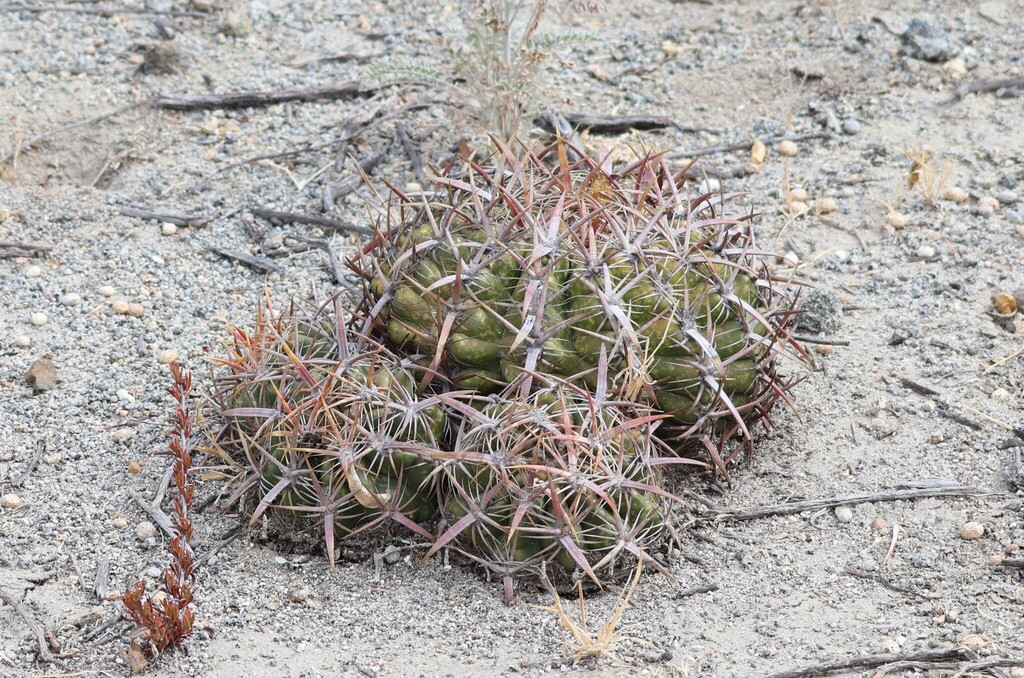
This charming little barrel cactus is a real gem from the coastal regions of Southern California and Baja. It stays quite compact compared to its larger cousins, making it a perfect fit for a sunny windowsill. You will love its sturdy, ribbed structure and those striking, colorful spines.

At a glance
- Care level
- Easy
- Plant type
- Succulent
- Light
- Full sun
- Indoor light
- Direct sun
- Water
- Every 14 to 30 days
- Mature size
- 12 inches tall
- Growth rate
- Slow
- Hardiness
- USDA 9 to 11
- Bloom time
- Late spring to early summer
Care
Give this cactus as much direct sun as you possibly can to keep it healthy and compact. Let the soil dry out completely between waterings, and watch for shriveling as a sign it is thirsty. Ensure your pot has excellent drainage to keep the roots happy and rot-free.
- Watering
- Water sparingly during the growing season and keep it almost dry throughout the winter months.
- Feeding
- Feed with a balanced, low-nitrogen fertilizer diluted to half strength during the active growing season.
- Pruning
- Pruning is rarely needed, but you can carefully remove any dead or damaged tissue with sterilized shears.
- Repotting
- Repot only when the plant has clearly outgrown its container, using a pot just slightly larger than the current one.
- Soil
- Well-draining cactus and succulent mix
- Soil pH
- 6.0 to 7.5
- Temperature
- -4 to 45°C
- Humidity
- 10 to 40%
- Drought tolerance
- High
- Lifespan
- Perennial, can live for several decades with proper care.
- Deer and rabbits
- High
Signs it needs repotting
- Roots growing out of the drainage holes.
- The cactus has become top heavy and unstable in its pot.
- Growth has slowed significantly over several years.
Safety
- People
- The plant is not toxic, but its sharp spines pose a significant physical injury risk.
- Pets
- This plant is generally considered non-toxic to cats and dogs, though its sharp spines pose a physical injury risk.
- Children
- Keep this plant well out of reach of children due to its extremely sharp and dangerous spines.
- Contact allergens
- The sharp spines can cause mechanical skin irritation or puncture wounds.
- Airborne allergens
- There are no known respiratory allergens associated with this plant.
- Edibility
- While the fruit is technically edible, it is often dry and lacks flavor, so it is best left for wildlife.
How to identify it
- Globular to flattened stem shape
- Prominent ribs with sharp spines
- Spines often turn reddish or yellow
- Yellow to greenish cup shaped flowers
- Height
- 0.15 to 0.3m
- Spread
- 0.15 to 0.35m
- Leaves
- green, evergreen
- Flowers
- yellow, greenish-yellow, 3 to 5cm
- Fruit
- red, Late summer
Problems to watch for
- Root rot · This occurs when the soil stays too wet for too long, especially in cooler weather.
- Mealybugs · These small white insects hide in the crevices between ribs and suck plant sap.
Check your coast barrel cactus from a photo
Pocket Botanist looks at a photo of your plant and tells you what's wrong and what to try first.
Scan with your phone's camera to get the app
Or go to pocketbotanist.app/get on your phone
Growing it
- Propagation
- seed
- When to plant
- spring, early summer
- Overwintering
- Keep the plant completely dry and in a bright location during winter. Ensure it is protected from freezing temperatures and excessive winter rain.
- In containers
- It grows very well in containers, provided you use a fast draining cactus mix and a pot with large drainage holes.
Seed Sowing
- 1. Sow seeds in a well draining cactus soil mix during spring.
- 2. Keep the soil lightly moist and warm until germination occurs.
- 3. Gradually reduce watering as the seedlings establish their root systems.
Group this cactus with other drought tolerant plants that do not require summer irrigation to prevent rot.
Grows well with
- California Poppy · They share similar low water needs and create a lovely visual contrast.
- Cleveland Sage · This shrub provides a nice backdrop and thrives in the same dry, sunny conditions.
Similar species
- Golden Barrel Cactus · It has a similar barrel shape but grows much larger and has distinct golden spines.
Science
- Family
- Cactaceae
- Genus
- Ferocactus
- Order
- Caryophyllales
- Class
- Magnoliopsida
- Native range
- Coastal Southern California and northern Baja California.
- Conservation
- It is considered a sensitive species in parts of its range due to habitat loss from coastal development.
It survives in arid coastal scrub by storing water in its succulent stem and utilizing spines to shade its body from intense sun.
- Value to wildlife
- nectar source
- Pollinators
- bees
- Uses
- xeriscaping, container gardening, rock gardens
Through the year
Ecological indicators
- Salinity
- 4/9
- Soil reaction
- 6/9
- Light
- 8/9
- Temperature
- 7/9
- Moisture
- 1/9
- Nutrients
- 2/9
Taxonomy resolved against GBIF.
Questions people ask
- How often should I water it?
- Water sparingly during the growing season and keep it completely dry throughout the winter.
- Does it need full sun?
- Yes, it requires bright, direct sunlight to maintain its compact shape and healthy spine growth.
Where the name comes from
Ferocactus comes from the Latin ferox meaning fierce, referring to its formidable spines. The specific epithet viridescens means becoming green.
Good to know
- It is commonly called the Coast Barrel Cactus.
- The species name viridescens refers to the greenish tint of its flowers.
- It is one of the few barrel cacti that stays relatively small.
- It thrives in the unique microclimate of coastal Southern California and Baja.
Also in
Keep your coast barrel cactus growing
This page is a general guide. Save your plant in Pocket Botanist and you get care reminders timed for this plant, plus a care history that shows what worked.
Scan with your phone's camera to get the app
Or go to pocketbotanist.app/get on your phone
This guide was generated with AI on and checked against GBIF taxonomy. It is general information, not horticultural or veterinary advice. Read about how we build these guides.