 Pocket Botanist
Plant guide
Spotted spurge.
Chamaesyce maculata
Pronounced yoo-FOR-bee-uh mak-yoo-LAY-tuh
Also known as Chamaesyce maculata, Spotted Spurge, large spurge, spotted sandmat



Scan with your phone's camera to get the app
Or go to pocketbotanist.app/get on your phone
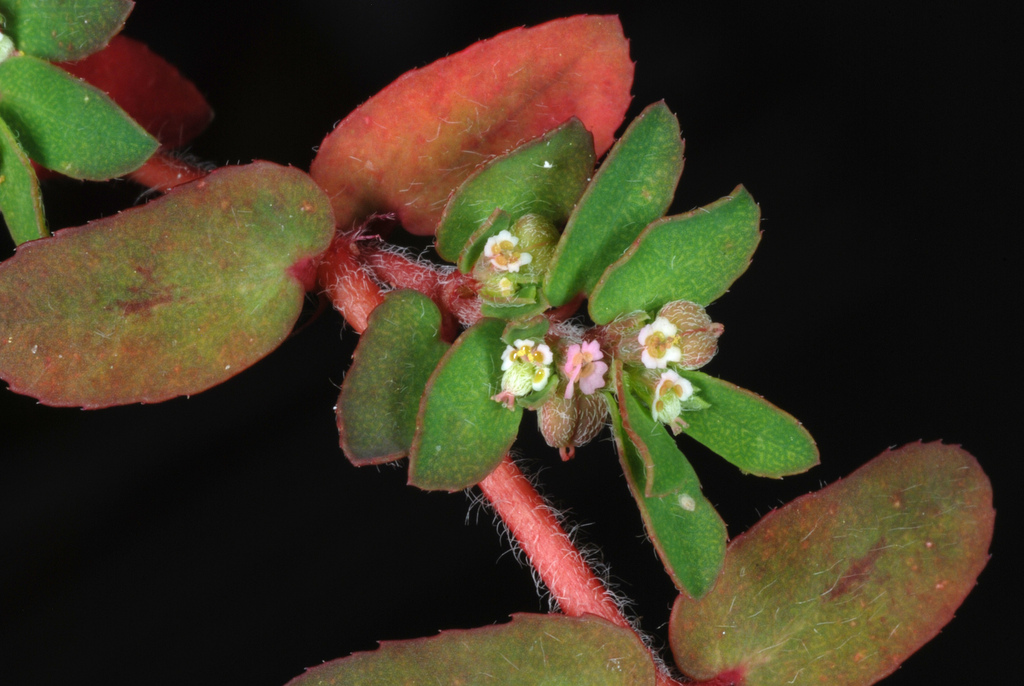
Spotted spurge is a low growing, mat forming annual that often appears as a weed in gardens and pavement cracks. It features small, oval leaves with a distinctive dark purple or reddish spot in the center. This plant thrives in disturbed soil and is quite resilient in hot, dry conditions.

At a glance
- Care level
- Easy
- Plant type
- Annual
- Light
- Full sun
- Indoor light
- Direct sun
- Water
- Every 7 to 14 days
- Mature size
- 10cm height, 60cm spread
- Growth rate
- Fast
- Hardiness
- USDA 3 to 11
- Bloom time
- Late spring to early autumn
Care
This plant is typically managed as a weed, but if kept, it requires little attention beyond full sun. Watch for rapid spread via seeds, as it can quickly colonize bare soil areas. Ensure you wear gloves when handling to avoid skin irritation from the sap.
- Watering
- Water only when the soil has dried out completely.
- Feeding
- Fertilizing is generally not required for this species.
- Pruning
- Remove seed heads regularly to prevent unwanted spread.
- Repotting
- Repot only if growing in a container, though it is rarely cultivated.
- Soil
- Well draining, sandy, or rocky soil
- Soil pH
- Neutral to slightly acidic
- Temperature
- 5 to 35°C
- Humidity
- 30 to 70%
- Drought tolerance
- High
- Lifespan
- Annual, typically 1 year
- Deer and rabbits
- High
Safety
- People
- The milky latex sap is highly irritating to skin and eyes and toxic if swallowed.
- Pets
- The milky sap is toxic to cats and dogs if ingested or if it contacts their skin.
- Children
- Keep this plant away from children as the sap is caustic and the plant is poisonous if eaten.
- Contact allergens
- The milky sap contains diterpene esters that cause contact dermatitis and blistering.
- Airborne allergens
- The pollen is not considered a significant airborne allergen.
- Edibility
- This plant is toxic if ingested and should never be consumed.
How to identify it
- Prostrate mat forming growth habit
- Opposite oval leaves with dark spots
- Milky white sap in stems
- Tiny inconspicuous flowers
- Small hairy seed capsules
- Height
- 0.05 to 0.2m
- Spread
- 0.1 to 0.4m
- Leaves
- green, bronze, purple, deciduous
- Flowers
- white, pink, 0.1 to 0.3cm
- Fruit
- green, brown, Summer to autumn
Problems to watch for
- Powdery MildewCommon
- AphidsUncommon
- Root RotUncommon
- RustUncommon
Check your spotted spurge from a photo
Pocket Botanist looks at a photo of your plant and tells you what's wrong and what to try first.
Scan with your phone's camera to get the app
Or go to pocketbotanist.app/get on your phone
Growing it
- Propagation
- seed
- When to plant
- spring
- Overwintering
- The plant dies back completely with the first hard frost and does not require special winter care.
- In containers
- It is not typically grown in containers as it is considered a weed.
Seed
- 1. Collect seeds from dry capsules in late summer.
- 2. Scatter seeds on bare, disturbed soil in early spring.
- 3. Ensure the area receives full sun for germination.
This plant is generally considered a weed and is not typically included in intentional garden guilds.
Grows well with
- Crabgrass · They often grow together in disturbed, sunny patches of soil.
Similar species
- Prostrate spurge · It shares a similar low growing habit and milky sap.
Science
- Family
- Euphorbiaceae
- Genus
- Euphorbia
- Order
- Malpighiales
- Class
- Magnoliopsida
- Native range
- North America
- Conservation
- It is a common, widespread weed and is not of conservation concern.
It thrives in disturbed soils and open areas where it can outcompete other plants for sunlight.
- Value to wildlife
- nectar source
- Pollinators
- bees, butterflies
- Uses
- ground cover, weed control research
Through the year
Ecological indicators
- Soil reaction
- 5/9
- Light
- 8/9
- Temperature
- 6/9
- Salinity
- 3/9
- Moisture
- 4/9
- Nutrients
- 5/9
Taxonomy resolved against GBIF.
Questions people ask
- Is spotted spurge a weed?
- Yes, it is widely considered a persistent weed in lawns and gardens.
- How do I get rid of it?
- Hand pulling before it sets seed is effective, but ensure you wear gloves to avoid the sap.
Where the name comes from
The name maculata refers to the spotted appearance of the leaves, while Euphorbia honors Euphorbus, a physician to King Juba II.
Good to know
- It is often called spotted spurge because of the dark purple spot on its leaves.
- The plant forms a low mat that can suppress other weeds.
- It is a prolific seed producer that can quickly colonize bare soil.
Also in
Keep your spotted spurge growing
This page is a general guide. Save your plant in Pocket Botanist and you get care reminders timed for this plant, plus a care history that shows what worked.
Scan with your phone's camera to get the app
Or go to pocketbotanist.app/get on your phone
This guide was generated with AI on and checked against GBIF taxonomy. It is general information, not horticultural or veterinary advice. Read about how we build these guides.