 Pocket Botanist
Plant guide
Sun spurge.
Euphorbia helioscopia
Pronounced yoo-FOR-bee-uh hee-lee-oh-SKOH-pee-uh
Also known as Madwoman's milk, Madwoman’s milk, Sun Spurge



Scan with your phone's camera to get the app
Or go to pocketbotanist.app/get on your phone
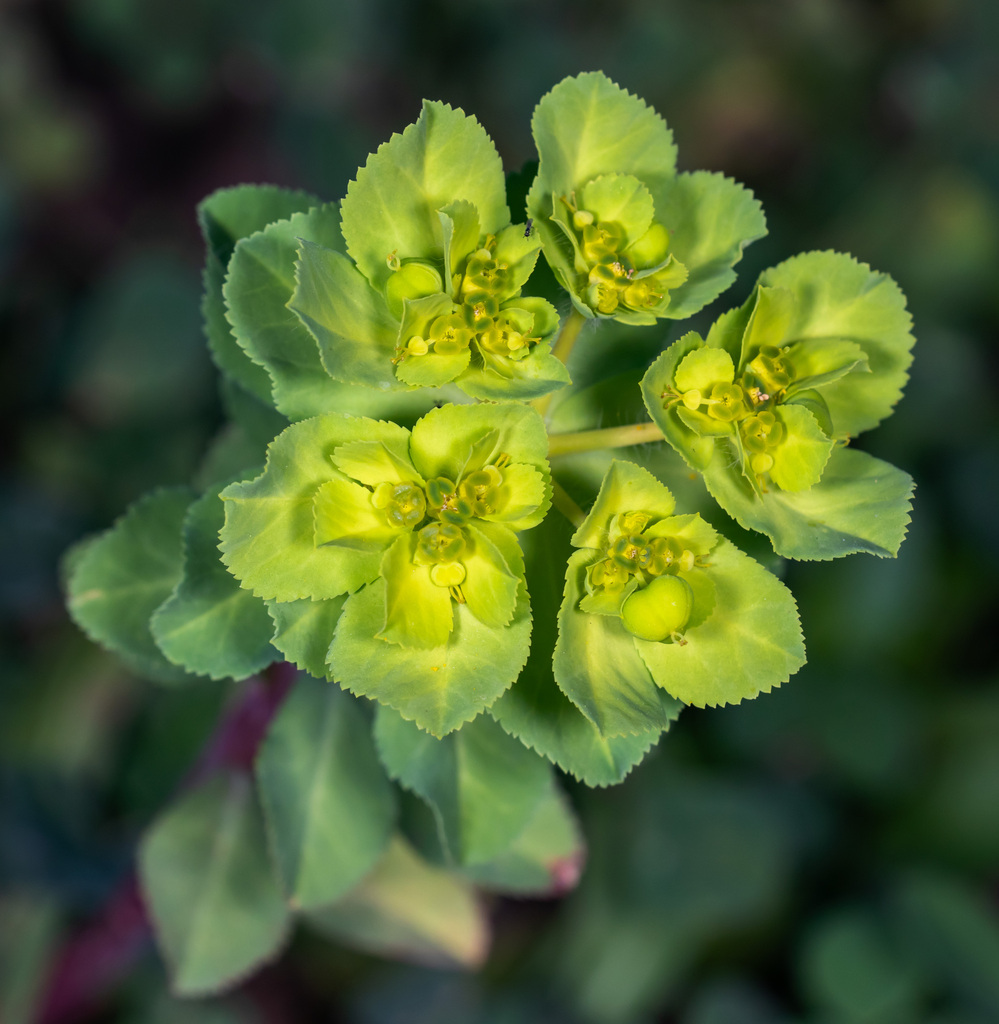
Sun spurge is a charming annual weed often found in disturbed soil and gardens. It is known for its unique flower heads that track the sun throughout the day. You will find it is quite resilient in various conditions.
At a glance
- Care level
- Easy
- Plant type
- Annual herb
- Light
- Full sun
- Indoor light
- Direct sun
- Water
- Every 3 to 7 days
- Mature size
- 12 to 20 inches
- Growth rate
- Fast
- Hardiness
- USDA 4 to 9
- Bloom time
- Late winter to mid summer
Care
This plant thrives in full sun and well drained soil. Keep an eye out for its rapid spread as it drops seeds easily. Wear gloves when handling to avoid contact with the irritating milky sap.
- Watering
- Keep the soil consistently moist but not waterlogged.
- Feeding
- A light application of balanced fertilizer during the growing season is sufficient.
- Pruning
- Remove spent flower heads to prevent unwanted self seeding.
- Repotting
- As an annual, this plant typically completes its life cycle within a year.
- Soil
- Well drained, fertile soil
- Soil pH
- 6.0 to 7.5
- Temperature
- -10 to 30°C
- Humidity
- 40 to 70%
- Drought tolerance
- Moderate
- Lifespan
- Annual, typically 1 year
- Deer and rabbits
- High
Safety
- People
- The milky sap is highly irritating to the skin and eyes and can cause severe blistering.
- Pets
- This plant is toxic to cats and dogs if ingested and the sap can cause skin irritation.
- Children
- Keep this plant away from children because the toxic sap causes painful skin rashes and eye damage upon contact.
- Contact allergens
- The white latex sap contains diterpene esters that cause contact dermatitis and severe eye irritation.
- Airborne allergens
- Pollen may cause mild respiratory irritation in sensitive individuals.
- Edibility
- This plant is toxic if ingested and should never be consumed.
How to identify it
- Yellow green flower clusters
- Serrated leaf margins
- Milky white sap inside stems
- Small rounded seed capsules
- Height
- 0.1 to 0.5m
- Spread
- 0.1 to 0.3m
- Leaves
- green, yellowish green, deciduous
- Flowers
- yellow, greenish yellow, 0.5 to 1cm
- Fruit
- green, brown, Summer
Problems to watch for
- Powdery mildew · White fungal growth appears on leaves during periods of high humidity.
Check your sun spurge from a photo
Pocket Botanist looks at a photo of your plant and tells you what's wrong and what to try first.
Scan with your phone's camera to get the app
Or go to pocketbotanist.app/get on your phone
Growing it
- Propagation
- seed
- When to plant
- spring, autumn
- Overwintering
- The plant completes its life cycle in one season and dies back completely in winter, leaving seeds to germinate in spring.
- In containers
- It is not recommended for containers as it is an aggressive weed.
Seed
- 1. Collect mature seeds from the capsules in late summer.
- 2. Sow seeds directly into disturbed soil in autumn or spring.
- 3. Keep the soil lightly moist until germination occurs.
This plant is generally considered a weed and is best kept away from ornamental garden beds.
Grows well with
- Common Poppy · They often grow together in disturbed meadow environments.
Similar species
- Petty Spurge · It is a smaller, related weed that shares a similar growth habit.
Science
- Family
- Euphorbiaceae
- Genus
- Euphorbia
- Order
- Malpighiales
- Class
- Magnoliopsida
- Native range
- Europe, Northern Africa, and parts of Asia.
- Conservation
- This is a common weed and is not of conservation concern.
It thrives in disturbed soils and cultivated fields where it quickly colonizes open ground.
- Value to wildlife
- nectar source
- Pollinators
- bees, beetles
- Uses
- botanical interest, weed control research
Through the year
Ecological indicators
- Salinity
- 2/9
- Soil reaction
- 6/9
- Light
- 7/9
- Temperature
- 5/9
- Moisture
- 5/9
- Nutrients
- 6/9
Taxonomy resolved against GBIF.
Questions people ask
- Is this plant safe for pets?
- No, the sap is toxic to dogs and cats and can cause severe irritation.
- How do I get rid of it?
- Pull it by hand before it sets seed, making sure to wear gloves to protect your skin from the sap.
Where the name comes from
The name helioscopia comes from Greek words meaning sun and to look at, referring to its heliotropic nature. Euphorbia honors Euphorbus, a physician to King Juba II of Mauretania.
Good to know
- It is often called madwoman's milk due to the milky sap.
- The plant is a common agricultural weed in many parts of the world.
- It has been used in traditional medicine, though it is too dangerous for home use.
Also in
Keep your sun spurge growing
This page is a general guide. Save your plant in Pocket Botanist and you get care reminders timed for this plant, plus a care history that shows what worked.
Scan with your phone's camera to get the app
Or go to pocketbotanist.app/get on your phone
This guide was generated with AI on and checked against GBIF taxonomy. It is general information, not horticultural or veterinary advice. Read about how we build these guides.