 Pocket Botanist
Plant guide
Burning bush.
Euonymus alatus
Pronounced yoo-ON-ih-mus ah-LAY-tus
Also known as Burning Bush, Burning Bush Spindletree, Burningbush, Spindletree, Winged Burning Bush, Winged Euonymus, Winged Spindletree, oriental spindle-tree



Scan with your phone's camera to get the app
Or go to pocketbotanist.app/get on your phone
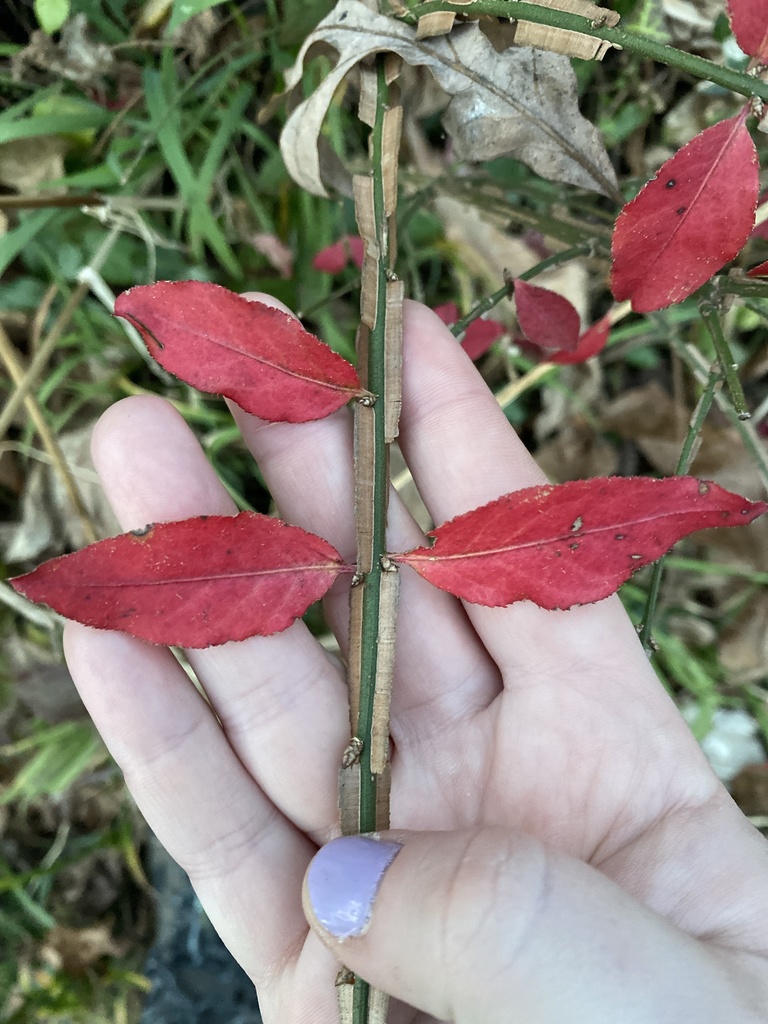
The burning bush is a deciduous shrub famous for its brilliant red fall foliage. It is a tough plant that adapts well to various garden conditions. You will love how it lights up your yard when the weather cools down.

At a glance
- Care level
- Easy
- Plant type
- Deciduous shrub
- Light
- Full sun to partial shade
- Indoor light
- Direct sun
- Water
- Every 7 to 14 days
- Mature size
- 6 to 10 feet
- Growth rate
- Medium
- Hardiness
- USDA 3 to 8
- Bloom time
- Late spring
Care
Plant this shrub in well-draining soil and provide consistent moisture while it gets established. Watch for yellowing leaves which can indicate poor drainage or overwatering. Prune back any dead or crossing branches to maintain a tidy shape.
- Watering
- Water deeply once a week during dry spells to keep the root zone hydrated.
- Feeding
- Apply a balanced slow release fertilizer once in early spring before new growth starts.
- Pruning
- Prune in late winter or early spring to shape the plant and remove damaged wood.
- Repotting
- If kept in a container, move to a larger pot every few years when the roots become crowded.
- Soil
- Loamy, clay, or sandy
- Soil pH
- 6.0 to 8.0
- Temperature
- -35 to 35°C
- Humidity
- 40 to 70%
- Drought tolerance
- Moderate
- Lifespan
- Perennial, typically 30 to 50 years.
- Deer and rabbits
- Moderate
Signs it needs repotting
- Roots growing out of the drainage holes
- Water running straight through the pot
- Stunted growth
Safety
- People
- All parts of this plant, especially the fruit, are considered toxic if ingested.
- Pets
- This plant is considered toxic to cats and dogs if ingested.
- Children
- Keep children away from the berries, as they are attractive but harmful if eaten.
- Contact allergens
- The sap may cause mild skin irritation in sensitive individuals.
- Airborne allergens
- The pollen is not considered a significant allergen.
- Edibility
- The berries are toxic to humans and should never be consumed.
How to identify it
- Cork-like ridges on stems
- Brilliant crimson autumn leaves
- Small reddish purple fruits
- Opposite simple green leaves
- Height
- 2 to 3m
- Spread
- 2 to 3m
- Leaves
- green, deciduous
- Flowers
- yellow, green, 0.5 to 1cm
- Fruit
- red, purple, Autumn
Problems to watch for
- Scale insects · Small sap sucking insects that can cause leaf yellowing and stunted growth.
- Powdery mildew · A fungal infection that appears as a white dusty coating on the leaves.
Check your burning bush from a photo
Pocket Botanist looks at a photo of your plant and tells you what's wrong and what to try first.
Scan with your phone's camera to get the app
Or go to pocketbotanist.app/get on your phone
Growing it
- Propagation
- cuttings, seed
- When to plant
- spring, autumn
- Overwintering
- No special winter care is needed as it is very cold hardy. Just ensure the soil is well drained so the roots do not sit in freezing water.
- In containers
- It can be grown in large containers, but it will eventually need to be moved to the ground as it grows quite large.
Softwood cuttings
- Take a 10 cm cutting in early summer.
- Remove the lower leaves.
- Dip the end in rooting hormone.
- Place in moist potting mix.
- Keep in a bright, humid spot until rooted.
Pair with plants that have similar water needs to ensure they all stay healthy during dry spells.
Grows well with
- Daylily · They provide a nice contrast in texture and bloom time.
- Coneflower · These perennials thrive in similar light conditions.
Similar species
- Wintercreeper · It is a related species that often grows as a groundcover or vine.
Science
- Family
- Celastraceae
- Genus
- Euonymus
- Order
- Celastrales
- Class
- Magnoliopsida
- Native range
- Northeastern Asia, including China, Japan, and Korea.
- Conservation
- This plant is considered highly invasive in many parts of North America and should be avoided in those regions.
It thrives in forest understories and edges, where it can tolerate varying light conditions.
- Value to wildlife
- nectar source, bird food source
- Pollinators
- bees, butterflies
- Uses
- ornamental shrub, hedge, privacy screen
Through the year
Ecological indicators
- Salinity
- 2/9
- Soil reaction
- 5/9
- Light
- 5/9
- Temperature
- 5/9
- Moisture
- 5/9
- Nutrients
- 5/9
Taxonomy resolved against GBIF.
Questions people ask
- Is burning bush invasive?
- Yes, it is considered invasive in many parts of the United States because it spreads easily into forests.
- Does it need pruning?
- It does not require heavy pruning, but you can trim it in late winter to maintain its shape.
Where the name comes from
The name Euonymus comes from the Greek word for good name, while alatus refers to the winged stems.
Good to know
- It is known for its unique corky ridges on the stems.
- The fall color is so intense it can look like the plant is on fire.
- It is very adaptable to different soil types.
Also in
Keep your burning bush growing
This page is a general guide. Save your plant in Pocket Botanist and you get care reminders timed for this plant, plus a care history that shows what worked.
Scan with your phone's camera to get the app
Or go to pocketbotanist.app/get on your phone
This guide was generated with AI on and checked against GBIF taxonomy. It is general information, not horticultural or veterinary advice. Read about how we build these guides.