 Pocket Botanist
Plant guide
Rainbow eucalyptus.
Eucalyptus deglupta
Pronounced yoo-kuh-LIP-tus de-GLOOP-tuh
Also known as Indonesian Gum, Mindanao Eucalyptus, Mindanao Gum, Rainbow Eucalyptus, Rainbow Gum, deglupta, kamarere, mindanau-gum



Scan with your phone's camera to get the app
Or go to pocketbotanist.app/get on your phone

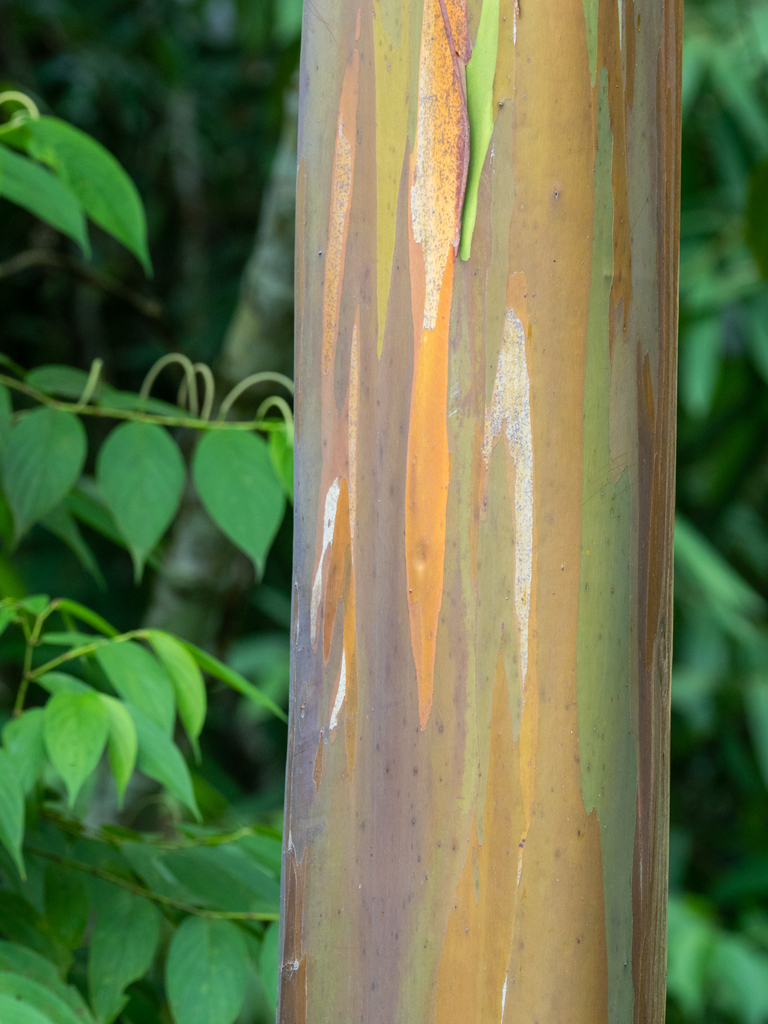
The rainbow eucalyptus is a stunning tree famous for its vibrant, multi-colored bark that peels away to reveal bright green, orange, and purple layers. It thrives in tropical climates and grows quite rapidly in the right conditions. This tree is truly a showstopper in any large landscape.
At a glance
- Care level
- Moderate
- Plant type
- Evergreen tree
- Light
- Full sun
- Indoor light
- Direct sun
- Water
- Every 3 to 7 days
- Mature size
- 100 to 200 feet
- Growth rate
- Fast
- Hardiness
- USDA 10 to 12
- Bloom time
- Late summer to autumn
Care
Keep this tree in a spot with plenty of space to grow and ensure it gets consistent moisture. Watch for yellowing leaves which can signal poor drainage or nutrient issues. It needs a warm environment to truly thrive.
- Watering
- Keep the soil consistently moist but never waterlogged.
- Feeding
- Apply a balanced fertilizer during the active growing season.
- Pruning
- Prune only to remove dead or damaged branches.
- Repotting
- Repot young trees when they become rootbound in their containers.
- Soil
- Moist, well-draining, fertile soil
- Soil pH
- 5.5 to 6.5
- Temperature
- 15 to 35°C
- Humidity
- 60 to 90%
- Drought tolerance
- Low
- Lifespan
- Perennial, typically 50 to 100 years in ideal conditions.
- Fragrance
- Light
- Deer and rabbits
- Moderate
Signs it needs repotting
- Roots growing out of drainage holes
- Water running straight through the pot
Safety
- People
- The leaves contain essential oils that can be irritating if ingested in large quantities.
- Pets
- This plant is considered toxic to cats and dogs if ingested.
- Children
- The tree is very large and not suitable for small gardens, but it poses no specific toxic threat to children beyond standard plant caution.
- Contact allergens
- The essential oils in the foliage can cause skin irritation for sensitive individuals.
- Airborne allergens
- Pollen from this tree may trigger mild respiratory symptoms in those with specific tree pollen allergies.
- Edibility
- This plant is not considered edible and parts may cause gastrointestinal distress if ingested.
How to identify it
- Multi-colored peeling bark
- Smooth trunk surface
- Lance shaped evergreen leaves
- Small white flower clusters
- Height
- 30 to 75m
- Spread
- 10 to 30m
- Leaves
- green, evergreen
- Flowers
- white, cream, 1 to 2cm
- Fruit
- brown, Winter
Problems to watch for
- Leaf SpotCommon
- CankerUncommon
- Root RotUncommon
- Scale InsectsUncommon
- ChlorosisRare
- Leaf ScorchRare
Check your rainbow eucalyptus from a photo
Pocket Botanist looks at a photo of your plant and tells you what's wrong and what to try first.
Scan with your phone's camera to get the app
Or go to pocketbotanist.app/get on your phone
Growing it
- Propagation
- seed, cuttings
- When to plant
- Spring, Summer
- Overwintering
- Protect from any frost, as this species is strictly tropical and will suffer damage if temperatures drop below 10 degrees Celsius.
- In containers
- Not recommended for containers due to its massive size and rapid growth rate.
Seed
- 1. Surface sow seeds in a well draining potting mix.
- 2. Keep the substrate consistently moist and warm.
- 3. Provide bright, indirect light until germination occurs.
- 4. Transplant seedlings once they develop two sets of true leaves.
Pair this tree with moisture loving tropical understory plants that appreciate light shade.
Grows well with
- Bird of Paradise · They share similar tropical moisture and light requirements.
- Elephant Ear · These plants enjoy the same humid, warm environment.
Similar species
- River Red Gum · Another fast growing Eucalyptus with similar water needs.
Science
- Family
- Myrtaceae
- Genus
- Eucalyptus
- Order
- Myrtales
- Class
- Magnoliopsida
- Native range
- Philippines, Indonesia, and Papua New Guinea.
- Conservation
- It is not currently listed as endangered, but wild populations are declining due to habitat loss in its native range.
It thrives in tropical rainforests where it colonizes disturbed areas with high rainfall.
- Value to wildlife
- nectar source
- Pollinators
- bees, butterflies
- Uses
- ornamental specimen, timber production, pulpwood
Through the year
Ecological indicators
- Salinity
- 2/9
- Soil reaction
- 6/9
- Light
- 8/9
- Temperature
- 9/9
- Moisture
- 8/9
- Nutrients
- 6/9
Taxonomy resolved against GBIF.
Questions people ask
- Can I grow this in a pot?
- It is generally too large for long term container growth.
- How often should I water it?
- Keep the soil consistently moist as it loves high humidity.
Where the name comes from
The name Eucalyptus comes from Greek words meaning well and covered, referring to the operculum on the flower buds. Deglupta refers to the peeling bark.
Good to know
- It is the only Eucalyptus species native to the Northern Hemisphere.
- The bark changes color as it ages, creating a unique display.
- It grows incredibly fast, sometimes reaching over 3 meters in a single year.
- The wood is often used for high quality paper pulp.
Also in
Keep your rainbow eucalyptus growing
This page is a general guide. Save your plant in Pocket Botanist and you get care reminders timed for this plant, plus a care history that shows what worked.
Scan with your phone's camera to get the app
Or go to pocketbotanist.app/get on your phone
This guide was generated with AI on and checked against GBIF taxonomy. It is general information, not horticultural or veterinary advice. Read about how we build these guides.