 Pocket Botanist
Plant guide
Viper's bugloss.
Echium vulgare
Pronounced EK-ee-um vul-GAH-ree
Also known as Blue Echium, Blue Thistle, Blue-devil, Blueweed, Common Echium, Common Viper's Bugloss, Common Vipersbugloss



Scan with your phone's camera to get the app
Or go to pocketbotanist.app/get on your phone

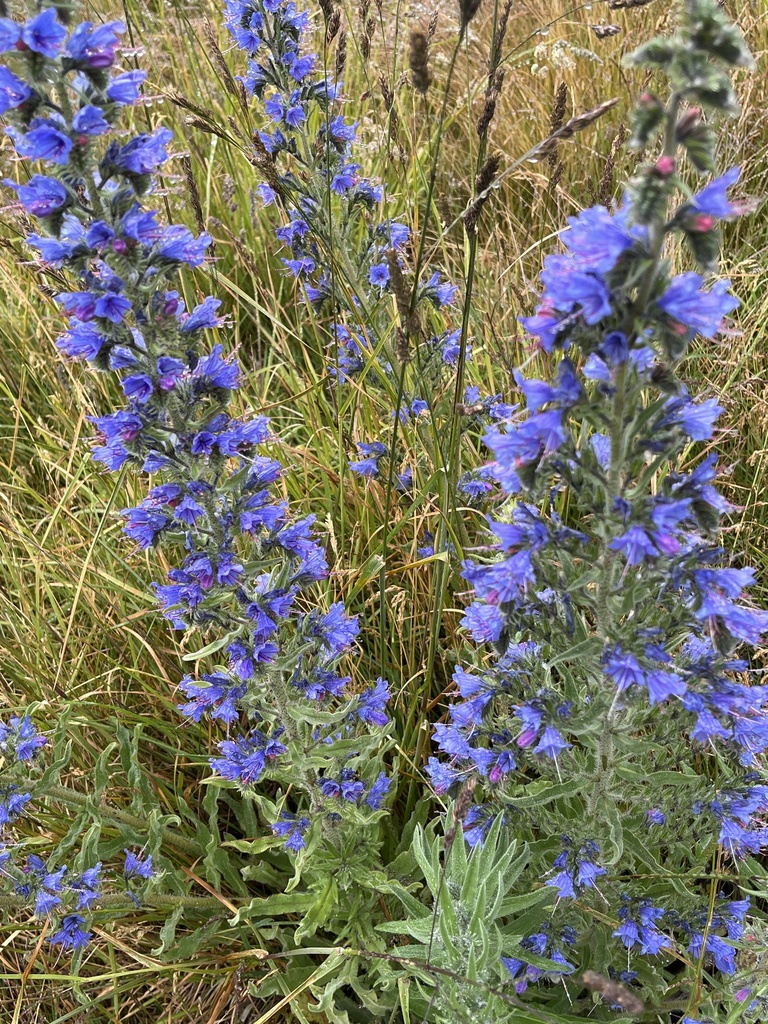
Viper's bugloss is a striking biennial wildflower that produces tall, bristly spikes of vibrant blue flowers. It's a fantastic choice for attracting bees and butterflies to your garden. You'll find it thrives in poor, rocky soils where other plants might struggle.
At a glance
- Care level
- Easy
- Plant type
- Biennial wildflower
- Light
- Full sun
- Indoor light
- Direct sun
- Water
- Every 7 to 14 days
- Mature size
- 3 feet tall
- Growth rate
- Medium
- Hardiness
- USDA 3 to 8
- Bloom time
- Late spring to early autumn
Care
Plant this in a sunny spot with excellent drainage to prevent root rot. Watch for wilting if the soil stays too wet for too long. It's very drought tolerant once established.
- Watering
- Water only when the top few inches of soil feel dry to the touch.
- Feeding
- It generally does not need fertilizer and prefers lean soil conditions.
- Pruning
- Deadhead spent flower spikes to encourage a tidy appearance or prevent unwanted self seeding.
- Repotting
- If grown in a container, move it to a larger pot only if the taproot becomes crowded.
- Soil
- Well draining, rocky, or sandy soil
- Soil pH
- Neutral to alkaline
- Temperature
- -20 to 35°C
- Humidity
- 20 to 50%
Safety
- People
- The plant contains pyrrolizidine alkaloids which can be harmful if consumed in large quantities.
- Pets
- This plant can be mildly toxic to pets if ingested due to pyrrolizidine alkaloids.
- Children
- Keep children away from the bristly stems as they can cause painful skin scratches.
- Contact allergens
- The stiff hairs on the stems and leaves can cause skin irritation or rashes upon contact.
- Airborne allergens
- The pollen may trigger mild allergic reactions in sensitive individuals.
- Edibility
- This plant is not considered edible and may cause digestive distress if ingested.
How to identify it
- Tall spikes of bright blue flowers
- Stiff, bristly hairs on stems
- Narrow, lance shaped basal leaves
- Red stamens protruding from petals
- Height
- 0.3 to 0.9m
- Spread
- 0.2 to 0.45m
- Leaves
- green, gray-green, deciduous
- Flowers
- blue, purple, pink, 1 to 2cm
Problems to watch for
- Powdery mildew · A white fungal growth on leaves often caused by poor air circulation.
Check your viper's bugloss from a photo
Pocket Botanist looks at a photo of your plant and tells you what's wrong and what to try first.
Scan with your phone's camera to get the app
Or go to pocketbotanist.app/get on your phone
Growing it
- Propagation
- seed
- When to plant
- spring, autumn
Pair this plant with other drought tolerant wildflowers to create a low maintenance meadow that supports local bees.
Grows well with
- Common Yarrow · They share similar drought tolerant needs and thrive in sunny meadows.
- Corn Poppy · They both flourish in disturbed soil and provide a classic wildflower look.
Similar species
- Purple viper's bugloss · It is a closely related species with a similar appearance but often considered more invasive.
Science
- Family
- Boraginaceae
- Genus
- Echium
- Order
- Boraginales
- Class
- Magnoliopsida
- Native range
- Europe and parts of Western Asia.
- Conservation
- It is considered an invasive weed in some parts of North America and should be managed accordingly.
It is a pioneer species that quickly colonizes disturbed, dry, and nutrient poor ground.
- Value to wildlife
- excellent nectar source, attracts native pollinators
- Pollinators
- bees, butterflies
- Uses
- pollinator gardens, wildflower meadows, xeriscaping
Through the year
Ecological indicators
- Salinity
- 3/9
- Soil reaction
- 6/9
- Light
- 8/9
- Temperature
- 5/9
- Moisture
- 2/9
- Nutrients
- 2/9
Taxonomy resolved against GBIF.
Questions people ask
- Is it easy to grow from seed?
- Yes, it readily self seeds in sunny, well drained spots.
- Does it need fertilizer?
- No, it prefers lean soil and will likely suffer if given too much nitrogen.
Where the name comes from
The genus name Echium comes from the Greek word echis, meaning viper, because the seeds resemble a viper's head. The species name vulgare simply means common.
Good to know
- It is a biennial, meaning it grows leaves the first year and flowers the second.
- The plant is highly attractive to honeybees and produces high quality honey.
- It thrives in poor, rocky soil where other plants struggle to grow.
Also in
Keep your viper's bugloss growing
This page is a general guide. Save your plant in Pocket Botanist and you get care reminders timed for this plant, plus a care history that shows what worked.
Scan with your phone's camera to get the app
Or go to pocketbotanist.app/get on your phone
This guide was generated with AI on and checked against GBIF taxonomy. It is general information, not horticultural or veterinary advice. Read about how we build these guides.