 Pocket Botanist
Plant guide
Engelmann's hedgehog cactus.
Echinocereus engelmannii
Pronounced eh-kye-no-SEE-ree-us en-gel-MAN-ee-eye
Also known as Engelmann's Long Spine Cactus, Engelmann's hedgehog cactus, Strawberry Cactus



Scan with your phone's camera to get the app
Or go to pocketbotanist.app/get on your phone
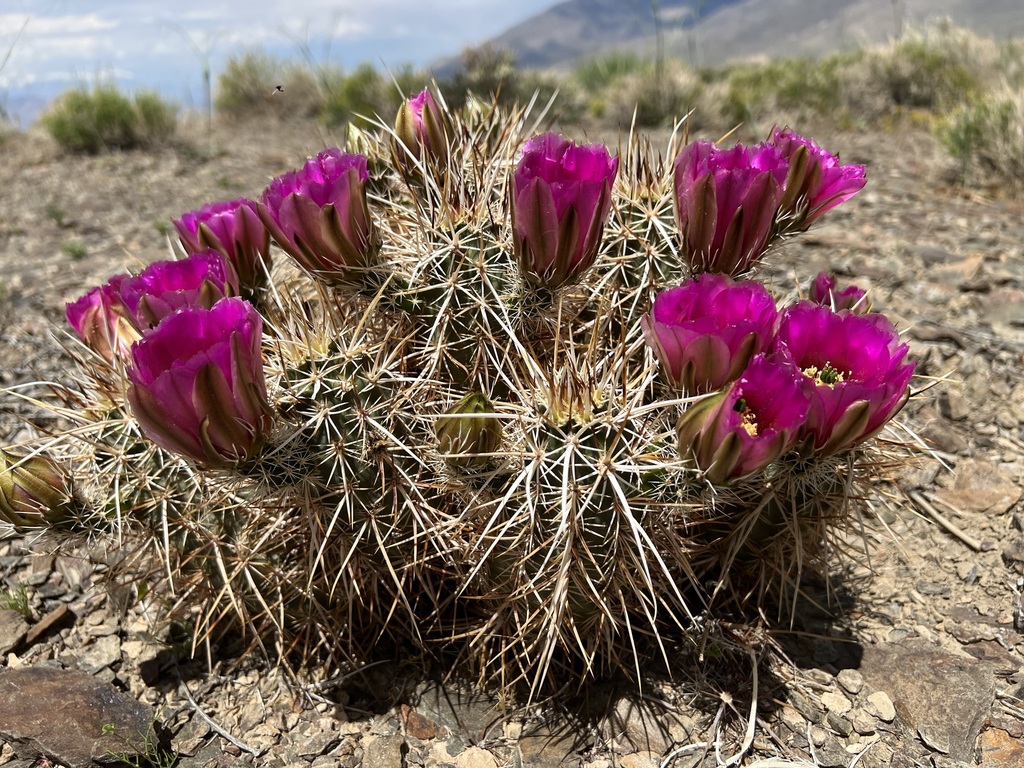
This charming desert native forms clusters of cylindrical stems that look great in a sunny spot. It produces vibrant magenta flowers that really stand out against the desert landscape. You will love how resilient it is once it gets settled in your garden.

At a glance
- Care level
- Easy
- Plant type
- Cactus
- Light
- Full sun
- Indoor light
- Direct sun
- Water
- Every 14 to 30 days
- Mature size
- 12 to 24 inches tall
- Growth rate
- Slow
- Hardiness
- USDA 7 to 10
- Bloom time
- Mid to late spring
Care
Give this cactus plenty of sun and ensure the soil drains very quickly to prevent rot. Watch for soft or mushy stems, which indicate the plant is getting too much water. Keep it dry during the winter months to mimic its natural dormant period.
- Watering
- Allow the soil to dry out completely between waterings.
- Feeding
- Feed with a balanced liquid fertilizer diluted to half strength during the active growing season.
- Pruning
- Only remove dead or damaged stems using sterilized shears.
- Repotting
- Repot only when the cactus has clearly outgrown its container.
- Soil
- Sandy or gritty cactus mix
- Soil pH
- 6.0 to 7.5
- Temperature
- -12 to 45°C
- Humidity
- 10 to 40%
- Drought tolerance
- High
- Lifespan
- Perennial, typically 10 to 20 years
- Deer and rabbits
- High
Signs it needs repotting
- Roots growing out of the drainage holes.
- The plant becomes top heavy and unstable.
- The soil no longer drains water effectively.
Safety
- People
- The plant is not toxic, but the spines can cause significant mechanical injury.
- Pets
- This plant is generally considered non-toxic to cats and dogs, though the sharp spines pose a physical injury risk.
- Children
- Keep this plant away from children because the dense, sharp spines pose a high risk of injury if touched.
- Contact allergens
- The sharp spines can cause skin irritation or puncture wounds.
- Airborne allergens
- There is no significant risk of respiratory allergy from this plant.
- Edibility
- The fruit is edible but must be peeled carefully to avoid the fine, sharp spines.
How to identify it
- Cylindrical stems in clumping clusters
- Dense covering of sharp spines
- Vibrant magenta or pink flowers
- Stems grow up to 24 inches tall
- Radial spines are white to brown
- Height
- 0.15 to 0.6m
- Spread
- 0.3 to 1m
- Leaves
- green, evergreen
- Flowers
- magenta, pink, purple, 5 to 8cm
- Fruit
- red, Summer
Problems to watch for
- MealybugsCommon
- Root RotCommon
- Scale InsectsUncommon
- Spider MitesUncommon
Check your engelmann's hedgehog cactus from a photo
Pocket Botanist looks at a photo of your plant and tells you what's wrong and what to try first.
Scan with your phone's camera to get the app
Or go to pocketbotanist.app/get on your phone
Growing it
- Propagation
- seed, cuttings
- When to plant
- spring, early autumn
- Overwintering
- Keep the plant completely dry during winter to prevent rot. Ensure it is in a well ventilated area with cool temperatures.
- In containers
- It grows well in containers if you use a gritty, fast draining cactus mix and a pot with large drainage holes.
Seed
- 1. Sow seeds in a well draining cactus mix.
- 2. Keep the soil lightly moist until germination.
- 3. Gradually reduce water as the seedlings establish.
Cuttings
- 1. Carefully remove a stem segment with a clean knife.
- 2. Allow the cut end to callous for one week.
- 3. Place the calloused end in dry, sandy soil.
Pair this cactus with other slow growing desert plants that share its need for excellent drainage and intense sun.
Grows well with
- Creosote Bush · It provides natural light shade and mimics the native desert habitat.
- Desert Marigold · It adds bright yellow color that contrasts beautifully with the magenta cactus flowers.
Similar species
- Claret Cup Cactus · It shares a similar growth habit and preference for rocky desert soils.
Science
- Family
- Cactaceae
- Genus
- Echinocereus
- Order
- Caryophyllales
- Class
- Magnoliopsida
- Native range
- Southwestern United States and northwestern Mexico.
- Conservation
- It is not currently listed as endangered, but wild collection is discouraged to protect local populations.
It survives in arid regions by storing water in its succulent stems and using spines to shade the plant body.
- Value to wildlife
- nectar source, bird food
- Pollinators
- bees, butterflies, hummingbirds
- Uses
- rock garden, desert landscaping, container plant
Through the year
Ecological indicators
- Salinity
- 2/9
- Soil reaction
- 6/9
- Light
- 8/9
- Temperature
- 7/9
- Moisture
- 1/9
- Nutrients
- 2/9
Taxonomy resolved against GBIF.
Questions people ask
- How often should I water this cactus?
- Water sparingly during the growing season and keep it completely dry throughout the winter.
- Does it need full sun?
- Yes, it requires at least six hours of direct sunlight daily to bloom well.
Where the name comes from
The genus name Echinocereus comes from the Greek word for hedgehog, while the species name honors German botanist George Engelmann.
Good to know
- It is often called the strawberry hedgehog cactus because of its red, edible fruit.
- The stems grow in clusters that can eventually contain dozens of individual heads.
- It thrives in harsh, rocky desert environments where little else can grow.
- The spines are often multicolored, ranging from white to yellow and brown.
Also in
Keep your engelmann's hedgehog cactus growing
This page is a general guide. Save your plant in Pocket Botanist and you get care reminders timed for this plant, plus a care history that shows what worked.
Scan with your phone's camera to get the app
Or go to pocketbotanist.app/get on your phone
This guide was generated with AI on and checked against GBIF taxonomy. It is general information, not horticultural or veterinary advice. Read about how we build these guides.