 Pocket Botanist
Plant guide
Mexican snowball.
Echeveria elegans
Pronounced ek-uh-VEER-ee-uh EL-uh-ganz
Also known as Mexican snowball, Mexican-gem, pearl echeveria, white Mexican-rose



Scan with your phone's camera to get the app
Or go to pocketbotanist.app/get on your phone
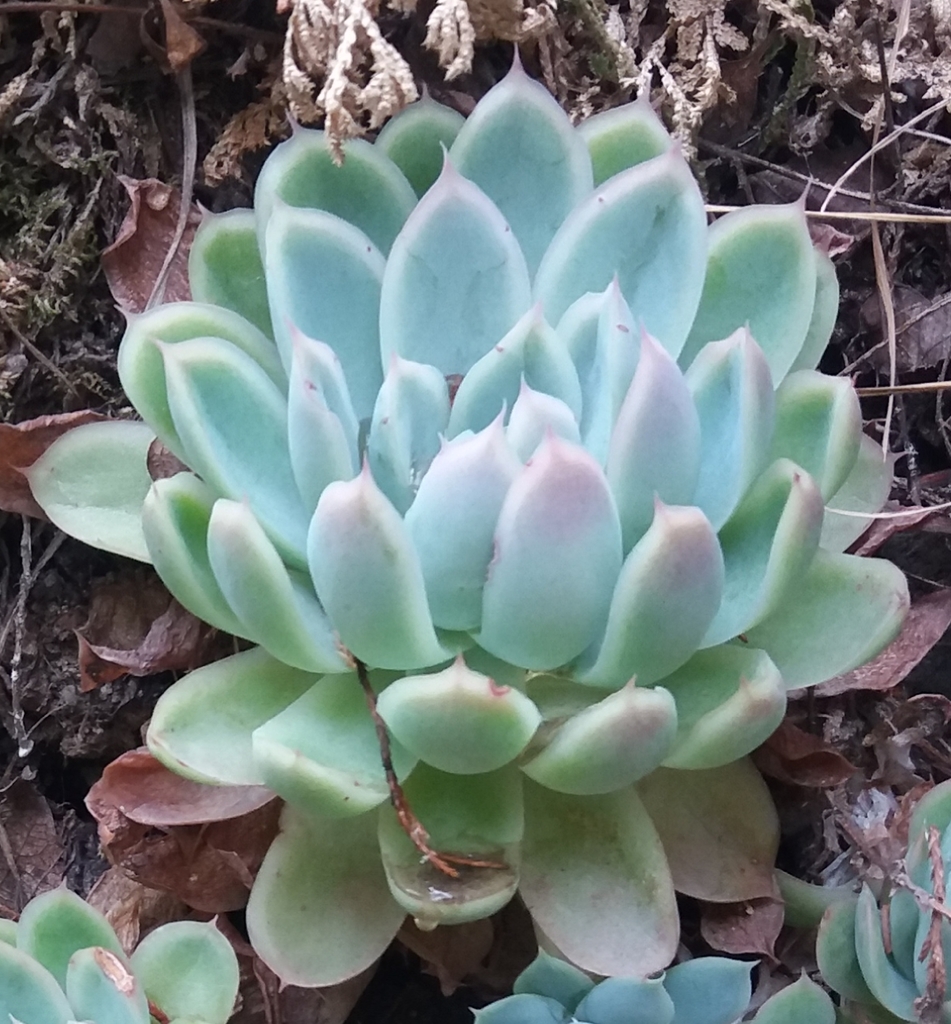
This charming succulent forms tight, pale blue-green rosettes that look just like little flowers. It is a classic choice for rock gardens or sunny windowsills. You will love how it produces offsets to create a lovely colony over time.
At a glance
- Care level
- Easy
- Plant type
- Succulent
- Light
- Full sun to partial shade
- Indoor light
- Direct sun
- Water
- Every 10 to 21 days
- Mature size
- 4 to 6 inches
- Growth rate
- Slow
- Hardiness
- USDA 9 to 11
- Bloom time
- Late winter to spring
Care
Plant this succulent in well-draining soil and ensure it gets plenty of light to keep its compact shape. Watch for mushy leaves, which signal too much water, or stretching stems, which mean it needs more sun. Always let the soil dry out completely between waterings.
- Watering
- Water deeply only when the soil is completely dry to the touch.
- Feeding
- Feed with a balanced liquid fertilizer diluted to half strength during the active growing season.
- Pruning
- Remove dead or shriveled lower leaves to keep the plant tidy and prevent rot.
- Repotting
- Repot only when the plant has outgrown its container or the soil has broken down.
- Soil
- Gritty cactus and succulent mix
- Soil pH
- 6.0 to 7.0
- Temperature
- 5 to 30°C
- Humidity
- 10 to 40%
- Drought tolerance
- High
- Lifespan
- Perennial, typically 3 to 5 years.
- Deer and rabbits
- Moderate
Signs it needs repotting
- Roots growing out of the drainage hole
- The plant has become top-heavy
- The soil no longer drains well
Safety
- People
- It is generally considered non-toxic, but ingestion may cause mild stomach upset.
- Pets
- This plant is considered non-toxic to cats and dogs.
- Children
- The rosettes are sturdy but can be damaged by rough handling, and small parts could pose a minor choking hazard.
- Edibility
- This plant is not considered edible and should be kept away from food preparation areas.
How to identify it
- Tight pale blue-green rosettes
- Translucent leaf margins
- Waxy leaf coating
- Pinkish coral flower stalks
- Height
- 0.05 to 0.1m
- Spread
- 0.1 to 0.2m
- Leaves
- pale blue, green, evergreen
- Flowers
- pink, yellow, 1 to 2cm
Problems to watch for
- Mealybugs · Small white cottony insects that cluster in the leaf axils.
- Root rot · Caused by overwatering or poor drainage leading to mushy stems.
Check your mexican snowball from a photo
Pocket Botanist looks at a photo of your plant and tells you what's wrong and what to try first.
Scan with your phone's camera to get the app
Or go to pocketbotanist.app/get on your phone
Growing it
- Propagation
- cuttings, offsets, seed
- When to plant
- spring, summer
- Overwintering
- Move to a frost-free location and keep the soil very dry throughout the winter months.
- In containers
- It is excellent for containers, provided the pot has drainage holes and a gritty soil mix.
Leaf Cuttings
- Gently twist a healthy leaf from the main stem.
- Let the leaf callus over in a dry spot for a few days.
- Place the leaf on top of well-draining soil.
- Mist occasionally until tiny roots and a new rosette appear.
Group succulents with similar water needs to ensure they do not rot from overwatering.
Grows well with
- Sedum · They share similar water and light requirements.
- Haworthia · This plant offers a nice textural contrast in a succulent bowl.
Similar species
- Echeveria agavoides · It has a similar rosette shape but with pointier leaves.
Science
- Family
- Crassulaceae
- Genus
- Echeveria
- Order
- Saxifragales
- Class
- Magnoliopsida
- Native range
- Central Mexico
- Conservation
- It is not currently listed as endangered, though wild populations are sometimes threatened by habitat loss.
It grows on rocky slopes where it survives by storing water in its fleshy leaves.
- Value to wildlife
- nectar source
- Pollinators
- bees, butterflies
- Uses
- container plant, rock garden, succulent arrangement
Through the year
Ecological indicators
- Salinity
- 1/9
- Soil reaction
- 6/9
- Light
- 7/9
- Temperature
- 7/9
- Moisture
- 2/9
- Nutrients
- 2/9
Taxonomy resolved against GBIF.
Questions people ask
- How often should I water it?
- Water only when the soil has dried out completely, usually every two weeks.
- Does it need direct sun?
- Yes. It prefers full sun or several hours of direct light a day to prevent stretching.
Where the name comes from
The genus is named after Atanasio Echeverría y Godoy, a botanical artist, while the species name refers to its elegant appearance.
Good to know
- The leaves are covered in a fine, powdery wax called farina that protects them from the sun.
- It produces many offsets, which is why it is often called the Hens and Chicks of the Echeveria genus.
- This plant is native to the semi-arid regions of Mexico.
Also in
Keep your mexican snowball growing
This page is a general guide. Save your plant in Pocket Botanist and you get care reminders timed for this plant, plus a care history that shows what worked.
Scan with your phone's camera to get the app
Or go to pocketbotanist.app/get on your phone
This guide was generated with AI on and checked against GBIF taxonomy. It is general information, not horticultural or veterinary advice. Read about how we build these guides.