 Pocket Botanist
Plant guide
Song of India.
Dracaena reflexa
Pronounced druh-SEE-nuh ree-FLEX-uh
Also known as Pleomele, Song of India, song-of-India



Scan with your phone's camera to get the app
Or go to pocketbotanist.app/get on your phone

The Song of India is a beautiful, slow growing plant that brings a tropical feel to your home. It features striking foliage that adds a nice pop of color to any room. You'll love how easy it is to keep this plant happy with just a little bit of attention.
At a glance
- Care level
- Easy
- Plant type
- Tropical shrub
- Light
- Bright indirect light is best for keeping those leaf colors vibrant.
- Indoor light
- Bright indirect
- Water
- Every 7 to 14 days
- Mature size
- 3 to 6 feet indoors
- Growth rate
- Slow
- Hardiness
- USDA 10 to 12
- Bloom time
- Rarely blooms indoors, but occasionally in late winter.
Care
Keep the soil lightly moist but never soggy to prevent root issues. Watch for brown leaf tips, which often mean the air is too dry or your water has too many minerals. Wipe the leaves occasionally to keep them dust free and healthy.
- Watering
- Let the top inch of soil dry out before you add more water.
- Feeding
- Feed with a balanced liquid fertilizer during the spring and summer months.
- Pruning
- Trim back the stems once a year if you want to encourage a bushier shape.
- Repotting
- Move to a slightly larger pot only when the roots start to crowd the current container.
- Soil
- Well draining peat based potting mix
- Soil pH
- 6.0 to 6.5
- Temperature
- 15 to 27°C
- Humidity
- 40 to 60%
- Drought tolerance
- Moderate
- Lifespan
- Perennial, can live for many decades with proper care.
- Deer and rabbits
- Moderate
Signs it needs repotting
- Roots growing out of the drainage holes.
- Water running straight through the pot.
- Stunted growth during the active season.
Safety
- People
- The leaves contain saponins which are toxic to humans and pets if chewed or swallowed.
- Pets
- This plant is toxic to cats and dogs if ingested.
- Children
- Keep this plant out of reach of small children as the leaves are a choking hazard and toxic if consumed.
- Contact allergens
- The sap can cause mild skin irritation in sensitive individuals.
- Airborne allergens
- There are no significant airborne allergens associated with this plant.
- Edibility
- This plant is not edible and can cause significant gastrointestinal distress if ingested.
How to identify it
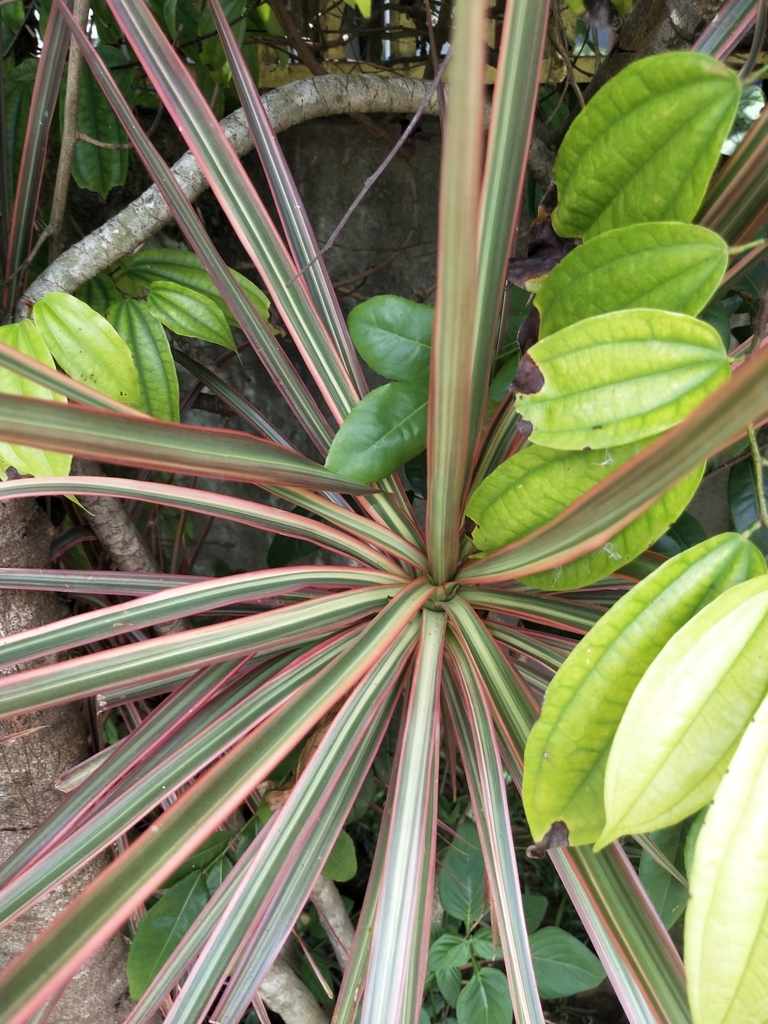
- Narrow lance shaped leaves
- Yellow or cream leaf margins
- Spiral leaf arrangement on stems
- Woody cane like stems
- Height
- 0.9 to 3m
- Spread
- 0.6 to 1.5m
- Leaves
- dark green, yellow, lime, evergreen
- Flowers
- white, 1 to 2cm
- Fruit
- orange, red, rarely produced
Problems to watch for
- Spider mites · Tiny pests that cause yellowing leaves and fine webbing.
- Root rot · Occurs when the soil stays too wet for too long.
Check your song of india from a photo
Pocket Botanist looks at a photo of your plant and tells you what's wrong and what to try first.
Scan with your phone's camera to get the app
Or go to pocketbotanist.app/get on your phone
Growing it
- Propagation
- cuttings, air layering
- When to plant
- spring, summer
- Overwintering
- Move the plant indoors before temperatures drop below 15 degrees Celsius. Reduce watering during the winter months as growth slows down significantly.
- In containers
- It thrives in containers and prefers a pot that is only slightly larger than its root ball.
Stem cuttings
- 1. Cut a 10 to 15 cm stem section.
- 2. Remove the lower leaves.
- 3. Place the cutting in a jar of water or moist potting mix.
- 4. Keep in bright, indirect light until roots form.
Group plants with similar water needs together to maintain a consistent microclimate.
Grows well with
- Peace Lily · They share similar light and humidity requirements.
- Pothos · It makes a lovely trailing contrast at the base of the plant.
Similar species
- Corn Plant · It has a similar growth habit but with much broader leaves.
Science
- Family
- Asparagaceae
- Genus
- Dracaena
- Order
- Asparagales
- Class
- Liliopsida
- Native range
- Madagascar and nearby islands in the Indian Ocean.
- Conservation
- Not currently listed as endangered in its native range.
It grows as an understory shrub in tropical forests where it thrives in filtered light.
- Value to wildlife
- nectar source
- Pollinators
- bees, butterflies
- Uses
- indoor ornamental, office plant, container specimen
Through the year
Ecological indicators
- Salinity
- 2/9
- Soil reaction
- 6/9
- Light
- 5/9
- Temperature
- 8/9
- Moisture
- 4/9
- Nutrients
- 4/9
Taxonomy resolved against GBIF.
Questions people ask
- Why are the leaf tips turning brown?
- This is usually caused by low humidity or fluoride in tap water.
- How much light does it need?
- It prefers bright, indirect light to maintain its leaf variegation.
Where the name comes from
The genus name comes from the Greek word drakaina, meaning female dragon, referring to the red resin of some species. The species name reflexa refers to the way the leaves bend backward.
Good to know
- It is incredibly slow growing.
- The stems are often braided by growers for a unique look.
- It is highly effective at filtering indoor air pollutants.
Also in
Keep your song of india growing
This page is a general guide. Save your plant in Pocket Botanist and you get care reminders timed for this plant, plus a care history that shows what worked.
Scan with your phone's camera to get the app
Or go to pocketbotanist.app/get on your phone
This guide was generated with AI on and checked against GBIF taxonomy. It is general information, not horticultural or veterinary advice. Read about how we build these guides.