 Pocket Botanist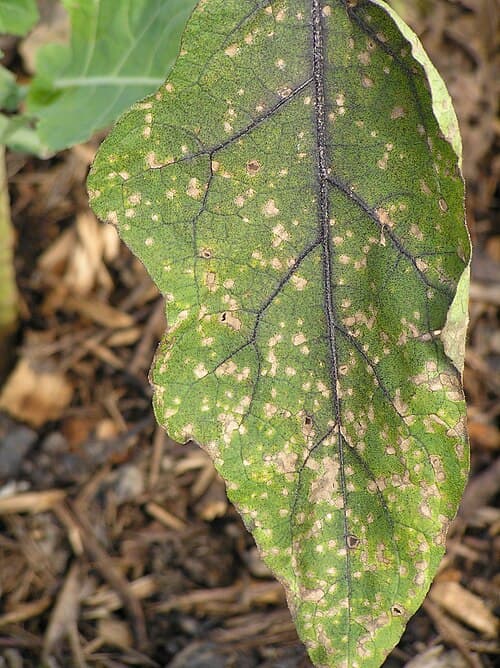

Check these first
- Examine the leaves for dark, sunken lesions.
- Check the fruit for similar dark spots or rot.
- Look for signs of poor airflow around the canopy.
Likely causes
Anthracnose
Most likelyHow to tell: You will see dark, sunken, or irregular spots on the leaves and sometimes the fruit. In severe cases, the leaves may curl or drop prematurely.
What to do: Prune away and destroy all infected leaves and fruit to stop the spread. Apply a copper fungicide spray according to the label instructions during the early spring.
Leaf spot fungus
PossibleHow to tell: These spots are usually smaller and more circular than anthracnose. They often appear as brown or black dots with a yellow halo.
What to do: Improve air circulation by thinning out crowded branches. Avoid overhead watering to keep the foliage dry.
When to worry
It is serious if the spots cover a large portion of the leaves or if the fruit begins to rot. Minor spotting on a few leaves is common in humid climates.
Stopping it coming back
Clean up all fallen leaves and fruit from the ground in autumn to remove fungal spores. Prune the tree to allow sunlight and air to reach the center.
Not sure which one it is? Photograph your japanese persimmon.
This page lists the usual causes. Pocket Botanist looks at your actual leaf and tells you the likely cause, how serious it is, and what to try first. Identification and a health check are free.


Questions people ask
- Is it safe to eat fruit with spots?
- If the spots are only on the skin, you can often peel the fruit and eat the inside. If the fruit is soft or rotting, it is best to discard it.
- Does this fungus spread to other plants?
- Yes, fungal spores can travel through wind and water. Keep infected debris away from your other garden plants.
More problems with Japanese Persimmon
Back to the Japanese Persimmon guide
This article was generated with AI from the plant’s care profile and is general information, not horticultural advice. Read about how we build these guides.