 Pocket Botanist
Plant guide
Blue cypress.
Cupressus macrocarpa
Pronounced hes-per-oh-SY-par-is mak-roh-KAR-pah
Also known as Monterey cypress, monterey-cypress



Scan with your phone's camera to get the app
Or go to pocketbotanist.app/get on your phone
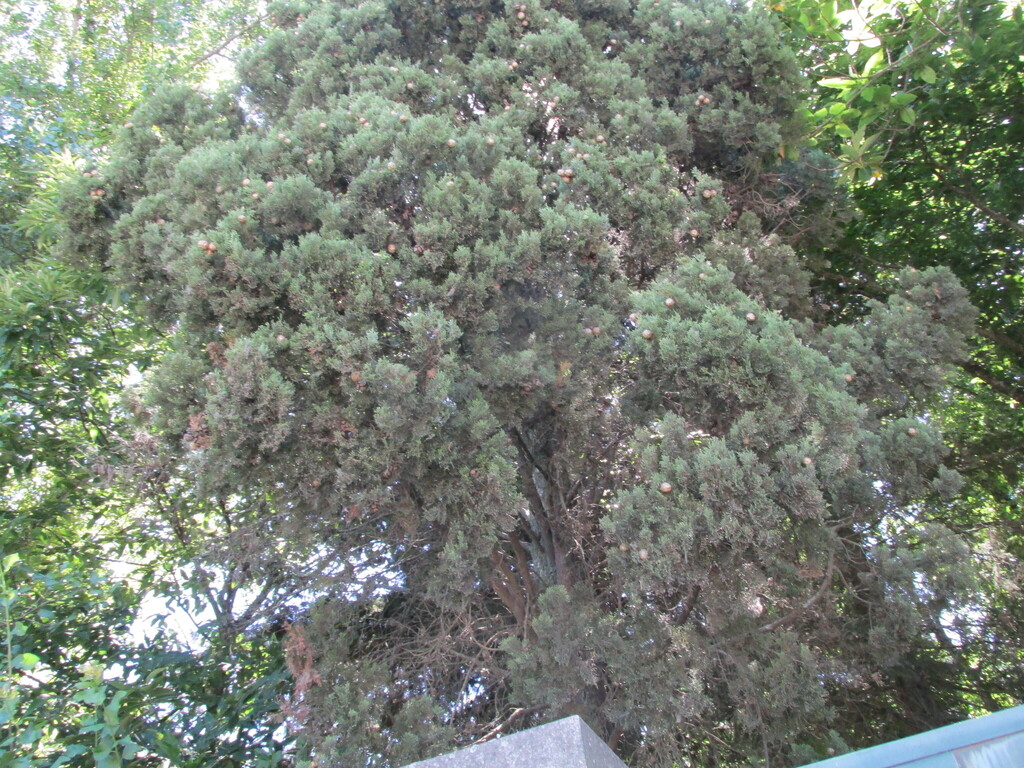
The Monterey cypress is a beautiful evergreen conifer known for its bright, lemon scented foliage. It thrives in coastal environments and makes a striking specimen tree. You will love the vibrant color it adds to your garden throughout the year.
At a glance
- Care level
- Moderate
- Plant type
- Evergreen conifer
- Light
- Full sun to partial shade
- Indoor light
- Bright indirect
- Water
- Every 5 to 10 days
- Mature size
- 10 to 25 meters
- Growth rate
- Medium
- Hardiness
- USDA 7 to 10
- Bloom time
- Late winter to early spring
Care
Water regularly while the tree is young, then let the soil dry out between waterings once it is established, and never let it become soggy to prevent root rot. Provide plenty of bright light and good air circulation to keep the foliage healthy. Watch for browning needles which often indicate the plant is too dry or lacks sufficient light.
- Watering
- Water when the top inch of soil feels dry to the touch.
- Feeding
- Apply a balanced liquid fertilizer during the active growing season.
- Pruning
- Lightly trim in late spring to maintain the desired shape and density.
- Repotting
- Repot every few years when the roots begin to crowd the container.
- Soil
- Well draining sandy or loamy soil
- Soil pH
- Neutral to slightly acidic
- Temperature
- -7 to 35°C
- Humidity
- 40 to 70%
- Drought tolerance
- High
- Lifespan
- Perennial, typically 50 to 100 years in cultivation.
- Fragrance
- Strong
- Deer and rabbits
- Moderate
Signs it needs repotting
- Roots growing out of the drainage holes.
- Water running straight through the pot without soaking in.
Safety
- People
- The plant is generally considered non toxic but the sap can cause skin irritation in sensitive individuals.
- Pets
- This plant is generally considered non toxic to cats and dogs.
- Children
- The small, hard cones may pose a choking hazard if swallowed by small children.
- Contact allergens
- Contact with the foliage or sap may cause mild skin irritation for some people.
- Airborne allergens
- The pollen can be a significant allergen for those sensitive to conifer pollen during the spring.
- Edibility
- The foliage and cones are not for human consumption and can cause digestive upset if ingested.
How to identify it
- Bright yellow green needle like foliage
- Distinctive lemon fragrance when crushed
- Small woody cones
- Upright columnar growth habit
- Height
- 10 to 25m
- Spread
- 3 to 8m
- Leaves
- dark green, evergreen
- Flowers
- yellow, 0.5 to 1cm
- Fruit
- brown, Autumn
Problems to watch for
- CankerCommon
- Spider MitesCommon
- PhytophthoraUncommon
- Root RotUncommon
- Scale InsectsUncommon
- Twig BlightUncommon
- Leaf ScorchRare
- Salt StressRare
Check your blue cypress from a photo
Pocket Botanist looks at a photo of your plant and tells you what's wrong and what to try first.
Scan with your phone's camera to get the app
Or go to pocketbotanist.app/get on your phone
Growing it
- Propagation
- seed, cuttings
- When to plant
- autumn, spring
- Overwintering
- Ensure the soil is well drained to prevent root rot during wet winters. Protect young trees from heavy snow loads that might break branches.
- In containers
- It is not recommended for containers as it quickly outgrows any standard pot size.
Seed
- 1. Collect cones in autumn.
- 2. Dry cones until they open.
- 3. Sow seeds in well draining soil.
- 4. Keep moist until germination.
Plant in groups to create a natural windbreak that mimics its native coastal habitat.
Grows well with
- California Poppy · They share similar environmental needs and provide a nice color contrast.
- Ceanothus · These shrubs thrive in the same coastal conditions and attract pollinators.
Similar species
- Leyland Cypress · Often used as a faster growing alternative for hedging.
- Monterey Pine · Shares the same native coastal range and habitat requirements.
Science
- Family
- Cupressaceae
- Genus
- Cupressus
- Order
- Pinales
- Class
- Pinopsida
- Native range
- Coastal central California, USA.
- Conservation
- This species is considered vulnerable in its limited native range due to habitat loss and disease.
It thrives in cool, foggy coastal environments where it withstands salt spray and strong winds.
- Value to wildlife
- provides nesting cover, seeds for birds
- Pollinators
- bees, beetles
- Uses
- windbreak, ornamental specimen, coastal hedge
Through the year
Ecological indicators
- Light
- 8/9
- Temperature
- 6/9
- Nutrients
- 4/9
- Salinity
- 7/9
- Soil reaction
- 6/9
- Moisture
- 4/9
Taxonomy resolved against GBIF.
Questions people ask
- Can I grow this in a pot?
- It is not well suited for long term container growth due to its massive size.
- How often should I water it?
- Water regularly until established, then it becomes quite drought tolerant.
Where the name comes from
The specific epithet macrocarpa refers to the large cones compared to other cypress species.
Good to know
- It is native to only two small groves on the Monterey Peninsula in California.
- The wood is highly resistant to rot and was historically used for boat building.
- It grows very quickly when young, often adding several feet per year.
Also in
Keep your blue cypress growing
This page is a general guide. Save your plant in Pocket Botanist and you get care reminders timed for this plant, plus a care history that shows what worked.
Scan with your phone's camera to get the app
Or go to pocketbotanist.app/get on your phone
This guide was generated with AI on and checked against GBIF taxonomy. It is general information, not horticultural or veterinary advice. Read about how we build these guides.