 Pocket Botanist
Plant guide
False heather.
Cuphea hyssopifolia
Pronounced KOO-fee-uh hiss-oh-pih-FOH-lee-uh
Also known as False Heather, Mexican-heather



Scan with your phone's camera to get the app
Or go to pocketbotanist.app/get on your phone
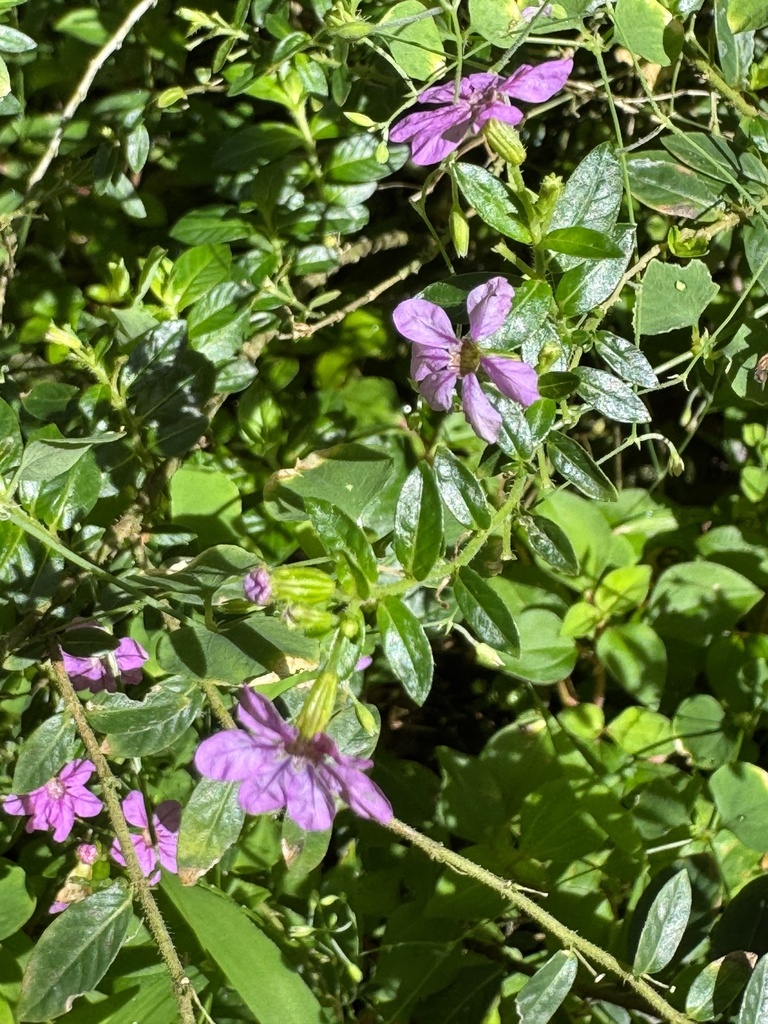
This charming plant is a small, evergreen shrub that produces tiny, bell shaped flowers. It is a favorite for borders or containers because of its neat, mounding habit. You will love how it brings a touch of delicate color to your garden space.

At a glance
- Care level
- Easy
- Plant type
- Subshrub
- Light
- Full sun to partial shade
- Indoor light
- Bright indirect
- Water
- Every 3 to 7 days
- Mature size
- 2 feet tall and wide
- Growth rate
- Medium
- Hardiness
- USDA 8 to 11
- Bloom time
- Spring to fall
Care
Keep the soil consistently moist but never waterlogged to ensure the best blooms. Watch for yellowing leaves, which often signal that the soil is staying too wet. A light trim after flowering helps maintain its tidy shape.
- Watering
- Water whenever the top inch of soil feels dry to the touch.
- Feeding
- Apply a balanced liquid fertilizer once a month during the active growing season.
- Pruning
- Lightly prune after flowering periods to encourage bushier growth.
- Repotting
- Repot in the spring if the plant becomes root bound in its container.
- Soil
- Well draining, fertile loam
- Soil pH
- 6.0 to 7.0
- Temperature
- 5 to 35°C
- Humidity
- 40 to 70%
- Drought tolerance
- Moderate
- Lifespan
- Perennial, typically 3 to 5 years
- Deer and rabbits
- Moderate
Signs it needs repotting
- Roots growing out of the drainage holes
- Water running straight through the pot
- Stunted growth during the active season
Safety
- People
- It is generally considered non-toxic, but ingestion should be avoided.
- Pets
- This plant is generally considered non toxic to cats and dogs.
- Children
- The small flowers could pose a minor choking hazard to very young children if placed in the mouth.
- Edibility
- This plant is not intended for consumption and may cause digestive upset if ingested.
How to identify it
- Small, fern like evergreen foliage
- Tiny, bell shaped pink or purple flowers
- Dense, mounding growth habit
- Narrow, lance shaped leaves
- Height
- 0.3 to 0.6m
- Spread
- 0.3 to 0.9m
- Leaves
- green, evergreen
- Flowers
- purple, pink, white, 1 to 2cm
Problems to watch for
- Aphids · Small insects that cluster on new growth and suck plant sap.
- Root rot · Occurs when soil stays too wet for too long, causing roots to decay.
Check your false heather from a photo
Pocket Botanist looks at a photo of your plant and tells you what's wrong and what to try first.
Scan with your phone's camera to get the app
Or go to pocketbotanist.app/get on your phone
Growing it
- Propagation
- cuttings, seed
- When to plant
- spring
- Overwintering
- In colder regions, bring your container plants indoors before the first frost. Keep them in a bright, cool spot and water sparingly until spring.
- In containers
- It is excellent for containers and hanging baskets, provided the pot has good drainage and is at least 20 centimeters wide.
Stem cuttings
- 1. Take a 10 centimeter cutting from healthy, non-flowering growth.
- 2. Remove the lower leaves.
- 3. Dip the cut end in rooting hormone.
- 4. Place in moist potting mix and keep in bright, indirect light.
Pair this with other heat-loving plants that appreciate consistent moisture to keep your garden beds looking uniform.
Grows well with
- Lantana · They share similar water and sun requirements.
- Pentas · They both attract pollinators and thrive in the same warm conditions.
Similar species
- Cigar plant · It is a close relative with distinct tubular flowers.
Science
- Family
- Lythraceae
- Genus
- Cuphea
- Order
- Myrtales
- Class
- Magnoliopsida
- Native range
- Mexico, Guatemala, and Honduras
- Conservation
- This plant is not currently threatened in its native range.
It grows naturally in moist, open areas and forest edges where it can spread easily.
- Value to wildlife
- nectar source
- Pollinators
- bees, butterflies
- Uses
- container plant, border edging, mass planting
Through the year
Ecological indicators
- Salinity
- 2/9
- Soil reaction
- 6/9
- Light
- 7/9
- Temperature
- 8/9
- Moisture
- 6/9
- Nutrients
- 5/9
Taxonomy resolved against GBIF.
Questions people ask
- Does it need full sun?
- It prefers full sun to partial shade for the best flowering.
- Can I grow it indoors?
- Yes, it makes a lovely houseplant if placed in a very bright window.
Where the name comes from
The name Cuphea refers to the curved shape of the seed pods, while hyssopifolia describes the leaves which look like those of the herb hyssop.
Good to know
- It is often called the Mexican heather.
- The genus name Cuphea comes from the Greek word for curved, referring to the shape of the seed capsule.
- It thrives in warm, humid climates.
- It is a very popular choice for hanging baskets.
Keep your false heather growing
This page is a general guide. Save your plant in Pocket Botanist and you get care reminders timed for this plant, plus a care history that shows what worked.
Scan with your phone's camera to get the app
Or go to pocketbotanist.app/get on your phone
This guide was generated with AI on and checked against GBIF taxonomy. It is general information, not horticultural or veterinary advice. Read about how we build these guides.