 Pocket Botanist
Plant guide
Cannonball tree.
Couroupita guianensis
Pronounced koo-roo-PEE-tuh gee-uh-NEN-sis
Also known as Cannonball Tree, cannonball-tree



Scan with your phone's camera to get the app
Or go to pocketbotanist.app/get on your phone
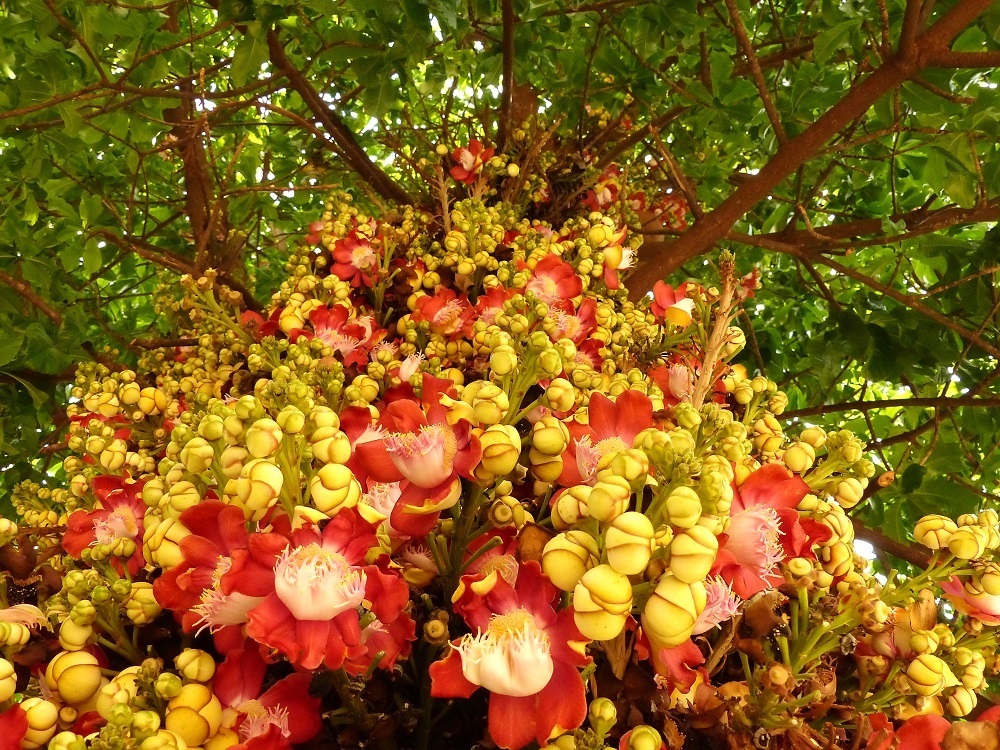
The cannonball tree is a striking tropical specimen known for its large, woody fruits that resemble rusty cannonballs. It produces fragrant, showy flowers directly on the trunk. This tree is truly a conversation starter in any large tropical landscape.
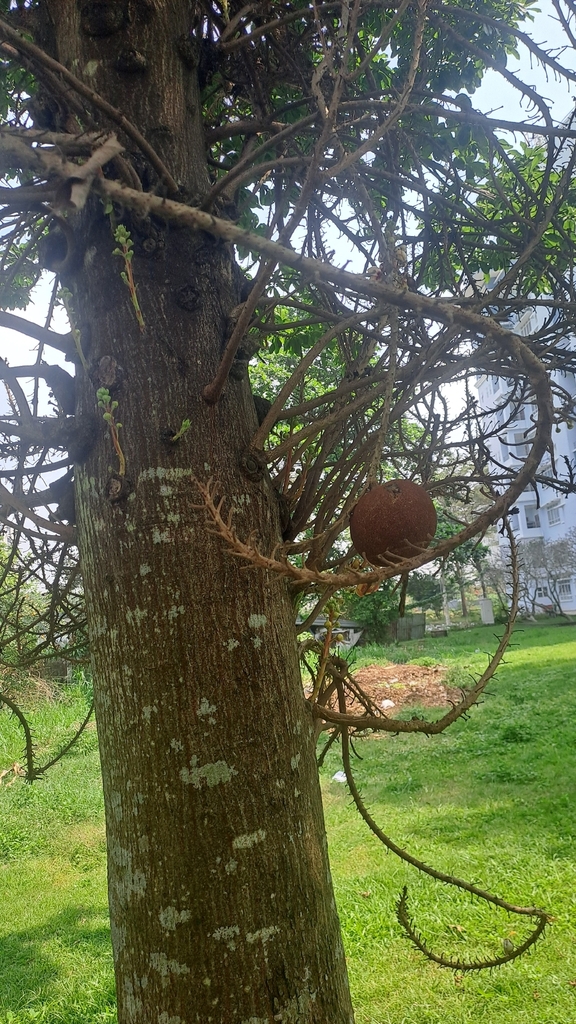
At a glance
- Care level
- Moderate
- Plant type
- Deciduous tree
- Light
- Full sun
- Indoor light
- Direct sun
- Water
- Every 2 to 4 days
- Mature size
- 25 to 35 meters
- Growth rate
- Fast
- Hardiness
- USDA 10 to 12
- Bloom time
- Year round in tropical climates
Care
Plant this tree in a location with plenty of space to accommodate its massive size. Keep the soil consistently moist and watch for signs of leaf drop if the environment becomes too dry. Ensure it is protected from frost as it is strictly a tropical plant.
- Watering
- Keep the soil evenly moist but avoid waterlogging the roots.
- Feeding
- Apply a balanced fertilizer during the active growing season.
- Pruning
- Remove dead or damaged branches once a year to maintain tree health.
- Repotting
- Repot only while the tree is young, as it eventually requires permanent ground planting.
- Soil
- Rich, well-draining soil
- Soil pH
- 6.0 to 7.5
- Temperature
- 15 to 35°C
- Humidity
- 60 to 90%
Safety
- People
- The fruit pulp is generally considered safe, but the plant is not typically used for food.
- Children
- The heavy, woody fruits can pose a significant injury risk if they fall on a child.
- Contact allergens
- The sap can cause mild skin irritation in sensitive individuals.
- Airborne allergens
- There are no notable airborne allergens associated with this tree.
- Edibility
- The fruit pulp is edible but can have a very unpleasant odor that discourages consumption.
How to identify it
- Large woody spherical fruits
- Fragrant pink and yellow flowers
- Flowers grow directly on trunk
- Large deciduous leathery leaves
- Height
- 15 to 35m
- Spread
- 8 to 15m
- Leaves
- green, deciduous
- Flowers
- pink, red, yellow, 5 to 10cm
- Fruit
- brown, Year round
Problems to watch for
- Root RotCommon
- CaterpillarsUncommon
- Leaf SpotUncommon
- MealybugsUncommon
- Scale InsectsUncommon
- Sooty MoldUncommon
- ChlorosisRare
- Stem BorersRare
Check your cannonball tree from a photo
Pocket Botanist looks at a photo of your plant and tells you what's wrong and what to try first.
Scan with your phone's camera to get the app
Or go to pocketbotanist.app/get on your phone
Growing it
- Propagation
- seed, cuttings
- When to plant
- spring, summer
Plant in a large, open space where the falling fruit will not damage other plants or structures.
Grows well with
- Heliconia · These thrive in the same high humidity and light conditions.
Similar species
- Brazil Nut · Both are large tropical trees in the Lecythidaceae family.
Science
- Family
- Lecythidaceae
- Genus
- Couroupita
- Order
- Ericales
- Class
- Magnoliopsida
- Native range
- Tropical South America and the Caribbean.
- Conservation
- This species is not currently listed as endangered in its native range.
It grows in humid tropical rainforests where it relies on large bees for pollination.
- Value to wildlife
- nectar source
- Pollinators
- bees
- Uses
- ornamental specimen, botanical garden feature
Through the year
Ecological indicators
- Salinity
- 1/9
- Soil reaction
- 6/9
- Light
- 8/9
- Temperature
- 9/9
- Moisture
- 7/9
- Nutrients
- 6/9
Taxonomy resolved against GBIF.
Questions people ask
- Can I grow this in a pot?
- It is generally too large for container culture unless you have a massive conservatory.
- Why does the fruit smell bad?
- The pulp contains compounds that produce a strong, fermented odor when exposed to air. Animals such as peccaries eat the fruit and help disperse the seeds.
Where the name comes from
The name Couroupita comes from a local Guianan name, while guianensis refers to the Guiana region.
Good to know
- The flowers are highly fragrant, especially at night.
- It is often planted near Buddhist temples in Asia.
- The tree is native to the rainforests of South America.
- The flowers have a complex structure that requires large bees for pollination.
Keep your cannonball tree growing
This page is a general guide. Save your plant in Pocket Botanist and you get care reminders timed for this plant, plus a care history that shows what worked.
Scan with your phone's camera to get the app
Or go to pocketbotanist.app/get on your phone
This guide was generated with AI on and checked against GBIF taxonomy. It is general information, not horticultural or veterinary advice. Read about how we build these guides.