 Pocket Botanist
Plant guide
Pampas Grass.
Cortaderia selloana
Pronounced kor-tuh-DARE-ee-uh sel-loh-AH-nuh
Also known as Common Pampas Grass, Pampas, Pampas Grass, Pampas-grass, Papas Grass, Uruguayan pampas grass



Scan with your phone's camera to get the app
Or go to pocketbotanist.app/get on your phone
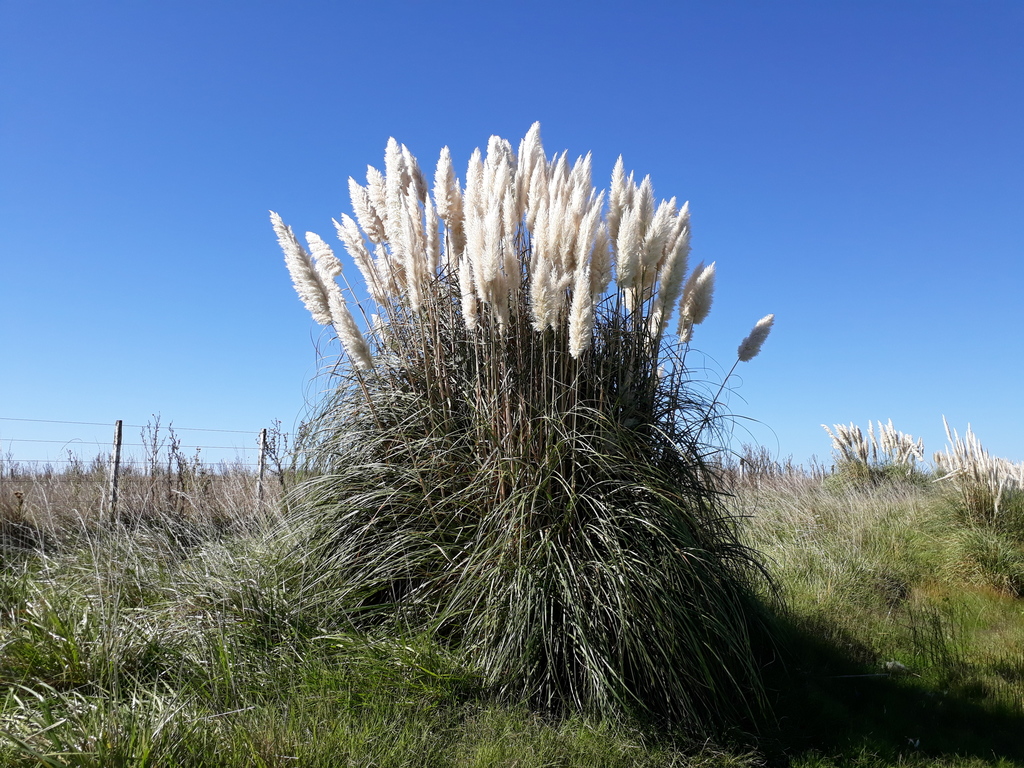
Pampas grass is a tall, clumping ornamental grass known for its dramatic, feathery plumes. It creates a striking focal point in large landscapes. This plant is quite tough once it gets established.

At a glance
- Care level
- Easy
- Plant type
- Perennial grass
- Light
- Full sun
- Indoor light
- Direct sun
- Water
- Every 7 to 14 days
- Mature size
- 300cm tall and 200cm wide
- Growth rate
- Fast
- Hardiness
- USDA 7 to 10
- Bloom time
- Late summer to mid autumn
Care
Plant in a spot with plenty of room to spread. Cut the foliage back to about 30cm in late winter to encourage fresh spring growth. Watch for brown, dead leaves in the center of the clump as the plant matures.
- Watering
- Water deeply during the first year to establish roots, then it becomes quite drought tolerant.
- Feeding
- Apply a balanced, slow release fertilizer in early spring as new growth begins.
- Pruning
- Cut the entire plant back to about 30cm in late winter before new growth emerges.
- Repotting
- It is best grown in the ground, but if kept in a container, repot when it becomes root bound.
- Soil
- Well draining, fertile soil
- Soil pH
- 6.0 to 7.5
- Temperature
- -12 to 35°C
- Humidity
- 30 to 70%
- Drought tolerance
- High
- Lifespan
- Perennial, typically 10 to 15 years
- Deer and rabbits
- High
Signs it needs repotting
- Roots growing out of the drainage holes
- Water sitting on the surface for too long
- Plant growth slowing significantly
Safety
- People
- The plant is not considered toxic but the leaves can cause severe mechanical injury.
- Pets
- The sharp, serrated leaf edges can cause physical injury to pets, though it is not chemically toxic.
- Children
- Keep children away from the foliage as the razor sharp edges can cause painful lacerations.
- Contact allergens
- The leaf margins are serrated like a saw and can cause deep cuts to skin.
- Airborne allergens
- The large plumes produce significant amounts of windborne pollen that may trigger hay fever.
- Edibility
- This plant is not edible and the foliage is extremely sharp.
How to identify it
- Tall, arching, razor sharp leaf blades
- Large, silky, plume like flower heads
- Dense, clumping growth habit
- Silvery white to pinkish flower color
- Height
- 2 to 3.5m
- Spread
- 1 to 2m
- Leaves
- green, blue-green, evergreen
- Flowers
- white, cream, pink, 30 to 90cm
- Fruit
- brown, Late autumn
Problems to watch for
- Root RotCommon
- Brown Leaf EdgesUncommon
- Leaf ScorchUncommon
- RustUncommon
Check your pampas grass from a photo
Pocket Botanist looks at a photo of your plant and tells you what's wrong and what to try first.
Scan with your phone's camera to get the app
Or go to pocketbotanist.app/get on your phone
Growing it
- Propagation
- division, seed
- When to plant
- spring, early autumn
- Overwintering
- In colder regions, tie the foliage together to protect the crown from moisture. Cut back the dead foliage in late winter before new growth begins.
- In containers
- It is generally too large for standard containers, but can be grown in very large tubs for a few years.
Division
- 1. Dig up the entire clump in spring.
- 2. Use a sharp spade or saw to divide the root ball into smaller sections.
- 3. Replant the divisions immediately in well draining soil.
Plant this grass as a focal point with lower growing perennials around the base to hide the sharp lower foliage.
Grows well with
- Russian Sage · The airy blue flowers contrast beautifully with the bold plumes of the grass.
- Coneflower · These perennials enjoy similar sun exposure and soil conditions.
Similar species
- Ravenna Grass · It is a similar large ornamental grass that is often used as a substitute.
Science
- Family
- Poaceae
- Genus
- Cortaderia
- Order
- Poales
- Class
- Liliopsida
- Native range
- Southern South America
- Conservation
- It is considered an invasive species in several parts of the world, including California and New Zealand.
It thrives in open grasslands where its deep roots help it survive periods of drought.
- Value to wildlife
- provides nesting material, offers winter cover
- Pollinators
- bees, butterflies
- Uses
- ornamental grass, privacy screen, dried flower arrangements
Through the year
Ecological indicators
- Soil reaction
- 6/9
- Light
- 8/9
- Moisture
- 4/9
- Salinity
- 3/9
- Temperature
- 6/9
- Nutrients
- 4/9
Taxonomy resolved against GBIF.
Questions people ask
- How do I prune it?
- Cut the foliage back to about 30 centimeters in late winter while wearing heavy gloves.
- Does it need full sun?
- Yes, it performs best in a spot with full sun and well draining soil.
Where the name comes from
The genus name Cortaderia comes from the Argentine word cortadera, meaning cutter, referring to the sharp leaves. The species name honors the German botanist Friedrich Sello.
Good to know
- The plumes can reach up to 3 meters in height.
- It was introduced to Europe in the 19th century as an ornamental.
- The name comes from the Pampas region of South America.
Also in
Keep your pampas grass growing
This page is a general guide. Save your plant in Pocket Botanist and you get care reminders timed for this plant, plus a care history that shows what worked.
Scan with your phone's camera to get the app
Or go to pocketbotanist.app/get on your phone
This guide was generated with AI on and checked against GBIF taxonomy. It is general information, not horticultural or veterinary advice. Read about how we build these guides.