 Pocket Botanist
Plant guide
Blue Mistflower.
Conoclinium coelestinum
Pronounced koh-no-KLIN-ee-um seh-LESS-tin-um
Also known as blue boneset, blue mist-flower, blue mistflower, mistflower, Perennial ageratum



Scan with your phone's camera to get the app
Or go to pocketbotanist.app/get on your phone
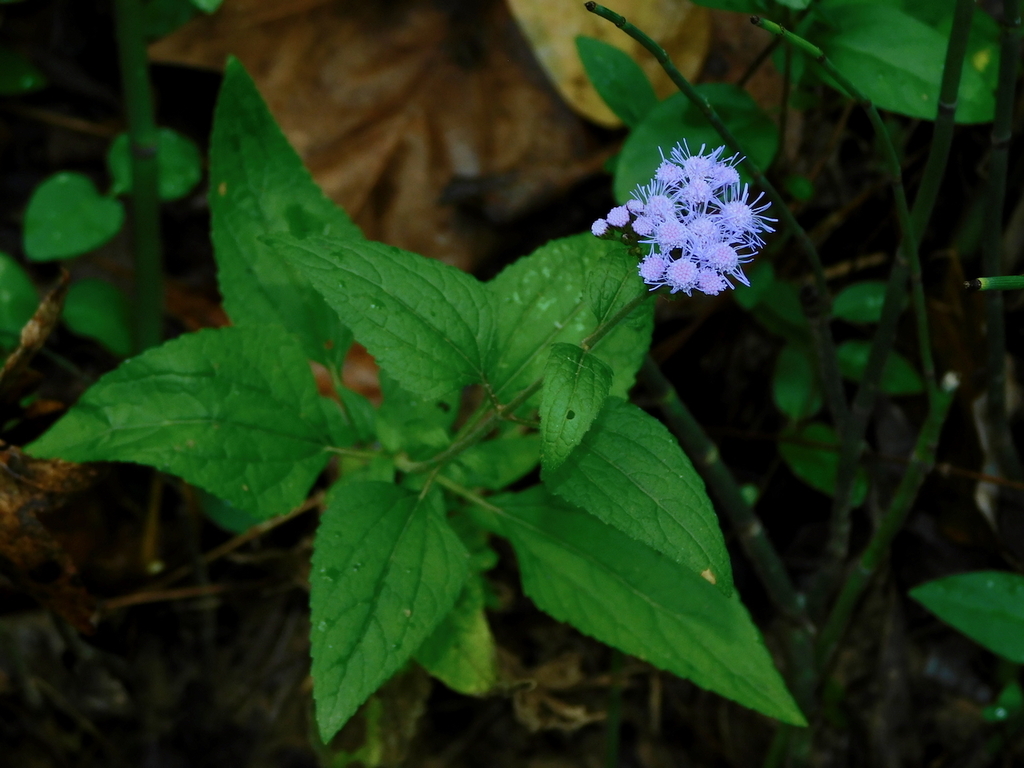
Blue Mistflower is a charming native perennial that brings a soft, airy feel to garden beds. It produces clusters of fuzzy, violet blue flowers that look like tiny pom poms. You will love how it attracts butterflies and pollinators to your yard in late summer.
At a glance
- Care level
- Easy
- Plant type
- Perennial
- Light
- Full sun to partial shade
- Indoor light
- Bright indirect
- Water
- Every 3 to 7 days
- Mature size
- 3 feet tall
- Growth rate
- Fast
- Hardiness
- USDA 5 to 10
- Bloom time
- Late summer to mid autumn
Care
Keep the soil consistently moist as this plant thrives in damp conditions. Watch for wilting during dry spells, which signals it needs a good soak. It spreads quickly, so you might want to divide it if it starts taking over your garden space.
- Watering
- Keep the soil evenly moist and never let it dry out completely.
- Feeding
- Apply a balanced organic fertilizer once in early spring to support healthy growth.
- Pruning
- Cut the stems back to the ground in late winter or early spring to tidy up the plant.
- Repotting
- Divide the rhizomes every couple of years to keep the plant vigorous and prevent overcrowding.
- Soil
- Moist, well draining soil
- Soil pH
- 6.0 to 7.5
- Temperature
- -29 to 35°C
- Humidity
- 40 to 80%
- Drought tolerance
- Moderate
- Lifespan
- Perennial, typically 5 to 10 years.
- Deer and rabbits
- Moderate
Signs it needs repotting
- Roots growing out of the drainage holes.
- Water sitting on the surface instead of soaking in.
- Stunted growth during the active season.
Safety
- People
- The plant contains pyrrolizidine alkaloids which can be harmful if ingested in large quantities.
- Children
- Keep away from small children as the plant is not edible and may cause irritation.
- Contact allergens
- Handling the foliage may cause mild skin irritation in sensitive individuals.
- Airborne allergens
- The pollen can trigger seasonal allergies for those sensitive to aster family plants.
- Edibility
- This plant is not intended for consumption and may cause digestive upset.
How to identify it
- Fuzzy violet blue flower clusters
- Opposite triangular to heart shaped leaves
- Toothed leaf margins
- Stems often tinged with purple
- Spreads via underground rhizomes
- Height
- 0.45 to 0.9m
- Spread
- 0.3 to 0.6m
- Leaves
- medium green, deciduous
- Flowers
- blue, violet, lavender, 1 to 2cm
Problems to watch for
- Powdery mildew · A white fungal growth appears on leaves during periods of high humidity and poor airflow.
Check your blue mistflower from a photo
Pocket Botanist looks at a photo of your plant and tells you what's wrong and what to try first.
Scan with your phone's camera to get the app
Or go to pocketbotanist.app/get on your phone
Growing it
- Propagation
- division, seed, cuttings
- When to plant
- spring, autumn
- Overwintering
- Cut the stems back to the ground after the first hard frost. A light layer of mulch helps protect the roots in colder climates.
- In containers
- It grows well in containers, but use a large pot to accommodate its spreading roots.
Division
- 1. Dig up the clump in early spring.
- 2. Use a sharp spade to divide the root mass into smaller sections.
- 3. Replant the divisions immediately at the same depth.
Plant in groups to create a dense drift that suppresses weeds and supports local pollinators.
Grows well with
- Goldenrod · The yellow blooms provide a beautiful color contrast to the blue mistflower.
- New England Aster · They bloom at the same time and share similar moisture requirements.
- Joe Pye Weed · These tall plants provide a nice structural backdrop for the lower growing mistflower.
Similar species
- Hardy Ageratum · It is a western relative with similar flower structure but higher drought tolerance.
Science
- Family
- Asteraceae
- Genus
- Conoclinium
- Order
- Asterales
- Class
- Magnoliopsida
- Native range
- Eastern and central United States.
- Conservation
- It is secure throughout its native range and is not currently threatened.
It colonizes moist meadows and woodland edges by spreading through its extensive root system.
- Value to wildlife
- nectar source, late season food
- Pollinators
- bees, butterflies, moths
- Uses
- pollinator gardens, rain gardens, meadow plantings, naturalizing
Through the year
Ecological indicators
- Salinity
- 2/9
- Soil reaction
- 6/9
- Light
- 7/9
- Temperature
- 6/9
- Moisture
- 7/9
- Nutrients
- 5/9
Taxonomy resolved against GBIF.
Questions people ask
- Is this plant invasive?
- It can be quite vigorous and spread quickly, so give it plenty of room or use it in areas where it can naturalize.
- Does it need full sun?
- It prefers full sun but will handle partial shade quite well.
Where the name comes from
The name Conoclinium comes from the Greek words for cone and bed, referring to the shape of the flower receptacle. Coelestinum means sky blue, describing the lovely flower color.
Good to know
- It spreads aggressively by underground rhizomes.
- The flowers are a magnet for late season butterflies like monarchs.
- It thrives in moist soil where other plants might struggle.
Keep your blue mistflower growing
This page is a general guide. Save your plant in Pocket Botanist and you get care reminders timed for this plant, plus a care history that shows what worked.
Scan with your phone's camera to get the app
Or go to pocketbotanist.app/get on your phone
This guide was generated with AI on and checked against GBIF taxonomy. It is general information, not horticultural or veterinary advice. Read about how we build these guides.