 Pocket Botanist
Plant guide
Whitemouth dayflower.
Commelina erecta
Pronounced kom-uh-LY-nuh ee-REK-tuh
Also known as Blousel Blommetjie, Blue Commelina, Coastal Blue Dayflower, Erect Dayflower, Slender Dayflower, Water Grass, Waterweed, White Mouth Dayflower



Scan with your phone's camera to get the app
Or go to pocketbotanist.app/get on your phone
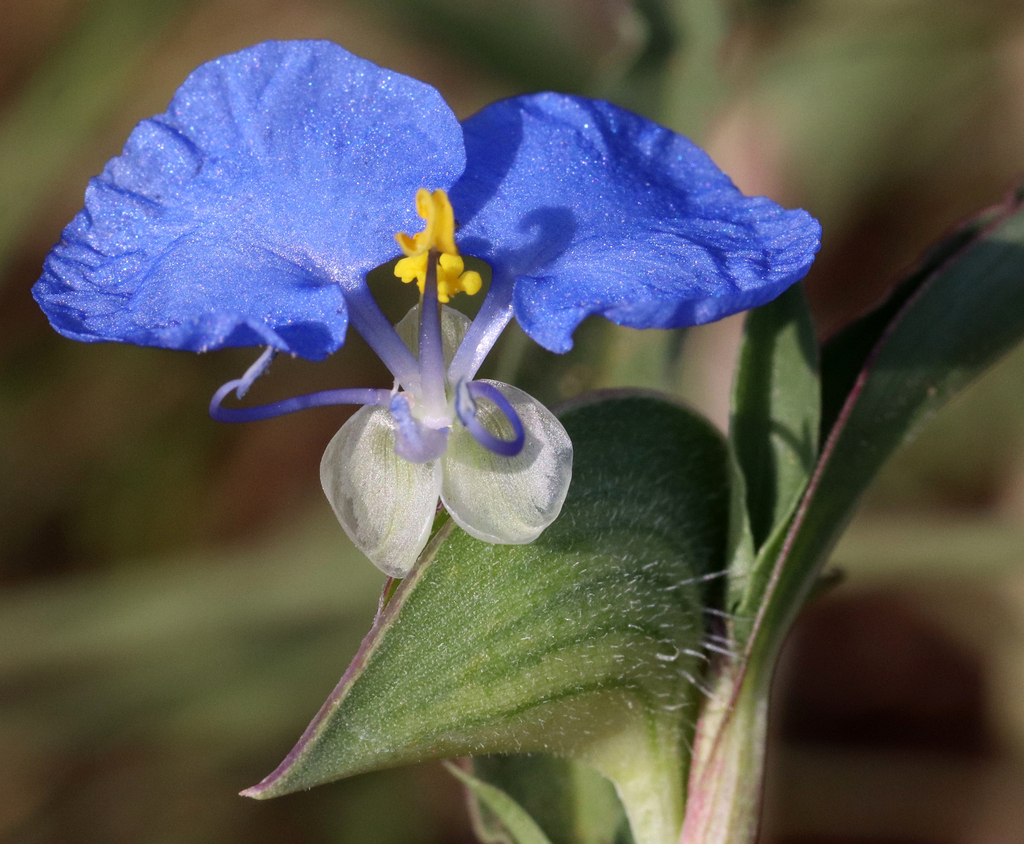
The whitemouth dayflower is a charming perennial herb that produces delicate blue flowers. It thrives in various environments, from open woods to sandy soils. You will find it adds a lovely touch of color to natural landscapes.

At a glance
- Care level
- Easy
- Plant type
- Perennial herb
- Light
- Partial shade to full sun
- Indoor light
- Bright indirect
- Water
- Every 3 to 7 days
- Mature size
- 1 to 2 feet
- Growth rate
- Medium
- Hardiness
- USDA 6 to 10
- Bloom time
- Late spring to early autumn
Care
Let the top of the soil dry out between waterings to mimic its natural habitat of dry, sandy soils. Watch for yellowing leaves which often indicate the soil is staying too wet. It is a hardy plant that adapts well to most garden conditions.
- Watering
- Water when the top inch of soil feels dry to the touch.
- Feeding
- Use a balanced liquid fertilizer during the active growing season.
- Pruning
- Trim back leggy stems to encourage a bushier growth habit.
- Repotting
- Move to a slightly larger container once the roots fill the current pot.
- Soil
- Well draining sandy or loamy soil
- Soil pH
- 6.0 to 7.5
- Temperature
- -10 to 35°C
- Humidity
- 40 to 70%
- Drought tolerance
- Moderate
- Lifespan
- Perennial, typically 3 to 5 years.
- Deer and rabbits
- Moderate
Signs it needs repotting
- Roots growing out of the drainage holes.
- Water draining through the pot too quickly.
Safety
- People
- This plant is generally considered non-toxic, but ingestion is not recommended.
- Pets
- This plant is generally considered non toxic to cats and dogs.
- Children
- The plant is not known to be dangerous to children, but it is best to discourage them from eating garden plants.
- Contact allergens
- Contact with the sap may cause mild skin irritation in sensitive individuals.
- Airborne allergens
- There are no significant reports of respiratory allergies associated with this plant.
- Edibility
- While some Commelina species are eaten, this plant is not considered a standard food crop and should be avoided.
How to identify it
- Bright blue three petaled flowers
- Lance shaped alternate leaves
- Upright, clump-forming stems from thickened roots
- White lower petal is inconspicuous
- Height
- 0.2 to 0.6m
- Spread
- 0.3 to 0.9m
- Leaves
- green, deciduous
- Flowers
- blue, 1 to 3cm
Problems to watch for
- Aphids · Small insects that may cluster on new growth and flower buds.
Check your whitemouth dayflower from a photo
Pocket Botanist looks at a photo of your plant and tells you what's wrong and what to try first.
Scan with your phone's camera to get the app
Or go to pocketbotanist.app/get on your phone
Growing it
- Propagation
- division, seed
- When to plant
- spring, autumn
- Overwintering
- The foliage will die back after the first frost. You can trim the dead stems to the ground in late autumn or early spring.
- In containers
- It grows well in containers, provided the pot has good drainage and is at least 20 cm wide.
Division
- 1. Dig up the clump in early spring.
- 2. Gently pull the roots apart into smaller sections.
- 3. Replant immediately in moist soil.
Plant in groups to create a lush, meadow-like effect that supports local pollinators.
Grows well with
- Purple Coneflower · They share similar light and moisture requirements.
- Little Bluestem · This grass provides a nice textural contrast to the broad leaves.
Similar species
- Common Dayflower · It is a related species that is often considered more invasive.
Science
- Family
- Commelinaceae
- Genus
- Commelina
- Order
- Commelinales
- Class
- Liliopsida
- Native range
- Widespread across the Americas.
- Conservation
- It is widespread and not of conservation concern.
It thrives in open woods and sandy soils, often colonizing disturbed areas.
- Value to wildlife
- nectar source
- Pollinators
- bees, butterflies
- Uses
- native plant gardens, pollinator borders, ground cover
Through the year
Ecological indicators
- Salinity
- 2/9
- Soil reaction
- 5/9
- Light
- 6/9
- Temperature
- 6/9
- Moisture
- 5/9
- Nutrients
- 4/9
Taxonomy resolved against GBIF.
Questions people ask
- Does it need full sun?
- It prefers full sun to partial shade.
- Is it invasive?
- It can spread readily in ideal conditions but is native to much of North America.
Where the name comes from
The genus honors the Commelijn brothers, while the species name erecta refers to its upright growth habit.
Good to know
- The genus is named after the Commelijn brothers, Dutch botanists.
- The flowers have two large blue petals and one smaller, inconspicuous white petal.
- It is often called widow's tears because the flowers disappear so quickly.
Keep your whitemouth dayflower growing
This page is a general guide. Save your plant in Pocket Botanist and you get care reminders timed for this plant, plus a care history that shows what worked.
Scan with your phone's camera to get the app
Or go to pocketbotanist.app/get on your phone
This guide was generated with AI on and checked against GBIF taxonomy. It is general information, not horticultural or veterinary advice. Read about how we build these guides.