 Pocket Botanist
Plant guide
Asiatic dayflower.
Commelina communis
Pronounced kom-eh-LEE-nah kom-YOO-nis
Also known as Asian Dayflower, Asiatic Dayflower, Common Dayflower, Dayflower



Scan with your phone's camera to get the app
Or go to pocketbotanist.app/get on your phone
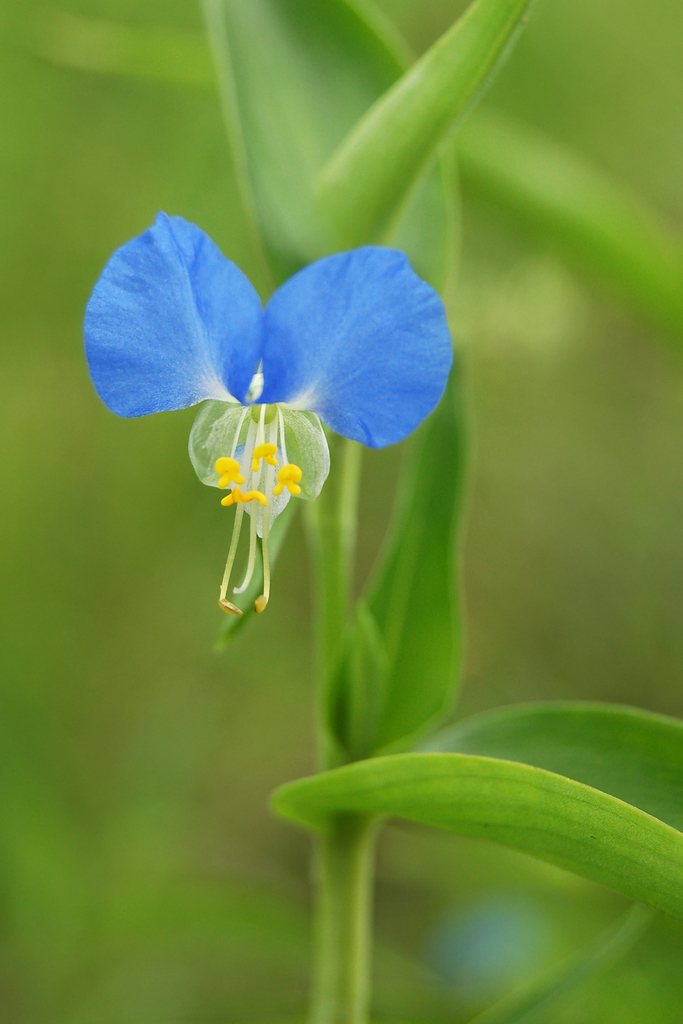
The Asiatic dayflower is a charming, sprawling plant known for its unique, bright blue blossoms. It often grows in moist, disturbed areas and can spread quite quickly in the right conditions. You will find that each delicate flower lasts for only a single day.
At a glance
- Care level
- Easy
- Plant type
- Annual herb
- Light
- Partial shade to full sun
- Indoor light
- Bright indirect
- Water
- Every 2 to 4 days
- Mature size
- 1 to 3 feet
- Growth rate
- Fast
- Hardiness
- USDA 3 to 9
- Bloom time
- Mid summer to early autumn
Care
Keep the soil consistently moist, as this plant loves water and will wilt if it dries out too much. Watch for yellowing leaves, which often signal that the soil has become too dry or the plant needs more nutrients. It is a vigorous grower, so feel free to trim it back if it starts taking over its space.
- Watering
- Keep the soil evenly moist but not waterlogged.
- Feeding
- Apply a balanced liquid fertilizer once a month during the growing season.
- Pruning
- Trim back leggy stems to encourage a bushier shape.
- Repotting
- Since it is typically grown as an annual, repotting is rarely necessary.
- Soil
- Moist, fertile, well draining soil
- Soil pH
- 6.0 to 7.5
- Temperature
- 5 to 30°C
- Humidity
- 40 to 70%
Safety
- People
- This plant is generally considered non-toxic but is not intended for consumption.
- Pets
- This plant is generally considered non toxic to cats and dogs.
- Children
- The plant is not inherently dangerous, but children should be discouraged from eating garden plants.
- Contact allergens
- Some individuals may experience mild skin irritation from handling the stems.
- Airborne allergens
- There are no notable reports of respiratory allergies associated with this plant.
- Edibility
- While young leaves are sometimes consumed in some cultures, they should be avoided due to potential accumulation of nitrates and lack of nutritional data.
How to identify it
- Bright blue petals with white centers
- Lance shaped, alternate green leaves
- Fleshy, branching stems
- Heart shaped green spathe bracts
- Height
- 0.2 to 0.6m
- Spread
- 0.3 to 0.9m
- Leaves
- green, deciduous
- Flowers
- blue, white, 1 to 3cm
- Fruit
- brown, autumn
Problems to watch for
- Aphids · Small insects that cluster on new growth and suck plant juices.
Check your asiatic dayflower from a photo
Pocket Botanist looks at a photo of your plant and tells you what's wrong and what to try first.
Scan with your phone's camera to get the app
Or go to pocketbotanist.app/get on your phone
Growing it
- Propagation
- seed
- When to plant
- spring
Plant it in areas where you do not mind it spreading, as it can quickly outcompete smaller, less vigorous neighbors.
Grows well with
Similar species
- Virginia Dayflower · It is a native North American relative that looks very similar.
Science
- Family
- Commelinaceae
- Genus
- Commelina
- Order
- Commelinales
- Class
- Liliopsida
- Native range
- Eastern Asia
- Conservation
- It is considered an invasive weed in many regions outside its native range.
It thrives in moist, disturbed soils, often colonizing roadsides and garden beds.
- Value to wildlife
- nectar source
- Pollinators
- bees, butterflies
- Uses
- ground cover, wildflower garden
Through the year
Ecological indicators
- Salinity
- 2/9
- Soil reaction
- 6/9
- Light
- 6/9
- Temperature
- 5/9
- Moisture
- 7/9
- Nutrients
- 6/9
Taxonomy resolved against GBIF.
Questions people ask
- Is it easy to grow?
- Yes, it is very vigorous and often grows as a volunteer in gardens.
- How do I control it?
- Hand pull it before it sets seed to prevent it from taking over.
Where the name comes from
The genus name honors the Dutch botanists Jan and Kaspar Commelin, while the specific epithet communis means common.
Good to know
- The flowers have two large blue petals and one small white petal.
- It is often called dayflower because the blooms last only a single day.
- It spreads aggressively by seed and rooting stems.
Keep your asiatic dayflower growing
This page is a general guide. Save your plant in Pocket Botanist and you get care reminders timed for this plant, plus a care history that shows what worked.
Scan with your phone's camera to get the app
Or go to pocketbotanist.app/get on your phone
This guide was generated with AI on and checked against GBIF taxonomy. It is general information, not horticultural or veterinary advice. Read about how we build these guides.