 Pocket Botanist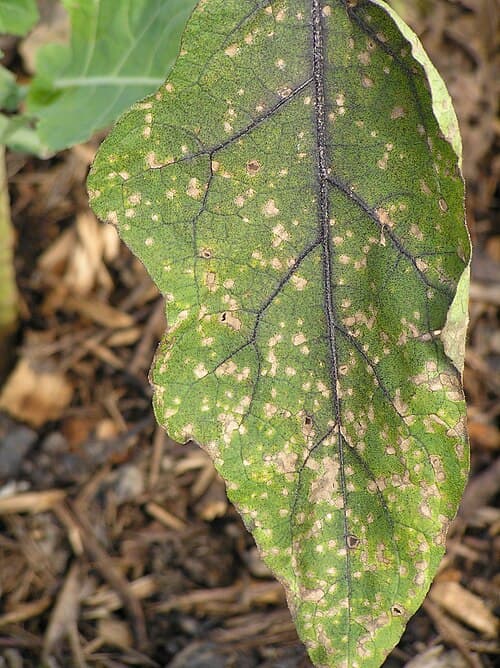

Check these first
- Inspect the undersides of leaves for fungal growth.
- Check if the spots are spreading to the stems.
- Verify if the plants are crowded or lack airflow.
Likely causes
Ascochyta blight
Most likelyHow to tell: You will see brown or black spots with a lighter center on leaves and stems. The stems may eventually snap or break at the site of the lesion.
What to do: Remove and destroy all infected plant parts immediately to stop the spread. Avoid overhead watering to keep the foliage dry, and ensure your plants have plenty of airflow.
Bacterial leaf spot
PossibleHow to tell: These spots appear as small, water soaked areas that turn dark brown or black. They often have a yellow halo around them.
What to do: Improve air circulation around your plants by spacing them further apart. Keep the leaves dry by watering at the base of the plant rather than from above.
When to worry
If the spots are spreading rapidly across the entire plant, it is likely too late to save it. Small, isolated spots can be managed by pruning.
Stopping it coming back
Always use certified disease free seeds and rotate your crops every 3 years to prevent soil borne fungi.
Not sure which one it is? Photograph your chickpea.
This page lists the usual causes. Pocket Botanist looks at your actual leaf and tells you the likely cause, how serious it is, and what to try first. Identification and a health check are free.


Questions people ask
- Can I eat chickpeas if the plant has spots?
- If the pods are healthy and free of spots, they are generally safe. However, do not harvest from plants that are heavily diseased.
- Will the spots go away on their own?
- No, fungal spots will not disappear. You must remove the affected parts to prevent the infection from killing the plant.
More problems with Chickpea
This article was generated with AI from the plant’s care profile and is general information, not horticultural advice. Read about how we build these guides.