 Pocket Botanist
Plant guide
Mexican orange blossom.
Choisya ternata
Pronounced CHOY-zee-uh ter-NAY-tuh
Also known as Mexican Mock Orange, Mexican Orange, Mexican Orange Blossom, Mexican-orange, Mexican-orangeblossom



Scan with your phone's camera to get the app
Or go to pocketbotanist.app/get on your phone

This lovely evergreen shrub brings a wonderful citrus scent to your garden with its white, star shaped flowers. It is a hardy plant that stays lush and green throughout the year. You will love how it fills your space with fragrance in the spring.
At a glance
- Care level
- Easy
- Plant type
- Evergreen shrub
- Light
- Full sun to partial shade
- Indoor light
- Bright indirect
- Water
- Every 7 to 14 days
- Mature size
- 6 to 8 feet
- Growth rate
- Medium
- Hardiness
- USDA 7 to 10
- Bloom time
- Late spring to early summer
Care
Plant it in well draining soil and keep it sheltered from harsh, drying winds. Watch for yellowing leaves which can indicate poor drainage or too much water. A light trim after flowering helps keep the shape tidy.
- Watering
- Water deeply when the top few inches of soil feel dry to the touch.
- Feeding
- Apply a balanced liquid fertilizer during the active growing season.
- Pruning
- Prune lightly immediately after flowering to encourage a bushier habit.
- Repotting
- Repot only when the roots have filled the container or the growth slows significantly.
- Soil
- Well draining, fertile loam
- Soil pH
- Neutral to slightly acidic
- Temperature
- -10 to 35°C
- Humidity
- 40 to 70%
- Drought tolerance
- Moderate
- Lifespan
- Perennial, typically 15 to 20 years
- Fragrance
- Strong
- Deer and rabbits
- Moderate
Signs it needs repotting
- Roots growing out of the drainage holes
- Water running straight through the pot without soaking in
Safety
- People
- All parts of the plant are considered toxic if ingested and may cause skin irritation upon contact.
- Pets
- This plant is considered toxic to cats and dogs if ingested.
- Children
- Keep this plant away from small children as ingestion of leaves or flowers can cause stomach upset.
- Contact allergens
- The sap can cause contact dermatitis in sensitive individuals.
- Airborne allergens
- The strongly scented flowers may trigger mild respiratory irritation in some people.
- Edibility
- This plant is not intended for consumption.
How to identify it
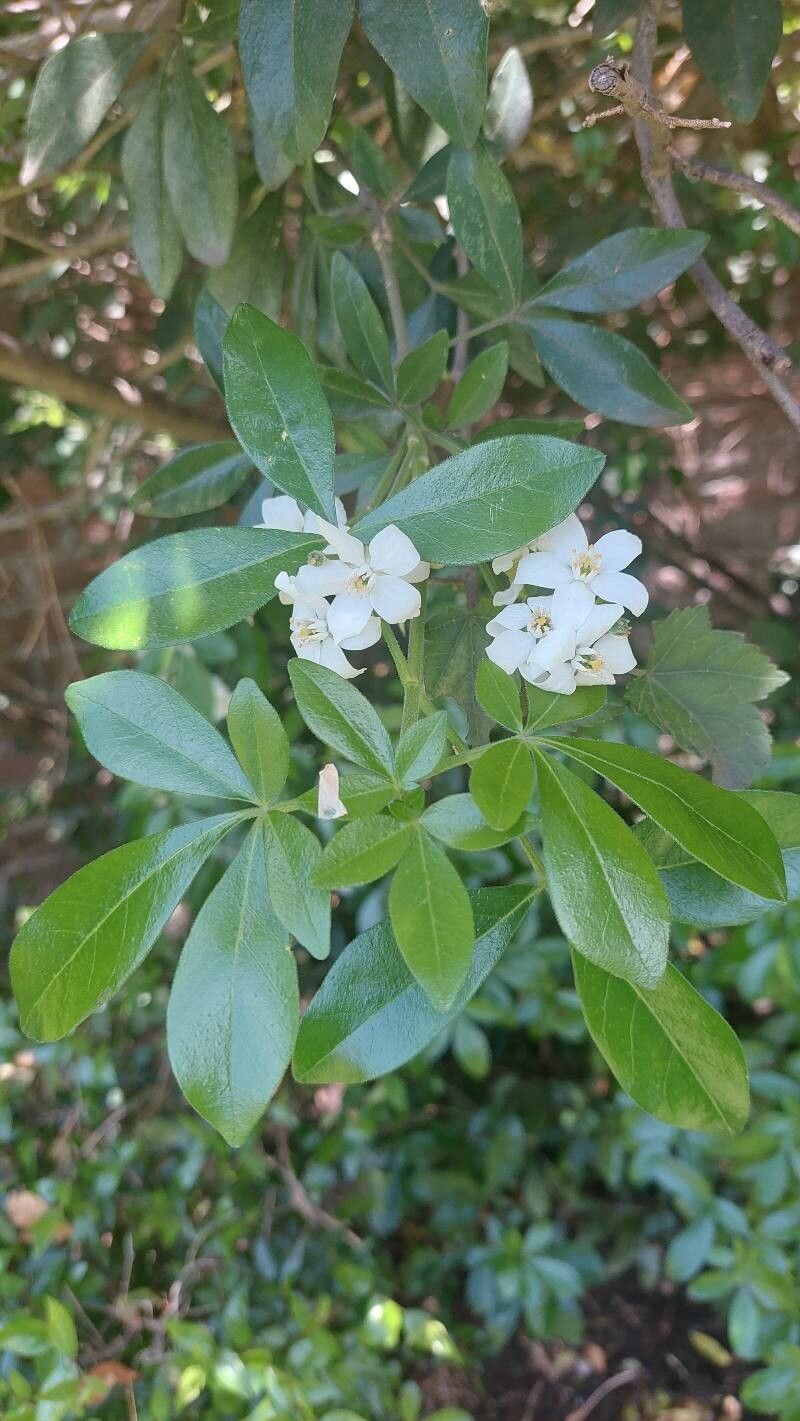
- Glossy, dark green trifoliate leaves
- Fragrant, white star shaped flowers
- Dense, rounded evergreen shrub habit
- Citrus scented foliage when crushed
- Height
- 1.5 to 2.5m
- Spread
- 1.5 to 2.5m
- Leaves
- dark green, evergreen
- Flowers
- white, 2 to 4cm
Problems to watch for
- Root rot · Occurs in poorly drained soils that stay too wet.
- Leaf spot · Fungal spots appearing on foliage during humid, stagnant conditions.
Check your mexican orange blossom from a photo
Pocket Botanist looks at a photo of your plant and tells you what's wrong and what to try first.
Scan with your phone's camera to get the app
Or go to pocketbotanist.app/get on your phone
Growing it
- Propagation
- cuttings
- When to plant
- spring, autumn
- Overwintering
- In colder regions, provide a thick layer of mulch around the base to protect roots. If grown in a pot, move it to a sheltered location or unheated greenhouse during hard freezes.
- In containers
- It grows well in large containers, provided they have excellent drainage and at least 40 liters of volume.
Semi-ripe cuttings
- Take 10cm cuttings in late summer.
- Remove lower leaves and dip the base in rooting hormone.
- Place in a pot with gritty compost and cover with a plastic bag.
- Keep in a bright spot out of direct sun until rooted.
Pair with plants that prefer similar neutral to slightly acidic, well drained soil conditions.
Grows well with
- Lavender · They share similar sun and drainage requirements.
- Cistus · These drought tolerant shrubs provide a nice textural contrast.
Similar species
- Choisya 'Aztec Pearl' · It has narrower, more delicate looking foliage.
Science
- Family
- Rutaceae
- Genus
- Choisya
- Order
- Sapindales
- Class
- Magnoliopsida
- Native range
- Highlands of Mexico.
- Conservation
- Not of conservation concern.
It grows as an understory shrub in its native habitat, relying on dappled light and well drained soils.
- Value to wildlife
- nectar source
- Pollinators
- bees, butterflies
- Uses
- ornamental shrub, hedging, container plant
Through the year
Ecological indicators
- Salinity
- 2/9
- Soil reaction
- 6/9
- Light
- 6/9
- Temperature
- 6/9
- Moisture
- 5/9
- Nutrients
- 5/9
Taxonomy resolved against GBIF.
Questions people ask
- Does it need full sun?
- It thrives in full sun but appreciates some afternoon shade in hotter climates.
- How often should I prune it?
- Prune lightly immediately after the main spring flowering to maintain shape.
Where the name comes from
The genus name Choisya honors the Swiss botanist Jacques Denis Choisy, while ternata refers to the leaves growing in threes.
Good to know
- It belongs to the Rutaceae family, the same family as citrus trees.
- The leaves are trifoliate, meaning they grow in groups of three.
- It can often produce a second, lighter flush of flowers in autumn.
Also in
Keep your mexican orange blossom growing
This page is a general guide. Save your plant in Pocket Botanist and you get care reminders timed for this plant, plus a care history that shows what worked.
Scan with your phone's camera to get the app
Or go to pocketbotanist.app/get on your phone
This guide was generated with AI on and checked against GBIF taxonomy. It is general information, not horticultural or veterinary advice. Read about how we build these guides.