 Pocket Botanist
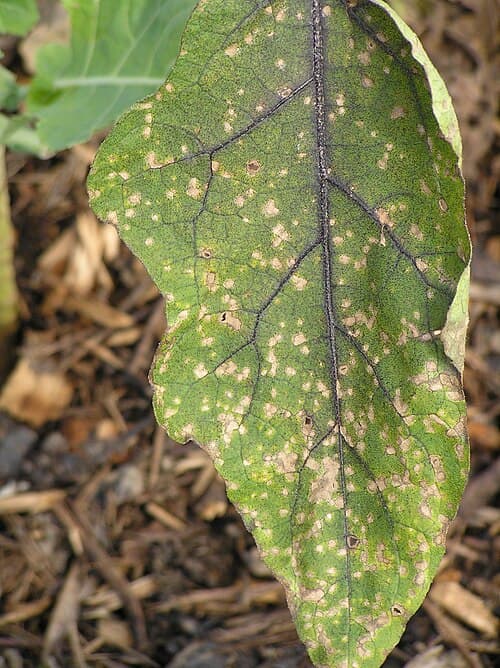

Check these first
- Check if the white patches rub off easily.
- Look for signs of overcrowding with nearby plants.
- Assess if the leaves stay wet for long periods.
Likely causes
Powdery mildew
Most likelyHow to tell: The leaves will look like they have been dusted with flour. It usually starts on the lower leaves and spreads upward.
What to do: Prune away the most heavily affected leaves to improve airflow. Spray the remaining foliage with a mix of one tablespoon of baking soda in a gallon of water.
Leaf spot disease
PossibleHow to tell: These appear as distinct brown or black spots with yellow halos. They are often caused by water sitting on the leaves for too long.
What to do: Remove infected leaves immediately to stop the spread. Always water at the base of the plant rather than overhead to keep the foliage dry.
Find out what's wrong with your peach leaved bellflower
The list above covers the usual causes. Pocket Botanist looks at a photo of your actual plant and tells you the likely cause, how serious it is, and what to try first. Identification and a health check are free.



Scan with your phone's camera to get the app
Or go to pocketbotanist.app/get on your phone
When to worry
Treat this as soon as you see it, as it can quickly cover the whole plant. If the leaves turn brown and crispy, the fungus has caused significant damage.
Stopping it coming back
Space your plants properly to ensure good air movement. Avoid overhead watering to keep the leaf surfaces dry.
Peach leaved bellflower: spots? Check yours with a photo
Every plant is a little different. Take a photo of your peach leaved bellflower and Pocket Botanist tells you which cause is most likely, how serious it is, and what to try first. A few checks a day are free. Save the plant and you get care reminders timed for it.
Scan with your phone's camera to get the app
Or go to pocketbotanist.app/get on your phone
Get the app · Or check it from a photo now, free
Questions people ask
- Can I save leaves that have spots?
- If the spot is small, you can leave it, but it is best to remove leaves that are more than half covered. This prevents the fungus from spreading to healthy parts.
- Is this disease contagious to other plants?
- Yes, powdery mildew spores travel easily on the wind. Keep an eye on your other garden plants if you see it on your bellflowers.
Guides to these causes
More problems with Peach leaved bellflower
- Why are there holes in my Peach-leaved bellflower leaves?
- Why is my Peach-leaved bellflower not blooming?
- Why are my peach leaved bellflower's leaves turning yellow?
- Why are my peach leaved bellflower's leaf tips turning brown?
- Why is my peach leaved bellflower drooping?
- Why is my peach leaved bellflower suffering from root rot?
- Why is my peach leaved bellflower looking leggy?
Back to the Peach leaved bellflower guide
This article was generated with AI on from the plant’s care profile and is general information, not horticultural advice. Read about how we build these guides.