 Pocket Botanist

Check these first
- Inspect the undersides of the leaves for small insects.
- Check if the leaves are staying wet for too long after watering.
- Look for signs of poor airflow around the plant.
Likely causes
Fungal leaf spot
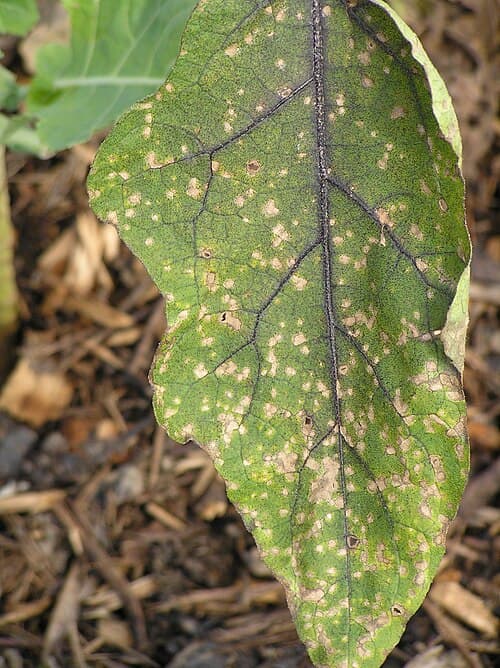
PossibleHow to tell: Small, dark, or water-soaked spots appear on the leaves, sometimes with a yellow halo. These spots may grow larger over time if the humidity remains high and airflow is low.
What to do: Remove and dispose of any heavily affected leaves to stop the spread. Improve air circulation around the plant by spacing it further from other plants or using a small fan. Avoid getting water on the leaves when you water the soil.
Pest damage
PossibleHow to tell: Tiny yellow or brown stippling appears on the leaves, often accompanied by small insects on the undersides. This is often caused by spider mites or thrips feeding on the leaf cells.
What to do: Wipe the leaves down with a damp cloth to remove the pests. Use a gentle insecticidal soap or neem oil spray on the affected areas once a week until the insects are gone. Ensure the plant is healthy and well-watered to help it resist future infestations.
Find out what's wrong with your large bindweed
The list above covers the usual causes. Pocket Botanist looks at a photo of your actual plant and tells you the likely cause, how serious it is, and what to try first. Identification and a health check are free.



Scan with your phone's camera to get the app
Or go to pocketbotanist.app/get on your phone
When to worry
If the spots are spreading rapidly across the entire plant, you should take immediate action to isolate it and treat the cause.
Stopping it coming back
Keep the foliage dry when watering and ensure there is plenty of fresh air moving around your plant.
Large bindweed: spots? Check yours with a photo
Every plant is a little different. Take a photo of your large bindweed and Pocket Botanist tells you which cause is most likely, how serious it is, and what to try first. A few checks a day are free. Save the plant and you get care reminders timed for it.
Scan with your phone's camera to get the app
Or go to pocketbotanist.app/get on your phone
Get the app · Or check it from a photo now, free
Questions people ask
- Are these spots contagious to my other plants?
- If the spots are caused by a fungus or pests, they can spread, so it is best to isolate the plant until it is healthy again.
- Can I use a fungicide for the spots?
- You can, but improving the environment is usually more effective for this plant than chemical treatments.
Guides to these causes
More problems with Large bindweed
- Why are there bugs on my Large bindweed?
- Why is my large bindweed growing so leggy?
- Why are my Large bindweed leaves turning yellow?
- Why is my Large bindweed drooping?
- Why are my large bindweed's leaf tips turning brown?
- Why is my Calystegia silvatica not blooming?
- How do I fix root rot on my Calystegia silvatica?
- Why are my Calystegia silvatica leaves curling?
Back to the Large bindweed guide
This article was generated with AI on from the plant’s care profile and is general information, not horticultural advice. Read about how we build these guides.