 Pocket Botanist

Check these first
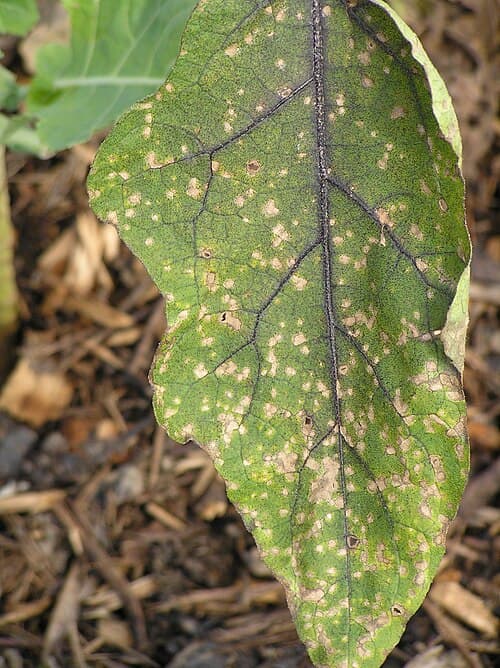
- Look for a white, dusty residue on the leaf surface.
- Check if the spots are dark and sunken into the leaf tissue.
- Ensure the plant has enough space from other shrubs for airflow.
Likely causes
Powdery Mildew
Most likelyHow to tell: A white, dusty coating appears on the surface of the leaves. It often starts as small circular spots that eventually cover the whole leaf.
What to do: Improve air circulation by thinning out crowded branches. Apply a neem oil spray or a fungicide labeled for powdery mildew every 7 to 10 days until the spots disappear.
Leaf Spot Fungi
PossibleHow to tell: Dark brown or black spots with yellow halos appear on the foliage. These often occur after periods of high humidity or heavy rain.
What to do: Remove and dispose of any heavily infected leaves to prevent the spread of spores. Avoid overhead watering to keep the foliage dry.
Find out what's wrong with your eastern baccharis
The list above covers the usual causes. Pocket Botanist looks at a photo of your actual plant and tells you the likely cause, how serious it is, and what to try first. Identification and a health check are free.



Scan with your phone's camera to get the app
Or go to pocketbotanist.app/get on your phone
When to worry
Small amounts of spotting are common in humid weather, but widespread coverage can weaken the plant. Treat it early to prevent premature leaf drop.
Stopping it coming back
Plant in an area with good air movement and avoid wetting the leaves when you water.
Eastern baccharis: spots? Check yours with a photo
Every plant is a little different. Take a photo of your eastern baccharis and Pocket Botanist tells you which cause is most likely, how serious it is, and what to try first. A few checks a day are free. Save the plant and you get care reminders timed for it.
Scan with your phone's camera to get the app
Or go to pocketbotanist.app/get on your phone
Get the app · Or check it from a photo now, free
Questions people ask
- Is powdery mildew harmful to my plant?
- It is mostly cosmetic, but severe cases can reduce the plant's ability to photosynthesize. It is best to treat it as soon as you notice it.
- Should I cut off all the spotted leaves?
- If only a few leaves are affected, go ahead and remove them. If the entire plant is covered, focus on improving airflow and using a fungicide.
Guides to these causes
More problems with Eastern baccharis
- Why is my Eastern baccharis growing so leggy?
- Why are the leaves on my Eastern baccharis turning yellow?
- Why are my Eastern baccharis leaves getting brown tips?
- Why is my Eastern baccharis drooping?
- Why is my Eastern baccharis losing its leaves?
- Why is my Eastern baccharis not flowering?
- What are the bugs on my Eastern baccharis?
- Is my Eastern baccharis suffering from root rot?
Back to the Eastern baccharis guide
This article was generated with AI on from the plant’s care profile and is general information, not horticultural advice. Read about how we build these guides.