 Pocket Botanist
Plant guide
Western columbine.
Aquilegia formosa
Pronounced ah-kwi-LEE-jee-uh for-MO-suh
Also known as Sitka columbine, crimson columbine, scarlet columbine, western columbine



Scan with your phone's camera to get the app
Or go to pocketbotanist.app/get on your phone

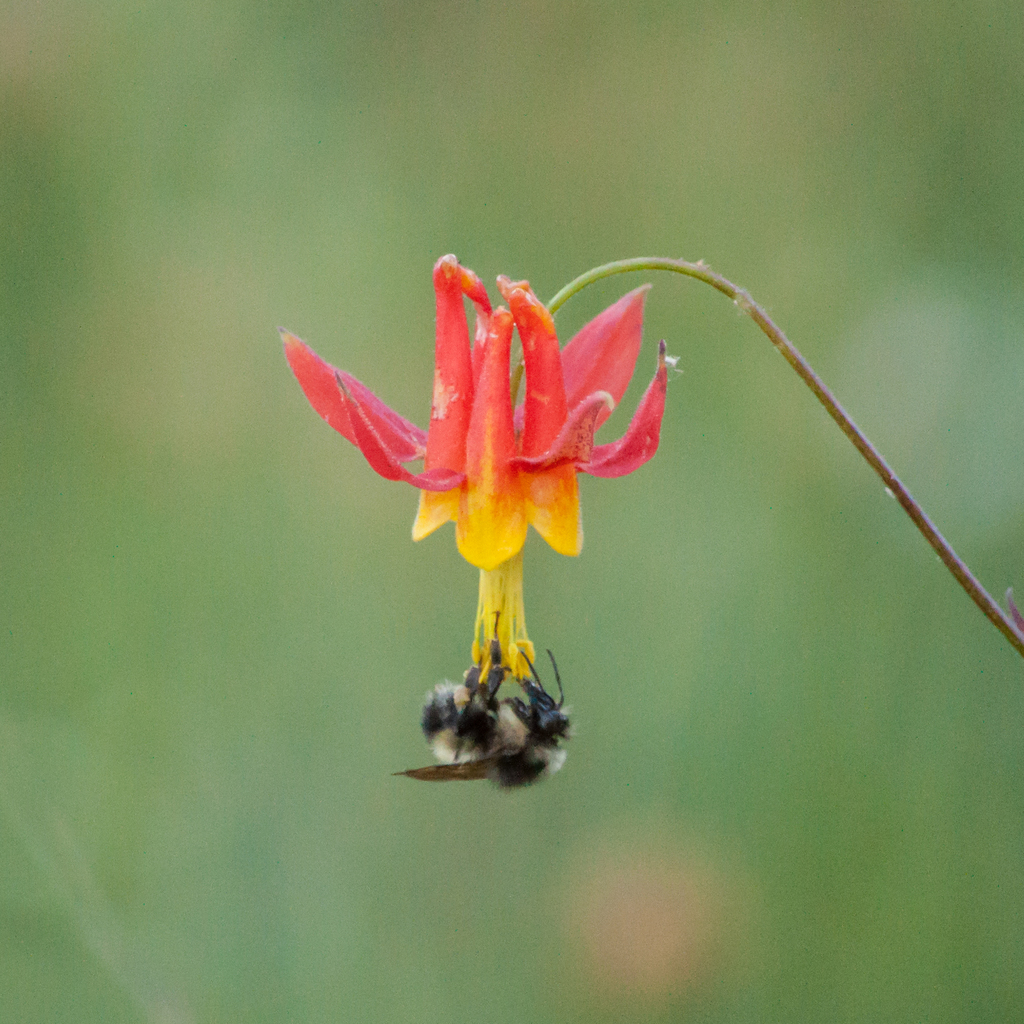
The Western columbine is a lovely native perennial that brings a splash of color to woodland settings. It features unique, nodding flowers that are a favorite among hummingbirds. You'll find it thrives best in spots that mimic its natural mountain home.
At a glance
- Care level
- Moderate
- Plant type
- Herbaceous perennial
- Light
- Partial shade to full sun in cooler climates.
- Indoor light
- Bright indirect
- Water
- Every 3 to 7 days
- Mature size
- 2 to 3 feet tall
- Growth rate
- Medium
- Hardiness
- USDA 3 to 9
- Bloom time
- Late spring to mid summer
Care
Keep the soil consistently moist but never soggy to prevent root issues. Watch for wilting leaves, which often signal that the plant needs more shade or water. Deadheading spent blooms helps the plant focus its energy on new growth.
- Watering
- Water when the top inch of soil feels dry to the touch.
- Feeding
- Apply a balanced, water soluble fertilizer during the active growing season.
- Pruning
- Remove faded flowers to encourage a second flush of blooms.
- Repotting
- Repot in early spring if the plant becomes root bound.
- Soil
- Well draining, humus rich soil
- Soil pH
- 6.0 to 7.5
- Temperature
- -34 to 30°C
- Humidity
- 40 to 70%
- Drought tolerance
- Moderate
- Lifespan
- Perennial, typically 3 to 5 years.
- Deer and rabbits
- Moderate
Signs it needs repotting
- Roots growing out of the drainage holes
- Stunted growth during the active season
Safety
- People
- All parts of the plant contain cyanogenic glycosides which can cause stomach upset if eaten.
- Pets
- This plant is considered mildly toxic to cats and dogs if ingested.
- Children
- Keep this plant away from small children as ingestion of any part can lead to nausea or vomiting.
- Contact allergens
- Handling the foliage may cause mild skin irritation in sensitive individuals.
- Airborne allergens
- The pollen is not typically considered a significant allergen.
- Edibility
- This plant is considered toxic if ingested and should not be consumed.
How to identify it
- Nodding red and yellow flowers
- Spurred petals pointing backward
- Delicate, blue green compound leaves
- Slender, branching stems
- Height
- 0.3 to 0.9m
- Spread
- 0.3 to 0.6m
- Leaves
- green, blue-green, deciduous
- Flowers
- red, yellow, 3 to 5cm
Problems to watch for
- Columbine leaf miner · Larvae create winding white tunnels inside the leaves.
- Powdery mildew · A white fungal coating appears on leaves during humid weather.
Check your western columbine from a photo
Pocket Botanist looks at a photo of your plant and tells you what's wrong and what to try first.
Scan with your phone's camera to get the app
Or go to pocketbotanist.app/get on your phone
Growing it
- Propagation
- seed, division
- When to plant
- spring, autumn
- Overwintering
- Cut back dead foliage in late autumn after the first frost. Apply a light layer of mulch to protect the crown from extreme temperature fluctuations.
- In containers
- It grows well in containers at least 30 centimeters deep with excellent drainage.
Seed
- 1. Collect seeds when pods turn brown and dry.
- 2. Sow seeds in pots during autumn to allow for natural cold stratification.
- 3. Keep soil moist and place in a cold frame or sheltered outdoor area.
Plant these near other woodland perennials to create a layered, naturalistic look that mimics a forest floor.
Grows well with
- Coral Bells · They share similar light and moisture requirements in woodland settings.
- Bleeding Heart · They provide a lovely textural contrast in shaded garden beds.
Similar species
- Eastern Columbine · It is a close relative with similar flower structure but is native to eastern North America.
Science
- Family
- Ranunculaceae
- Genus
- Aquilegia
- Order
- Ranunculales
- Class
- Magnoliopsida
- Native range
- Western North America from Alaska to California.
- Conservation
- It is widespread and secure across its native range.
It thrives in moist, open woodlands and along stream banks where it can access consistent soil moisture.
- Value to wildlife
- nectar source
- Pollinators
- bees, butterflies, hummingbirds
- Uses
- pollinator garden, woodland border, native plant landscape
Through the year
Ecological indicators
- Salinity
- 1/9
- Soil reaction
- 5/9
- Light
- 5/9
- Temperature
- 4/9
- Moisture
- 6/9
- Nutrients
- 4/9
Taxonomy resolved against GBIF.
Questions people ask
- Does it need full sun?
- It prefers partial shade, especially in hotter climates.
- Will it come back every year?
- Yes, it is a short-lived perennial that often self-seeds.
Where the name comes from
The scientific name Aquilegia refers to the resemblance of the petals to eagle talons, while formosa means beautiful.
Good to know
- The name Aquilegia comes from the Latin word for eagle, referring to the spur shape.
- It is a classic choice for attracting hummingbirds to the garden.
- The flowers are nodding, which helps protect the nectar from rain.
Also in
Keep your western columbine growing
This page is a general guide. Save your plant in Pocket Botanist and you get care reminders timed for this plant, plus a care history that shows what worked.
Scan with your phone's camera to get the app
Or go to pocketbotanist.app/get on your phone
This guide was generated with AI on and checked against GBIF taxonomy. It is general information, not horticultural or veterinary advice. Read about how we build these guides.