 Pocket Botanist
Plant guide
Rose of Jericho.
Anastatica hierochuntica
Pronounced an-uh-STAT-ih-kuh hy-roh-KUN-tih-kuh
Also known as Jericho-rose, rose-of-Jericho, true rose of Jericho



Scan with your phone's camera to get the app
Or go to pocketbotanist.app/get on your phone

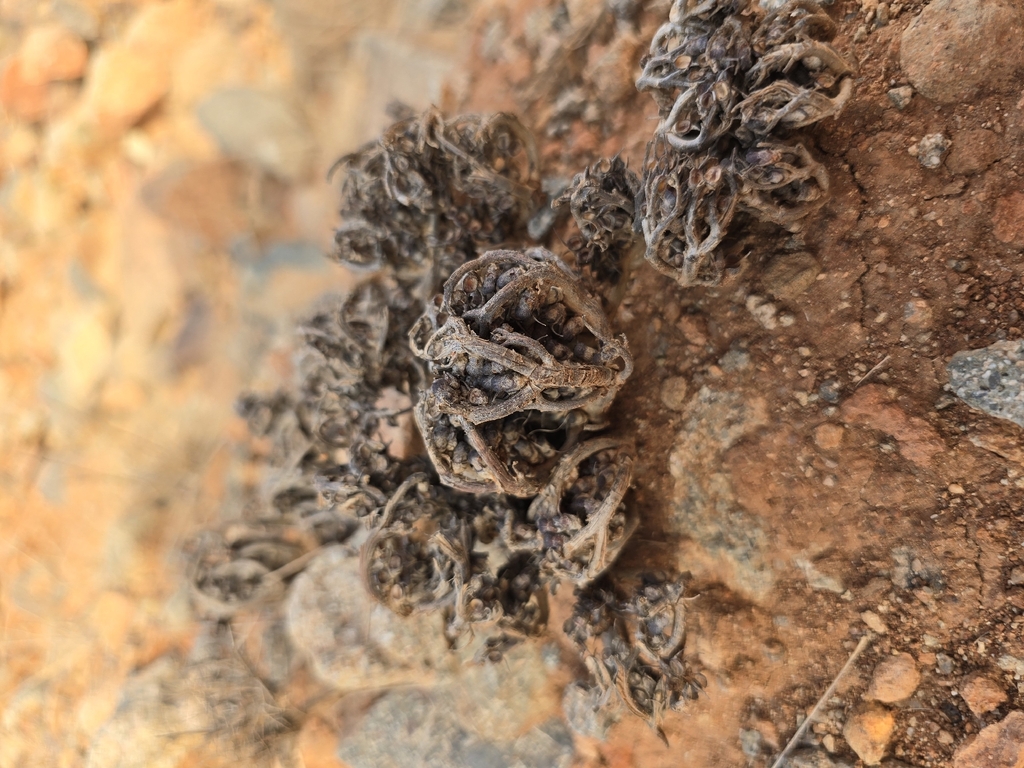
The Rose of Jericho is a fascinating desert plant that survives extreme drought by curling into a ball. When it gets moisture, it unfurls its branches to release seeds. It is a true desert survivor that does not need traditional soil to thrive.
At a glance
- Care level
- Easy
- Plant type
- Desert resurrection plant
- Light
- Bright indirect light is best for this desert plant.
- Indoor light
- Bright indirect
- Water
- Every 1 to 7 days
- Mature size
- 6 inches
- Growth rate
- Slow
- Hardiness
- USDA 9 to 11
- Bloom time
- Spring
Care
Place the dried plant in a shallow dish of water to watch it open up. Change the water daily to prevent mold growth. Let it dry out completely between hydration sessions to mimic its natural cycle.
- Watering
- Keep the plant in a shallow tray of water only when you want it to open.
- Feeding
- This plant does not require any fertilizer.
- Pruning
- Pruning is not necessary for this plant.
- Repotting
- Repotting is not applicable since it does not grow in soil.
- Soil
- Sandy, very well-draining soil for growing plants; the dried skeleton needs no soil
- Temperature
- 5 to 45°C
- Humidity
- 10 to 40%
- Drought tolerance
- High
- Lifespan
- Annual, completes life cycle in one season.
- Deer and rabbits
- High
Signs it needs repotting
- Roots circling the bottom of the pot.
- Soil drying out too quickly.
Safety
- People
- There is no known toxicity, but it is not intended for human consumption.
- Children
- The small, dry seed pods could pose a choking hazard if swallowed by young children.
- Contact allergens
- None known.
- Airborne allergens
- The dry, dusty nature of the plant may irritate sensitive airways.
- Edibility
- This plant is not considered food and should not be ingested.
How to identify it
- Small gray hairy leaves
- Dormant state is a tight ball
- Branches uncurl when wet but stay brown
- Tiny white flowers
- Woody seed pods
- Height
- 0.05 to 0.15m
- Spread
- 0.1 to 0.25m
- Leaves
- gray-green, deciduous
- Flowers
- white, 0.5 to 1cm
- Fruit
- brown, Late spring
Problems to watch for
- DehydrationCommon
- Root RotCommon
- Soft RotUncommon
- Stem RotUncommon
Check your rose of jericho from a photo
Pocket Botanist looks at a photo of your plant and tells you what's wrong and what to try first.
Scan with your phone's camera to get the app
Or go to pocketbotanist.app/get on your phone
Growing it
- Propagation
- seed
- When to plant
- spring
- Overwintering
- Keep the plant completely dry and in a cool, well-ventilated area during the winter months.
- In containers
- It is best grown in a shallow, well-draining container or kept as a dry curiosity.
Seed Sowing
- 1. Sow seeds in sandy, well-draining soil.
- 2. Keep the soil barely moist until germination.
- 3. Reduce water once seedlings are established.
Keep this plant in a separate container to avoid overwatering it while caring for other species.
Grows well with
- Desert Sage · It thrives in similar arid, sunny conditions.
Similar species
- False Rose of Jericho · It is a fern ally that also curls and uncurls but is not related.
Science
- Family
- Brassicaceae
- Genus
- Anastatica
- Order
- Brassicales
- Class
- Magnoliopsida
- Native range
- Deserts of the Middle East and North Africa.
- Conservation
- It is often over-collected in the wild for the tourist trade, so please source seeds responsibly.
The dead plant stays anchored in place rather than rolling away as a tumbleweed; when rain falls, its branches open and raindrops splash the seeds out onto nearby ground.
- Value to wildlife
- nectar source
- Pollinators
- bees
- Uses
- ornamental curiosity, botanical display
Through the year
Ecological indicators
- Salinity
- 4/9
- Soil reaction
- 7/9
- Light
- 8/9
- Temperature
- 8/9
- Moisture
- 1/9
- Nutrients
- 2/9
Taxonomy resolved against GBIF.
Questions people ask
- Does it really come back to life?
- It is not actually alive when it opens, but rather a physical reaction of the dead tissue to water.
- How do I water it?
- Place the dry ball in a shallow dish of water to watch it open.
Where the name comes from
Anastatica comes from the Greek word for resurrection, referring to its ability to open when wet.
Good to know
- It is famously known as the Rose of Jericho.
- The plant can remain dormant for years until rain triggers its opening.
- It is a true desert survivor that completes its life cycle very quickly.
Also in
Keep your rose of jericho growing
This page is a general guide. Save your plant in Pocket Botanist and you get care reminders timed for this plant, plus a care history that shows what worked.
Scan with your phone's camera to get the app
Or go to pocketbotanist.app/get on your phone
This guide was generated with AI on and checked against GBIF taxonomy. It is general information, not horticultural or veterinary advice. Read about how we build these guides.