 Pocket Botanist
Plant guide
Pearly everlasting.
Anaphalis margaritacea
Pronounced an-AF-ah-lis mar-gar-ih-TAY-see-uh
Also known as Common Pearlyeverlasting, Marguerite, Pearl Everlasting, Pearly Everlasting, Western Pearly Everlasting, Western Pearlyeverlasting



Scan with your phone's camera to get the app
Or go to pocketbotanist.app/get on your phone
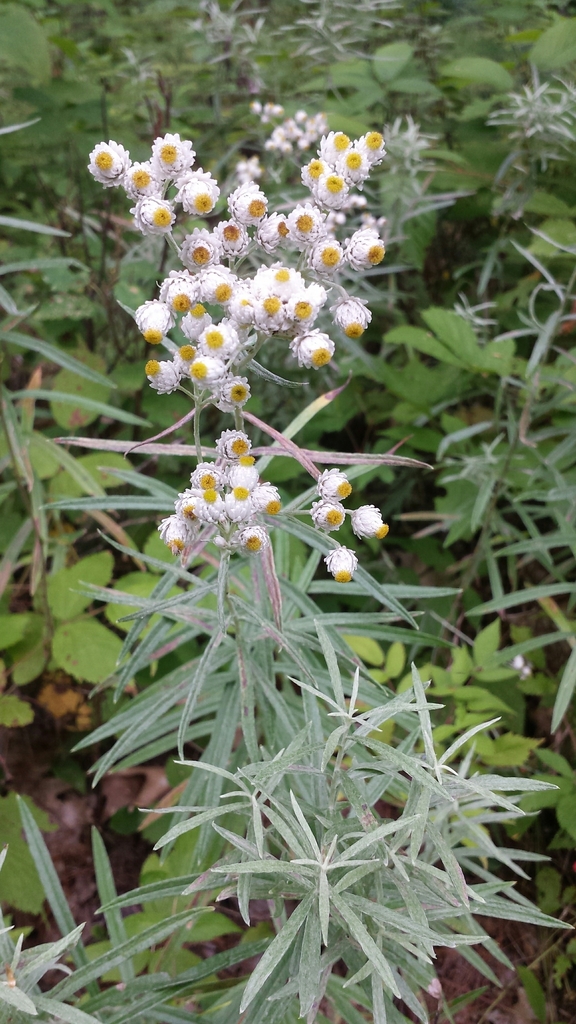
Pearly everlasting is a charming perennial known for its clusters of small, papery white flowers. It thrives in open, sunny spots and brings a lovely texture to any garden space. You will find it is quite hardy and adds a touch of wild beauty to the landscape.

At a glance
- Care level
- Easy
- Plant type
- Perennial
- Light
- Full sun
- Indoor light
- Direct sun
- Water
- Every 7 to 14 days
- Mature size
- 1 to 3 feet
- Growth rate
- Medium
- Hardiness
- USDA 3 to 8
- Bloom time
- Mid to late summer
Care
Plant this beauty in well draining soil to keep the roots happy. Watch for wilting if the soil stays too dry for too long. It is a tough plant that does not need much fussing once established.
- Watering
- Water when the top inch of soil feels dry to the touch.
- Feeding
- A light application of compost in the spring is plenty.
- Pruning
- Cut back the stems to the ground in late winter or early spring.
- Repotting
- Divide the clumps every few years to keep the plant vigorous.
- Soil
- Sandy or rocky well draining soil
- Soil pH
- Acidic to neutral
- Temperature
- -35 to 30°C
- Humidity
- 40 to 70%
- Drought tolerance
- Moderate
- Lifespan
- Perennial, typically 5 to 10 years
- Deer and rabbits
- High
Signs it needs repotting
- Roots growing out of the drainage holes.
- Water sitting on the surface of the soil for too long.
- The plant appears stunted despite regular care.
Safety
- People
- There are no significant reports of human toxicity for this species.
- Children
- The plant is not toxic, but the fine hairs on the foliage can be irritating if handled frequently by children.
- Contact allergens
- The fine, woolly hairs on the stems and leaves can cause minor skin irritation in sensitive individuals.
- Airborne allergens
- The pollen may cause mild hay fever symptoms in sensitive individuals during peak bloom.
- Edibility
- This plant is not considered edible and should not be consumed.
How to identify it
- Clusters of small white papery flowers
- Narrow lance shaped leaves
- Woolly white hairs on stems
- Upright growth habit
- Height
- 0.3 to 0.9m
- Spread
- 0.3 to 0.6m
- Leaves
- gray-green, silver, deciduous
- Flowers
- white, yellow, 0.5 to 1cm
Problems to watch for
- Powdery mildew · A white fungal growth on leaves often caused by poor air circulation or high humidity.
Check your pearly everlasting from a photo
Pocket Botanist looks at a photo of your plant and tells you what's wrong and what to try first.
Scan with your phone's camera to get the app
Or go to pocketbotanist.app/get on your phone
Growing it
- Propagation
- division, seed, cuttings
- When to plant
- spring, autumn
- Overwintering
- Cut the stems back to the ground in late autumn after the foliage has died back. A light layer of mulch can help protect the crown in colder regions.
- In containers
- It grows well in containers if provided with excellent drainage and a pot at least 30 cm wide.
Division
- 1. Dig up the clump in early spring as new growth begins.
- 2. Gently pull the root mass apart into smaller sections.
- 3. Replant the divisions immediately at the same depth as the original plant.
Plant in groups of three or more to create a more naturalistic look and better support local pollinators.
Grows well with
- Purple Coneflower · They share similar sun and water requirements while providing a nice color contrast.
- Little Bluestem · This grass provides a beautiful textural backdrop for the silvery foliage of the pearly everlasting.
Similar species
- Common Everlasting · It shares the papery flower structure but grows much lower to the ground.
Science
- Family
- Asteraceae
- Genus
- Anaphalis
- Order
- Asterales
- Class
- Magnoliopsida
- Native range
- Widespread across North America and parts of Asia.
- Conservation
- It is a common native plant and is not currently of conservation concern.
It is a hardy pioneer species that often colonizes disturbed sites, roadsides, and open meadows.
- Value to wildlife
- larval host plant, nectar source
- Pollinators
- bees, butterflies
- Uses
- dried flower arrangements, pollinator gardens, rock gardens, meadow plantings
Through the year
Ecological indicators
- Salinity
- 2/9
- Soil reaction
- 5/9
- Light
- 7/9
- Temperature
- 4/9
- Moisture
- 4/9
- Nutrients
- 3/9
Taxonomy resolved against GBIF.
Questions people ask
- Does it need full sun?
- Yes, it thrives best in full sun but will tolerate light afternoon shade.
- How do I dry the flowers?
- Cut the stems just before the flowers fully open and hang them upside down in a cool, dark, and dry place.
Where the name comes from
The name Anaphalis comes from the Greek word for a similar plant, while margaritacea means pearl-like, referring to the white flower heads.
Good to know
- The flowers are often called pearly everlasting because they retain their shape and color long after drying.
- It is a host plant for the American Lady butterfly.
- The leaves are covered in a dense, woolly white tomentum that helps the plant retain moisture.
Also in
Keep your pearly everlasting growing
This page is a general guide. Save your plant in Pocket Botanist and you get care reminders timed for this plant, plus a care history that shows what worked.
Scan with your phone's camera to get the app
Or go to pocketbotanist.app/get on your phone
This guide was generated with AI on and checked against GBIF taxonomy. It is general information, not horticultural or veterinary advice. Read about how we build these guides.