 Pocket Botanist
Plant guide
Common water plantain.
Alisma plantago-aquatica
Pronounced uh-LIZ-muh plan-TAY-go ah-KWA-ti-kuh
Also known as American waterplantain, Common Water Plantain, Common Water-Plantain, European water plantain, European water-plantain, Mad-Dog Weed, Mud Plantain



Scan with your phone's camera to get the app
Or go to pocketbotanist.app/get on your phone

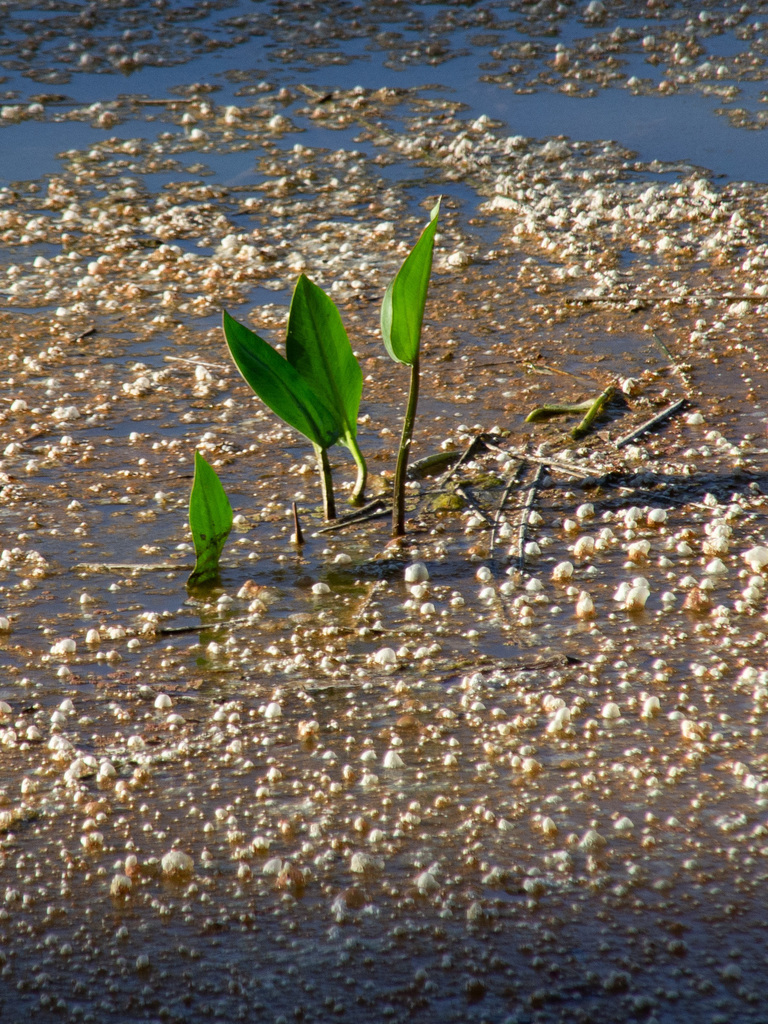
This charming aquatic perennial thrives in shallow water and wetlands. It produces delicate spikes of tiny white or pale pink flowers above its broad leaves. You will love how it adds a natural, pond-side feel to your garden.
At a glance
- Care level
- Easy
- Plant type
- Aquatic perennial
- Light
- Full sun to partial shade
- Indoor light
- Direct sun
- Water
- Every day
- Mature size
- 3 feet
- Growth rate
- Fast
- Hardiness
- USDA 5 to 9
- Bloom time
- Mid to late summer
Care
Keep the soil consistently saturated or submerged in shallow water. Watch for yellowing leaves which may indicate the water level is too deep or the soil is drying out. Remove spent flower stalks to encourage a tidy appearance.
- Watering
- The soil must remain constantly wet or submerged in up to 6 inches of water.
- Feeding
- Apply a slow release aquatic plant fertilizer during the active growing season.
- Pruning
- Trim away dead or damaged foliage to keep the plant healthy and prevent decay in the water.
- Repotting
- Repot in early spring if the plant becomes root bound in its aquatic container.
- Soil
- Heavy clay or aquatic silt
- Soil pH
- 6.0 to 8.0
- Temperature
- -20 to 30°C
- Humidity
- 60 to 100%
- Drought tolerance
- Low
- Lifespan
- Perennial, typically 3 to 5 years.
- Deer and rabbits
- Moderate
Signs it needs repotting
- Roots growing out of the pot drainage holes
- Stunted growth
- Crowded stems
Safety
- People
- The plant contains substances that can cause skin irritation upon contact and gastrointestinal distress if ingested.
- Pets
- The fresh plant contains acrid, irritating compounds and is considered mildly toxic. Chewing or eating it may cause mouth irritation and stomach upset in cats and dogs.
- Children
- Keep children away from the plant to prevent accidental ingestion of the leaves or seeds.
- Contact allergens
- Handling the foliage may cause mild skin irritation in sensitive individuals.
- Airborne allergens
- The pollen is not considered a significant airborne allergen.
- Edibility
- The fresh leaves are considered acrid and potentially irritating, so they should not be consumed without proper processing.
How to identify it
- Broad, oval shaped basal leaves
- Tall, branched flowering stalks
- Tiny three petaled white flowers
- Thrives in shallow water or mud
- Height
- 0.3 to 1m
- Spread
- 0.3 to 0.6m
- Leaves
- green, deciduous
- Flowers
- white, pale pink, 1 to 2cm
- Fruit
- brown, Autumn
Problems to watch for
- Aphids · Small insects that may cluster on the flower stalks.
Check your common water plantain from a photo
Pocket Botanist looks at a photo of your plant and tells you what's wrong and what to try first.
Scan with your phone's camera to get the app
Or go to pocketbotanist.app/get on your phone
Growing it
- Propagation
- seed, division
- When to plant
- spring, summer
- Overwintering
- The foliage will die back naturally in winter. Simply leave the plant in the water, as it is hardy enough to survive freezing temperatures.
- In containers
- It grows well in containers placed in shallow water, provided the pot is at least 20 centimeters wide.
Division
- 1. Lift the plant from the water in spring.
- 2. Gently pull the root clump apart into smaller sections.
- 3. Replant the sections into fresh aquatic soil.
Seed
- 1. Collect seeds in late autumn.
- 2. Sow them in pots submerged in shallow water.
- 3. Keep them in a bright location until germination.
Group these with other marginal plants to create a naturalistic transition from water to land.
Grows well with
- Yellow Flag Iris · They share similar moisture requirements and create a nice height contrast.
- Marsh Marigold · This plant blooms earlier, extending the season of interest in the pond.
Similar species
- Narrow-leaved Water Plantain · It has similar growth habits but features narrower, lance-shaped leaves.
Science
- Family
- Alismataceae
- Genus
- Alisma
- Order
- Alismatales
- Class
- Liliopsida
- Native range
- Europe, Asia, and northern Africa.
- Conservation
- It is widespread and not currently of conservation concern.
It survives by growing in nutrient-rich mud at the edges of slow-moving or stagnant water bodies.
- Value to wildlife
- nectar source, shelter for aquatic insects
- Pollinators
- bees, butterflies, beetles
- Uses
- pond margins, bog gardens, wildlife ponds
Through the year
Ecological indicators
- Salinity
- 1/9
- Soil reaction
- 6/9
- Light
- 7/9
- Temperature
- 5/9
- Moisture
- 9/9
- Nutrients
- 6/9
Taxonomy resolved against GBIF.
Questions people ask
- Does it need to be in water?
- Yes, it prefers to grow in shallow water or very wet, boggy soil.
- How do I control its spread?
- You can remove the seed heads before they drop to prevent self-seeding.
Where the name comes from
The name Alisma is an ancient Greek term for a water plant, while plantago-aquatica refers to its resemblance to the land-based plantain.
Good to know
- It is often called water plantain because the leaves resemble those of the common plantain.
- The plant thrives in water up to 15 centimeters deep.
- It produces tiny, three-petaled flowers on branched stalks.
Also in
Keep your common water plantain growing
This page is a general guide. Save your plant in Pocket Botanist and you get care reminders timed for this plant, plus a care history that shows what worked.
Scan with your phone's camera to get the app
Or go to pocketbotanist.app/get on your phone
This guide was generated with AI on and checked against GBIF taxonomy. It is general information, not horticultural or veterinary advice. Read about how we build these guides.