 Pocket Botanist
Plant guide
Waterwheel plant.
Aldrovanda vesiculosa
Pronounced al-dro-VAN-da ves-ik-yoo-LOH-sa
Also known as Aldrovanda, Common Aldrovanda, Waterwheel, Waterwheel Plant



Scan with your phone's camera to get the app
Or go to pocketbotanist.app/get on your phone
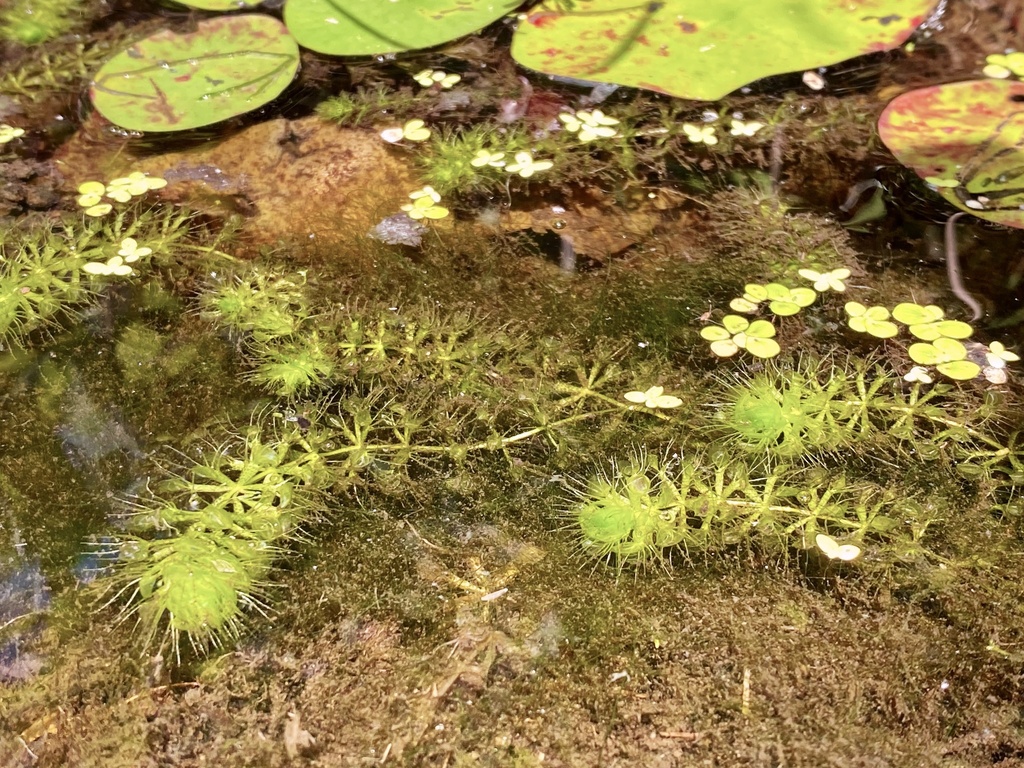
The waterwheel plant is a fascinating rootless aquatic carnivore that floats just below the water surface. It captures tiny prey using snap traps arranged in whorls around its stem. This rare plant is quite picky about its environment and needs pristine water conditions to thrive.

At a glance
- Care level
- Difficult
- Plant type
- Aquatic carnivorous plant
- Light
- Bright indirect light
- Indoor light
- Bright indirect
- Water
- Every day
- Mature size
- 6 to 8 inches
- Growth rate
- Fast
- Hardiness
- USDA 7 to 11
- Bloom time
- Mid to late summer
Care
Keep this plant in clean, nutrient poor water with a slightly acidic pH. Watch for algae buildup on the traps, which prevents them from closing properly. Ensure the water temperature stays warm during the growing season.
- Watering
- Always keep the plant fully submerged in distilled or rain water.
- Feeding
- Do not fertilize, as the plant captures its own nutrients from prey.
- Pruning
- Remove any dead or decaying stems to maintain water quality.
- Repotting
- Refresh the water and container annually to prevent mineral buildup.
- Soil
- None, aquatic
- Soil pH
- 5.0 to 6.5
- Temperature
- 10 to 30°C
- Humidity
- 70 to 100%
- Drought tolerance
- Low
- Lifespan
- Perennial, typically 1 to 3 years.
- Deer and rabbits
- High
Signs it needs repotting
- Crowded growth
- Yellowing stems
- Reduced trap formation
Safety
- People
- There is no known toxicity to humans.
- Children
- Keep this plant away from small children as it is fragile and requires specific water conditions.
- Edibility
- This plant is not edible.
How to identify it
- Whorls of snap traps along stem
- Rootless free floating aquatic habit
- Bright green foliage color
- Traps resemble tiny clam shells
- Height
- 0m
- Spread
- 0.1 to 0.2m
- Leaves
- green, red, deciduous
- Flowers
- white, 0.5 to 1cm
Problems to watch for
- Algae OvergrowthCommon
- Mechanical DamageUncommon
- Water Lily AphidUncommon
- Root RotRare
Check your waterwheel plant from a photo
Pocket Botanist looks at a photo of your plant and tells you what's wrong and what to try first.
Scan with your phone's camera to get the app
Or go to pocketbotanist.app/get on your phone
Growing it
- Propagation
- cuttings, seed
- When to plant
- spring, summer
- Overwintering
- The plant forms turions that sink to the bottom of the water body to survive winter. Keep the water from freezing solid to ensure the turions remain viable.
- In containers
- It is best grown in shallow, wide containers or ponds with distilled or rainwater.
Stem cuttings
- 1. Snip a healthy stem section.
- 2. Place the cutting in a clean, shallow container of water.
- 3. Ensure bright light and consistent temperatures.
Maintain high water quality to prevent competitive algae blooms.
Grows well with
- Duckweed · They share similar aquatic environmental needs.
Similar species
- Venus flytrap · It shares the same rapid trap mechanism.
Science
- Family
- Droseraceae
- Genus
- Aldrovanda
- Order
- Caryophyllales
- Class
- Magnoliopsida
- Native range
- Widespread across parts of Europe, Asia, Africa, and Australia.
- Conservation
- It is listed as endangered in many parts of its native range due to habitat loss.
It thrives in clean, shallow, stagnant, or slow moving water with high light and low nutrient levels.
- Value to wildlife
- aquatic habitat
- Pollinators
- bees
- Uses
- botanical collection, aquatic display
Through the year
Ecological indicators
- Salinity
- 1/9
- Soil reaction
- 5/9
- Light
- 8/9
- Temperature
- 7/9
- Moisture
- 9/9
- Nutrients
- 4/9
Taxonomy resolved against GBIF.
Questions people ask
- Does it need soil?
- No, it is a free floating aquatic plant.
- What does it eat?
- It captures small aquatic invertebrates like daphnia.
Where the name comes from
The genus honors the Italian naturalist Ulisse Aldrovandi.
Good to know
- It is closely related to the Venus flytrap.
- The plant does not have roots.
- It can grow up to 1 cm per day in ideal conditions.
- It forms winter buds called turions to survive cold periods.
Keep your waterwheel plant growing
This page is a general guide. Save your plant in Pocket Botanist and you get care reminders timed for this plant, plus a care history that shows what worked.
Scan with your phone's camera to get the app
Or go to pocketbotanist.app/get on your phone
This guide was generated with AI on and checked against GBIF taxonomy. It is general information, not horticultural or veterinary advice. Read about how we build these guides.