 Pocket Botanist
Plant guide
Persian silk tree.
Albizia julibrissin
Pronounced al-BIZ-ee-uh joo-li-BRIS-in
Also known as Japanese Mimosa, Mimosa, Mimosa-tree, Pink Siris, Powderpuff Tree, Silk Tree, Silktree, Silktree Albizia



Scan with your phone's camera to get the app
Or go to pocketbotanist.app/get on your phone

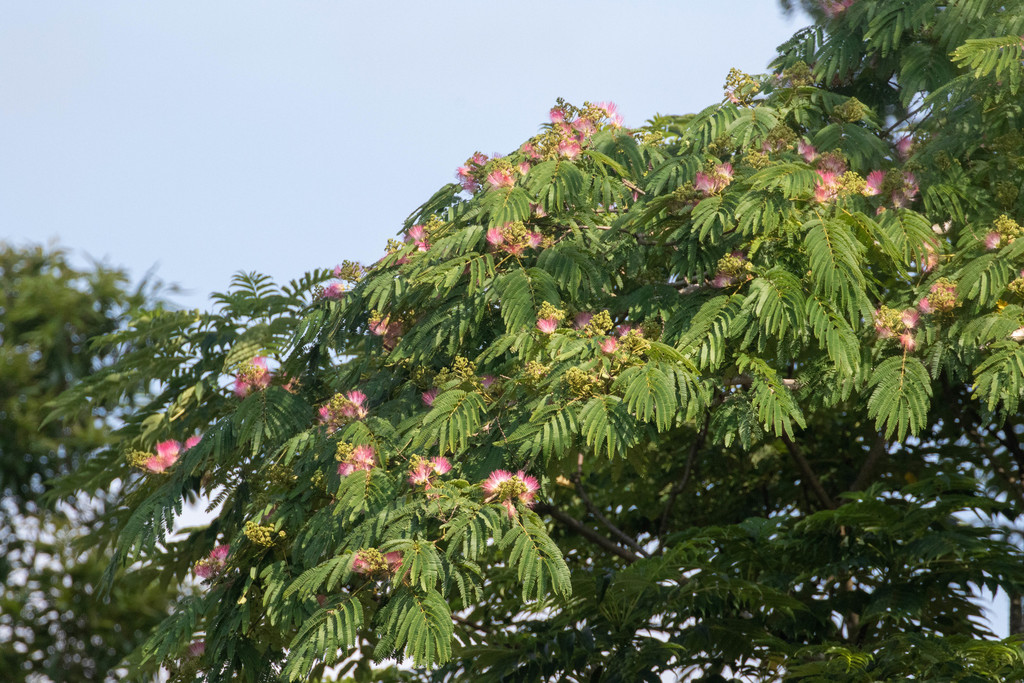
The Persian silk tree is a beautiful deciduous tree known for its feathery foliage and unique, powder puff flowers. It creates a lovely canopy in the landscape during the summer months. You will find it thrives best in warm climates with plenty of sun.
At a glance
- Care level
- Easy
- Plant type
- Deciduous tree
- Light
- Full sun
- Indoor light
- Direct sun
- Water
- Every 7 to 14 days
- Mature size
- 20 to 40 feet
- Growth rate
- Fast
- Hardiness
- USDA 6 to 10
- Bloom time
- Late spring to mid summer
Care
Plant this tree in a spot that gets plenty of sunshine to encourage the best blooms. Watch for yellowing leaves or wilting, which might signal issues with drainage or pests. Keep the area around the base clear to help the roots stay healthy.
- Watering
- Water deeply once established, but allow the top few inches of soil to dry out between sessions.
- Feeding
- Apply a balanced fertilizer once in early spring before new growth appears.
- Pruning
- Prune in late winter to remove dead wood and shape the canopy.
- Repotting
- Repotting is generally only necessary for young trees kept in containers.
- Soil
- Well draining loamy soil
- Soil pH
- 6.0 to 8.0
- Temperature
- -15 to 40°C
- Humidity
- 30 to 70%
- Drought tolerance
- High
- Lifespan
- Perennial, typically 10 to 20 years.
- Fragrance
- Light
- Deer and rabbits
- Moderate
Signs it needs repotting
- Roots growing out of drainage holes.
- Water running straight through the pot.
Safety
- People
- All parts of the plant are considered toxic if ingested in large quantities.
- Pets
- This plant is considered toxic to cats and dogs if ingested.
- Children
- Keep children away from the seed pods, as they are tempting to play with but toxic if eaten.
- Contact allergens
- The bark and sap can cause mild skin irritation in sensitive individuals.
- Airborne allergens
- The pollen may trigger allergic reactions in some people during the flowering season.
- Edibility
- The seeds are toxic if ingested and should never be consumed.
How to identify it
- Feathery bipinnate fern like leaves
- Pink powder puff flower clusters
- Flat brown seed pods
- Wide spreading umbrella shaped canopy
- Height
- 6 to 12m
- Spread
- 6 to 12m
- Leaves
- green, deciduous
- Flowers
- pink, 3 to 5cm
- Fruit
- brown, Autumn
Problems to watch for
- Mimosa wilt · A fungal infection that causes yellowing leaves and branch dieback.
Check your persian silk tree from a photo
Pocket Botanist looks at a photo of your plant and tells you what's wrong and what to try first.
Scan with your phone's camera to get the app
Or go to pocketbotanist.app/get on your phone
Growing it
- Propagation
- seed, cuttings
- When to plant
- spring, autumn
- Overwintering
- Young trees may need mulch around the base to protect roots from deep freezes. Ensure the soil is well drained to prevent winter rot.
- In containers
- It is not well suited for containers due to its rapid growth and large size.
Seed
- 1. Scarify the hard seed coat with sandpaper.
- 2. Soak seeds in warm water for 24 hours.
- 3. Plant in well draining soil.
Plant beneath the tree with shade tolerant perennials to make the most of the filtered light.
Grows well with
- Daylily · They thrive in the dappled shade provided by the tree canopy.
- Coneflower · These perennials enjoy the same sunny spots and well drained soil.
Similar species
- Honey Locust · They share similar fine, fernlike foliage.
Science
- Family
- Fabaceae
- Genus
- Albizia
- Order
- Fabales
- Class
- Magnoliopsida
- Native range
- Asia, from Iran to Japan.
- Conservation
- It is considered an invasive species in many parts of the United States and should be planted with caution.
It thrives in disturbed areas and open woodlands where it can quickly outcompete native vegetation.
- Value to wildlife
- nectar source
- Pollinators
- bees, butterflies, moths
- Uses
- ornamental shade tree, pollinator garden
Through the year
Ecological indicators
- Salinity
- 2/9
- Soil reaction
- 6/9
- Light
- 8/9
- Temperature
- 7/9
- Moisture
- 4/9
- Nutrients
- 3/9
Taxonomy resolved against GBIF.
Questions people ask
- Is this tree messy?
- Yes, it drops many seed pods and flowers, which can create a cleanup chore.
- Does it need much water?
- It is quite drought tolerant once established.
Where the name comes from
The genus honors Filippo degli Albizzi, an Italian nobleman who introduced the tree to Europe. The species name julibrissin is a corruption of the Persian word gul-i-abrisham, meaning silk flower.
Good to know
- It is often called the silk tree because of its silky, threadlike stamens.
- The tree grows very quickly but tends to have a short lifespan.
- It is highly adaptable to various soil types.
Also in
Keep your persian silk tree growing
This page is a general guide. Save your plant in Pocket Botanist and you get care reminders timed for this plant, plus a care history that shows what worked.
Scan with your phone's camera to get the app
Or go to pocketbotanist.app/get on your phone
This guide was generated with AI on and checked against GBIF taxonomy. It is general information, not horticultural or veterinary advice. Read about how we build these guides.