 Pocket Botanist
Plant guide
Chinese Evergreen.
Aglaonema commutatum 'Siam Aurora'
Pronounced ag-lay-oh-NEE-ma kom-yoo-TAY-tum
Also known as Aglaonema commutatum 'Siam Aurora', Chinese evergreen, Philippine Evergreen, silver queen aglaonema



Scan with your phone's camera to get the app
Or go to pocketbotanist.app/get on your phone
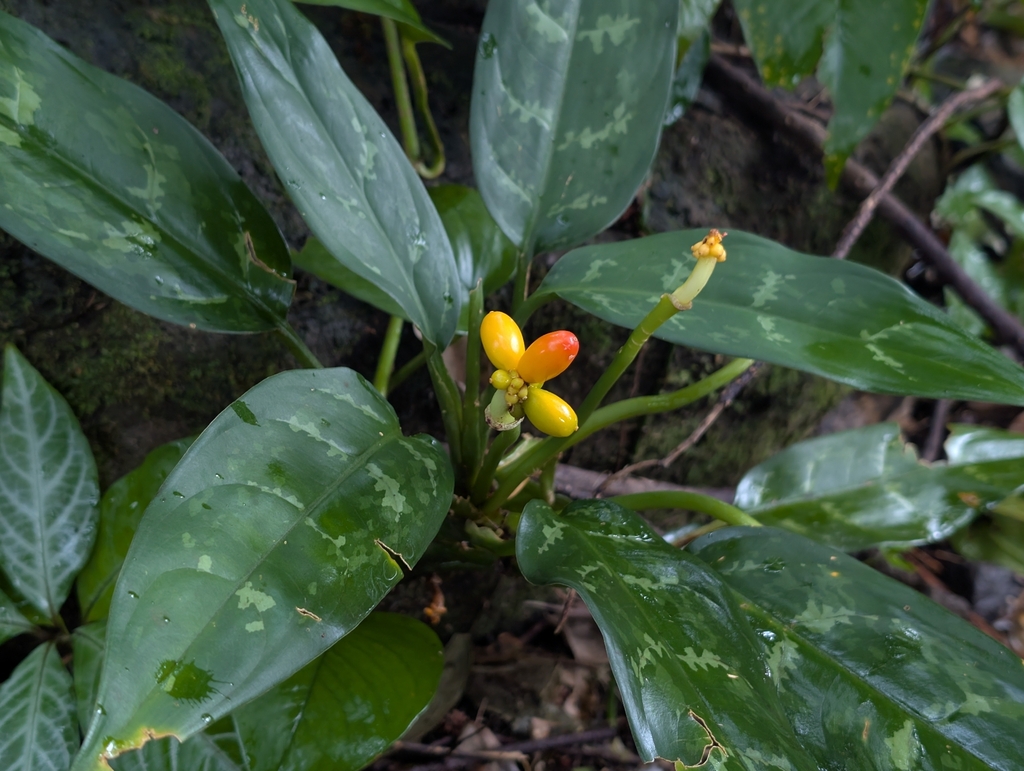
This is a fantastic plant for beginners because it handles low light so well. It features beautiful, patterned foliage that adds a nice touch to any room. You will love how easy it is to keep this plant happy.

At a glance
- Care level
- Easy
- Plant type
- Tropical perennial
- Light
- Partial shade to indirect light
- Indoor light
- Medium light
- Water
- Every 7 to 14 days
- Mature size
- 2 to 3 feet
- Growth rate
- Slow
- Hardiness
- USDA 10 to 12
- Bloom time
- Sporadic in summer
Care
Keep the soil slightly moist but never soggy to prevent root rot. Watch for yellowing leaves, which often signal that you are overwatering. Wipe the leaves occasionally to keep them dust free and healthy.
- Watering
- Water when the top inch of soil feels dry to the touch.
- Feeding
- Feed with a balanced liquid fertilizer during the growing season.
- Pruning
- Trim away any yellow or damaged leaves to encourage new growth.
- Repotting
- Repot only when the plant becomes root bound in its current container.
- Soil
- Well draining peat based mix
- Soil pH
- 5.6 to 6.5
- Temperature
- 15 to 27°C
- Humidity
- 50 to 80%
- Drought tolerance
- Moderate
- Lifespan
- Perennial, typically 5 to 10 years.
- Deer and rabbits
- Moderate
Signs it needs repotting
- Roots growing out of the drainage holes.
- Water running straight through the soil.
- Stunted growth.
Safety
- People
- The plant contains calcium oxalate crystals that cause irritation to the mouth and throat if chewed.
- Pets
- This plant is toxic to cats and dogs if ingested.
- Children
- Keep this plant out of reach of children as the leaves are toxic if ingested.
- Contact allergens
- The sap can cause skin irritation or dermatitis in sensitive individuals.
- Airborne allergens
- There is no significant evidence that this plant causes respiratory allergies.
- Edibility
- This plant is toxic if ingested and should never be consumed by humans or pets.
How to identify it
- Oval shaped dark green leaves
- Silver or cream leaf variegation
- Sturdy upright growth habit
- Small white spathe flowers
- Height
- 0.3 to 0.9m
- Spread
- 0.3 to 0.6m
- Leaves
- green, silver, white, evergreen
- Flowers
- white, green, 5 to 10cm
- Fruit
- red, Rarely produced indoors
Problems to watch for
- MealybugsCommon
- Root RotCommon
- Brown Leaf EdgesUncommon
- Spider MitesUncommon
Check your chinese evergreen from a photo
Pocket Botanist looks at a photo of your plant and tells you what's wrong and what to try first.
Scan with your phone's camera to get the app
Or go to pocketbotanist.app/get on your phone
Growing it
- Propagation
- division, cuttings
- When to plant
- Spring, Summer
- Overwintering
- Keep the plant in a warm spot away from cold drafts or heating vents. Reduce watering slightly during the winter months.
- In containers
- It grows very well in containers and prefers a pot with drainage holes that is only slightly larger than the root ball.
Stem Cuttings
- 1. Cut a healthy stem with at least two leaves.
- 2. Place the cutting in a glass of water.
- 3. Change the water weekly until roots appear.
- 4. Pot into soil once roots are 5cm long.
Group plants with similar water needs together to maintain a consistent microclimate.
Grows well with
- Peace Lily · They share similar light and humidity requirements.
- Pothos · They both thrive in similar indoor conditions.
Similar species
- Dieffenbachia · Similar foliage patterns but grows much larger.
Science
- Family
- Araceae
- Genus
- Aglaonema
- Order
- Alismatales
- Class
- Liliopsida
- Native range
- Tropical and subtropical regions of Asia.
- Conservation
- Not currently threatened in its native habitat.
It grows on the forest floor in tropical regions where it receives filtered light and consistent moisture.
- Value to wildlife
- indoor air purification
- Pollinators
- bees
- Uses
- houseplant, office plant, air purifier
Through the year
Ecological indicators
- Salinity
- 2/9
- Soil reaction
- 6/9
- Light
- 2/9
- Temperature
- 8/9
- Moisture
- 6/9
- Nutrients
- 4/9
Taxonomy resolved against GBIF.
Questions people ask
- How often should I water it?
- Water when the top inch of soil feels dry to the touch.
- Does it need direct sunlight?
- No, it prefers bright, indirect light and can tolerate low light.
Where the name comes from
The name Aglaonema comes from the Greek words aglaos meaning bright and nema meaning thread, referring to the stamens. The species name commutatum means changed or variable.
Good to know
- It is often called the Chinese Evergreen.
- It is very tolerant of low light levels.
- The variegated patterns are highly sought after by collectors.
Also in
Keep your chinese evergreen growing
This page is a general guide. Save your plant in Pocket Botanist and you get care reminders timed for this plant, plus a care history that shows what worked.
Scan with your phone's camera to get the app
Or go to pocketbotanist.app/get on your phone
This guide was generated with AI on and checked against GBIF taxonomy. It is general information, not horticultural or veterinary advice. Read about how we build these guides.