 Pocket Botanist
Guide botanique
Persian speedwell.
Veronica persica
Prononciation veh-RON-ih-kah PER-sih-kah
Aussi appelée Bird's Eye Speedwell, Birdeye speedwell, Birds-eye Speedwell, Buxbaum's Speedwell, Common Field-Speedwell, Field speedwell, Persian speedwell, Scrambling speedwell


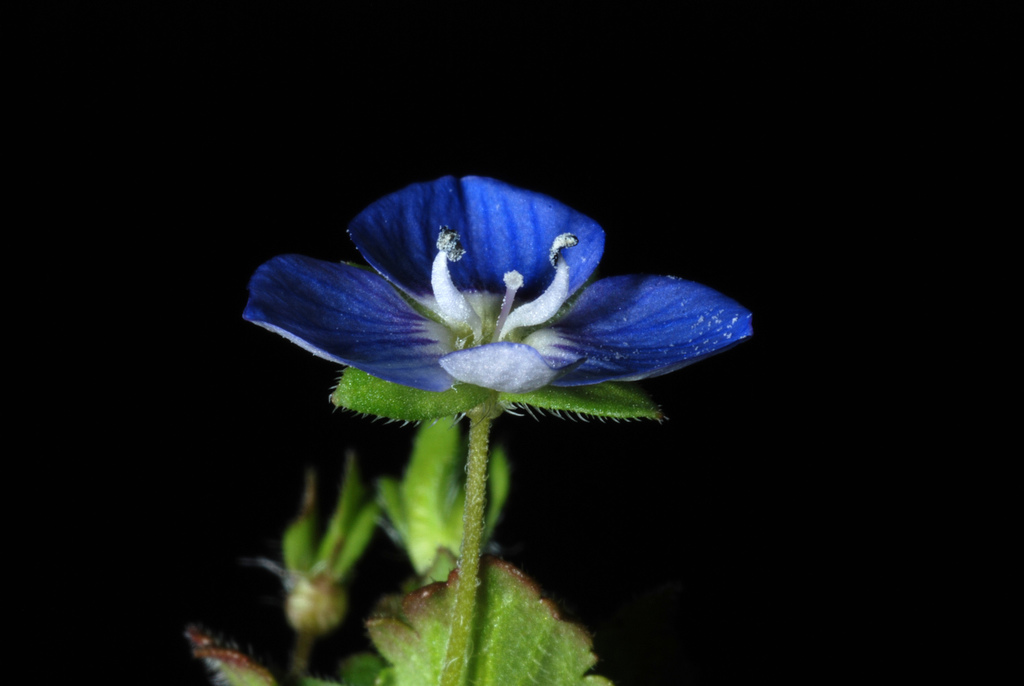
This charming little plant is a common sight in gardens and fields during the cooler months. It is a low growing annual that spreads quickly across the ground. You will love its tiny, bright blue flowers that pop up in early spring.

En un coup d'œil
- Niveau d'entretien
- Facile
- Type de plante
- Annual herb
- Lumière
- Full sun to partial shade
- Lumière en intérieur
- Lumière vive indirecte
- Arrosage
- Tous les 3 à 7 jours
- Taille adulte
- 6 to 12 inches tall
- Croissance
- Rapide
- Rusticité
- USDA 4 à 9
- Floraison
- Early spring to late autumn
Entretien
Keep the soil consistently moist but not waterlogged to support its rapid growth. Watch for wilting during dry spells, as this plant prefers cooler and damp conditions. It is quite hardy and often reseeds itself naturally.
- Arrosage
- Water whenever the top inch of soil feels dry to the touch.
- Engrais
- Apply a balanced liquid fertilizer sparingly during the active growing season.
- Taille
- Trim back leggy stems to encourage a bushier shape and more blooms.
- Rempotage
- Since this is an annual, you typically do not need to repot it.
- Sol
- Well draining loamy soil
- pH du sol
- 6.0 to 7.5
- Température
- -15 à 30°C
- Humidité
- 40 à 70%
- Résistance à la sécheresse
- Moyenne
- Durée de vie
- Annual, typically 1 year
- Résistance aux chevreuils et lapins
- Moyenne
Sécurité
- Humains
- It is generally considered non-toxic, but ingestion is not recommended.
- Enfants
- There are no specific safety concerns for children, though it is best to discourage eating wild plants.
- Allergènes de contact
- No significant skin irritation is associated with this plant.
- Allergènes aéroportés
- The pollen may cause mild reactions in sensitive individuals during peak flowering.
- Comestibilité
- This plant is not typically consumed and may cause digestive upset if ingested in quantity.
Comment l'identifier
- Tiny bright blue flowers
- Oval leaves with serrated edges
- Hairy stems and foliage
- Low growing spreading habit
- Hauteur
- 0,05 à 0,3m
- Envergure
- 0,1 à 0,4m
- Feuilles
- medium green, deciduous
- Fleurs
- bright blue, white, 0,5 à 1,2cm
- Fruits
- brown, summer to autumn
Problèmes courants
- Downy mildew — Appears as yellow patches on leaves with fuzzy growth underneath during damp conditions.
La cultiver
- Multiplication
- seed
- Quand planter
- spring, autumn
- Hivernage
- In mild climates, it may remain green through winter. In colder areas, it dies back and relies on seeds to survive until spring.
- En pot
- It is rarely grown in containers as it is considered a weed, but it would grow easily in any standard potting mix.
Seed
- 1. Collect mature seed pods in late spring.
- 2. Scatter seeds directly onto disturbed soil.
- 3. Keep the area lightly moist until germination occurs.
Because this plant spreads rapidly, it is best to manage it as a temporary ground cover rather than a permanent companion.
Bonnes associations
- Common Chickweed — They often share the same disturbed soil habitats in early spring.
- Purple deadnettle — These species frequently grow together in cool, moist garden beds.
Espèces similaires
- germander speedwell — It has a similar flower color but grows as a more persistent perennial.
Science
- Famille
- Plantaginaceae
- Genre
- Veronica
- Ordre
- Lamiales
- Classe
- Magnoliopsida
- Région d'origine
- Eurasia
- Préservation
- It is a widespread, non-native weed in many regions and is not of conservation concern.
It thrives in disturbed habitats like gardens and roadsides by producing large quantities of seeds that persist in the soil.
- Intérêt pour la faune
- nectar source
- Pollinisateurs
- abeilles, papillons
- Utilisations
- ground cover, wildflower garden
Au fil des saisons
Repères écologiques
- Salinité
- 2/9
- Réaction du sol
- 6/9
- Lumière
- 6/9
- Température
- 5/9
- Humidité
- 5/9
- Nutriments
- 6/9
Taxonomie vérifiée avec le GBIF.
Ce qu'on demande souvent
- Is this plant a weed?
- Yes, it is widely considered an invasive weed in gardens and agricultural fields.
- How do I get rid of it?
- Hand-pulling before it sets seed is the most effective way to manage small populations.
D'où vient le nom
The genus name honors Saint Veronica, while the species name persica refers to its historical association with the Persian region.
Bon à savoir
- It is commonly called bird's eye speedwell because of its bright, eye-like blue flowers.
- The plant is an efficient colonizer that can germinate in almost any disturbed soil.
- It was introduced to North America from Eurasia in the 19th century.
Ta plante a mauvaise mine ?
Cette page est un guide général. Pocket Botanist diagnostique les problèmes directement à partir d'une photo de ta plante, adapte l'arrosage à sa luminosité et te prévient quand il faut t'en occuper.
Ce guide a été généré par IA et vérifié avec la taxonomie du GBIF. Il s'agit d'informations générales, et non de conseils horticoles ou vétérinaires. Découvre comment nous concevons ces guides.