 Pocket Botanist
Pflanzenratgeber
Persian speedwell.
Veronica persica
Aussprache veh-RON-ih-kah PER-sih-kah
Auch bekannt als Bird's Eye Speedwell, Birdeye speedwell, Birds-eye Speedwell, Buxbaum's Speedwell, Common Field-Speedwell, Field speedwell, Persian speedwell, Scrambling speedwell


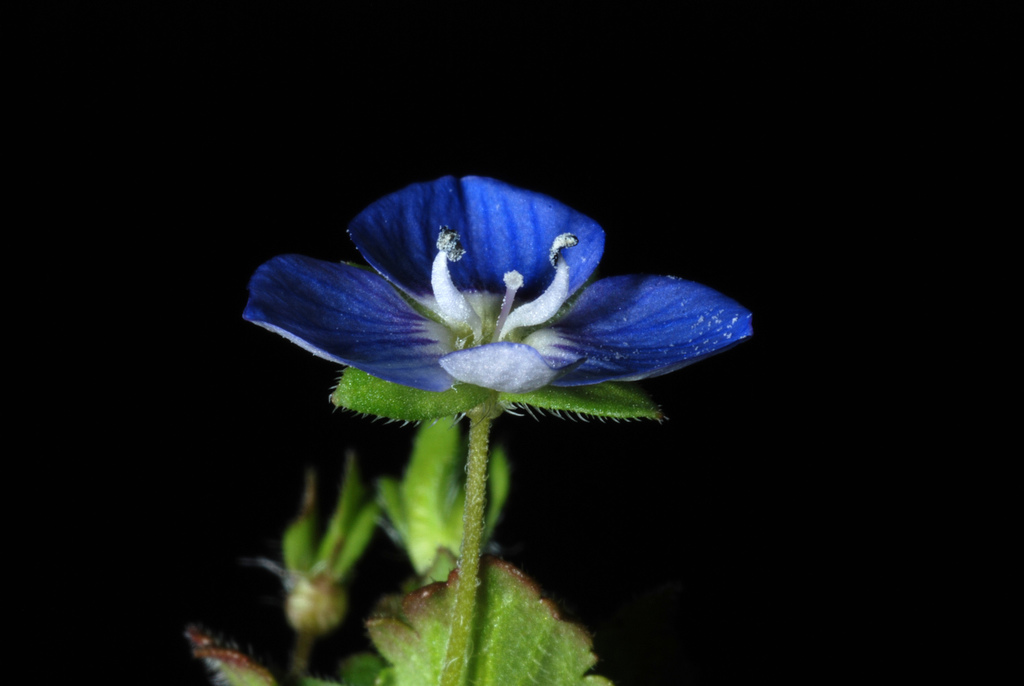
This charming little plant is a common sight in gardens and fields during the cooler months. It is a low growing annual that spreads quickly across the ground. You will love its tiny, bright blue flowers that pop up in early spring.

Auf einen Blick
- Pflegestufe
- Einfach
- Pflanzenart
- Annual herb
- Licht
- Full sun to partial shade
- Licht im Innenraum
- Hell, indirekt
- Gießen
- Alle 3 bis 7 Tage
- Endgröße
- 6 to 12 inches tall
- Wachstum
- Schnell
- Winterhärte
- USDA 4 bis 9
- Blütezeit
- Early spring to late autumn
Pflege
Keep the soil consistently moist but not waterlogged to support its rapid growth. Watch for wilting during dry spells, as this plant prefers cooler and damp conditions. It is quite hardy and often reseeds itself naturally.
- Gießen
- Water whenever the top inch of soil feels dry to the touch.
- Düngen
- Apply a balanced liquid fertilizer sparingly during the active growing season.
- Schneiden
- Trim back leggy stems to encourage a bushier shape and more blooms.
- Umtopfen
- Since this is an annual, you typically do not need to repot it.
- Boden
- Well draining loamy soil
- Boden-pH
- 6.0 to 7.5
- Temperatur
- -15 bis 30°C
- Luftfeuchtigkeit
- 40 bis 70%
- Trockenheitstoleranz
- Mittel
- Lebensdauer
- Annual, typically 1 year
- Wildverbiss-Resistenz
- Mittel
Sicherheit
- Menschen
- It is generally considered non-toxic, but ingestion is not recommended.
- Kinder
- There are no specific safety concerns for children, though it is best to discourage eating wild plants.
- Kontaktallergene
- No significant skin irritation is associated with this plant.
- Allergene in der Luft
- The pollen may cause mild reactions in sensitive individuals during peak flowering.
- Essbarkeit
- This plant is not typically consumed and may cause digestive upset if ingested in quantity.
So erkennst du die Pflanze
- Tiny bright blue flowers
- Oval leaves with serrated edges
- Hairy stems and foliage
- Low growing spreading habit
- Höhe
- 0,05 bis 0,3m
- Breite
- 0,1 bis 0,4m
- Blätter
- medium green, deciduous
- Blüten
- bright blue, white, 0,5 bis 1,2cm
- Früchte
- brown, summer to autumn
Häufige Probleme
- Downy mildew — Appears as yellow patches on leaves with fuzzy growth underneath during damp conditions.
Standort und Pflege
- Vermehrung
- seed
- Pflanzzeit
- spring, autumn
- Überwinterung
- In mild climates, it may remain green through winter. In colder areas, it dies back and relies on seeds to survive until spring.
- Im Kübel
- It is rarely grown in containers as it is considered a weed, but it would grow easily in any standard potting mix.
Seed
- 1. Collect mature seed pods in late spring.
- 2. Scatter seeds directly onto disturbed soil.
- 3. Keep the area lightly moist until germination occurs.
Because this plant spreads rapidly, it is best to manage it as a temporary ground cover rather than a permanent companion.
Gute Pflanzpartner
- Common Chickweed — They often share the same disturbed soil habitats in early spring.
- Purple deadnettle — These species frequently grow together in cool, moist garden beds.
Ähnliche Arten
- germander speedwell — It has a similar flower color but grows as a more persistent perennial.
Botanisches
- Familie
- Plantaginaceae
- Gattung
- Veronica
- Ordnung
- Lamiales
- Klasse
- Magnoliopsida
- Ursprüngliche Heimat
- Eurasia
- Artenschutz
- It is a widespread, non-native weed in many regions and is not of conservation concern.
It thrives in disturbed habitats like gardens and roadsides by producing large quantities of seeds that persist in the soil.
- Nutzen für Wildtiere
- nectar source
- Bestäuber
- Bienen, Schmetterlinge
- Verwendung
- ground cover, wildflower garden
Im Jahresverlauf
Ökologische Zeigerwerte
- Salzgehalt
- 2/9
- Bodenreaktion
- 6/9
- Licht
- 6/9
- Temperatur
- 5/9
- Feuchtigkeit
- 5/9
- Nährstoffe
- 6/9
Taxonomie abgeglichen mit GBIF.
Häufige Fragen
- Is this plant a weed?
- Yes, it is widely considered an invasive weed in gardens and agricultural fields.
- How do I get rid of it?
- Hand-pulling before it sets seed is the most effective way to manage small populations.
Woher der Name kommt
The genus name honors Saint Veronica, while the species name persica refers to its historical association with the Persian region.
Gut zu wissen
- It is commonly called bird's eye speedwell because of its bright, eye-like blue flowers.
- The plant is an efficient colonizer that can germinate in almost any disturbed soil.
- It was introduced to North America from Eurasia in the 19th century.
Probleme mit Persian speedwell?
Diese Seite bietet allgemeine Infos. Pocket Botanist erkennt Probleme anhand eines Fotos deiner echten Pflanze, passt das Gießen an dein Licht und deinen Standort an und erinnert dich an die Pflege.
Dieser Ratgeber wurde mit KI erstellt und mit der GBIF-Taxonomie abgeglichen. Er dient zur allgemeinen Information und ersetzt keine gärtnerische oder tierärztliche Beratung. Hier erfährst du, wie wir diese Ratgeber erstellen.