 Pocket Botanist
Guide botanique
Black eyed susan vine.
Thunbergia alata
Prononciation thun-BER-jee-uh uh-LAY-tuh
Aussi appelée Black Eyed Susan, Black eyed Susan vine, Black-eyed Susan, Black-eyed Susan clock vine, Bright eyes, Winged clockvine, Black-eyed Susan, Black-eyed Susan vine, Blackeyed Susan Clockvine, Blackeyed Susan vine, black-eyed-Susan-vine



This charming climber is a fast grower that loves to scramble up trellises. It produces cheerful, trumpet shaped flowers with a signature dark center. You'll find it's a fantastic choice for adding vertical interest to your garden.
En un coup d'œil
- Niveau d'entretien
- Facile
- Type de plante
- Flowering vine
- Lumière
- Full sun to partial shade
- Lumière en intérieur
- Lumière vive indirecte
- Arrosage
- Tous les 2 à 4 jours
- Taille adulte
- 6 to 8 feet
- Croissance
- Rapide
- Rusticité
- USDA 10 à 11
- Floraison
- Late spring to autumn
Entretien
Provide a sturdy trellis for the vines to climb as they grow. Keep an eye out for pests like spider mites, especially when the air is dry. Ensure the soil stays consistently moist but never soggy to keep the plant happy.
- Arrosage
- Water whenever the top inch of soil feels dry to the touch.
- Engrais
- Apply a balanced liquid fertilizer every two weeks during the active growing season.
- Taille
- Trim back long stems occasionally to encourage a bushier shape and more blooms.
- Rempotage
- Repot only if the plant becomes root bound or you need to refresh the soil.
- Sol
- Well draining, rich potting mix
- pH du sol
- 6.0 to 7.5
- Température
- 10 à 30°C
- Humidité
- 50 à 70%
- Résistance à la sécheresse
- Faible
- Durée de vie
- Tender perennial, often grown as an annual.
- Résistance aux chevreuils et lapins
- Moyenne
Signes qu'il faut rempoter
- Roots growing out of the drainage holes.
- Water running straight through the pot without soaking in.
- Stunted growth during the peak growing season.
Sécurité
- Humains
- The plant is generally considered non-toxic, but ingestion should be avoided.
- Enfants
- Keep the small, round seeds away from young children as they pose a potential choking hazard.
- Allergènes de contact
- There are no notable skin irritants associated with this plant.
- Allergènes aéroportés
- The pollen is not typically considered a significant airborne allergen.
- Comestibilité
- This plant is not intended for consumption and may cause digestive upset if ingested.
Comment l'identifier
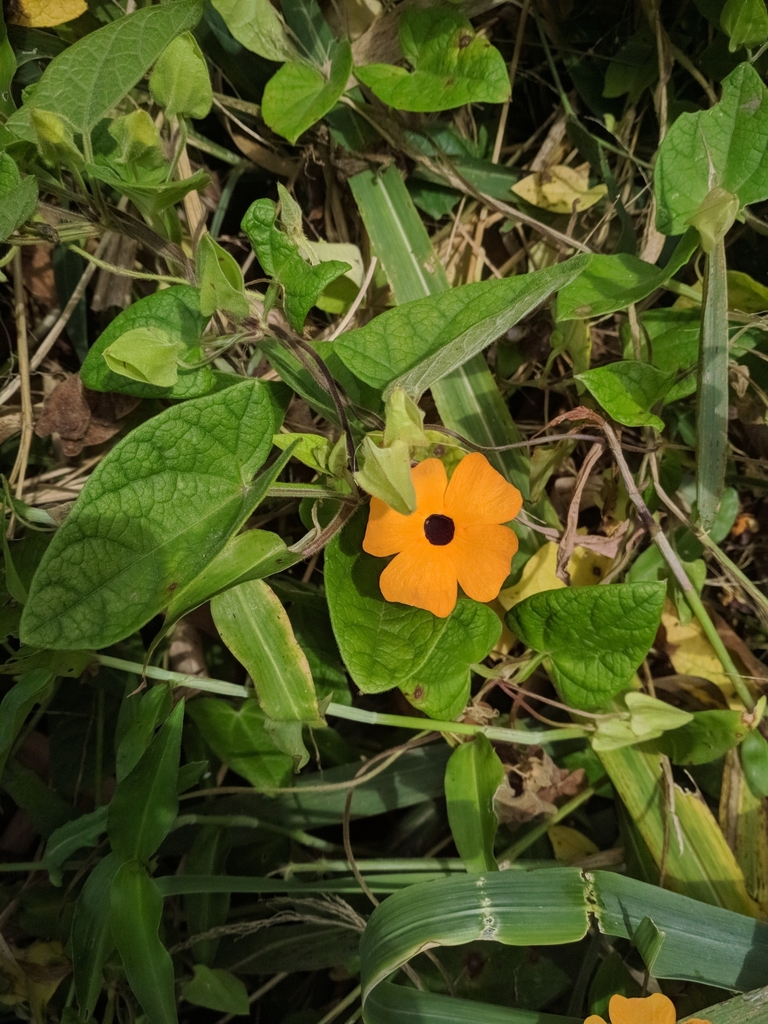
- Trumpet shaped flowers with dark centers
- Heart shaped or triangular green leaves
- Vigorous twining vine growth habit
- Winged leaf stalks
- Hauteur
- 1,5 à 2,5m
- Envergure
- 0,3 à 0,6m
- Feuilles
- green, deciduous
- Fleurs
- orange, yellow, white, 3 à 5cm
- Fruits
- brown, late summer
Problèmes courants
- Whitefly — Small white insects that congregate on the undersides of leaves and suck sap.
- Spider mites — Tiny arachnids that cause stippling on leaves and thrive in dry, hot conditions.
La cultiver
- Multiplication
- seed, cuttings
- Quand planter
- spring
- Hivernage
- In cold climates, bring the container indoors to a bright, frost-free location. Keep the soil barely moist until spring growth resumes.
- En pot
- It is excellent for containers, provided you use a pot at least 30 centimeters in diameter with a sturdy trellis.
Seed
- 1. Soak seeds in warm water for 24 hours before planting.
- 2. Sow seeds 1 centimeter deep in moist seed-starting mix.
- 3. Keep at 20 to 25 Celsius until germination occurs.
Pair this vine with plants that enjoy similar moisture levels to ensure the soil stays consistently damp.
Bonnes associations
- Sweet Potato — The trailing habit of the sweet potato vine complements the vertical growth of the black-eyed susan vine.
- Garden Petunia — Petunias provide a colorful, low-growing base that contrasts well with the climbing vine.
Espèces similaires
- Rudbeckia — Despite the shared common name, this is a completely different plant that grows as a clump-forming perennial.
Science
- Famille
- Acanthaceae
- Genre
- Thunbergia
- Ordre
- Lamiales
- Classe
- Magnoliopsida
- Région d'origine
- Tropical eastern Africa.
- Préservation
- This species is not of conservation concern and is considered invasive in some tropical regions.
It grows as a vigorous climber in forest edges and disturbed areas, using its twining stems to reach sunlight.
- Intérêt pour la faune
- nectar source
- Pollinisateurs
- abeilles, papillons
- Utilisations
- container gardening, trellis climber, hanging baskets
Au fil des saisons
Repères écologiques
- Salinité
- 2/9
- Réaction du sol
- 6/9
- Lumière
- 7/9
- Température
- 8/9
- Humidité
- 6/9
- Nutriments
- 5/9
Taxonomie vérifiée avec le GBIF.
Ce qu'on demande souvent
- Does it need a trellis?
- Yes, it is a twining vine that requires support to climb effectively.
- Can I grow it in a pot?
- It thrives in containers as long as it has a trellis and consistent moisture.
D'où vient le nom
The genus honors Carl Peter Thunberg, while the species name alata refers to the winged petioles of the leaves.
Bon à savoir
- It is a fast growing vine that can reach its full height in a single season.
- The genus is named after Swedish botanist Carl Peter Thunberg.
- It is often grown as an annual in cooler climates.
- The flowers close up at night.
Ta plante a mauvaise mine ?
Cette page est un guide général. Pocket Botanist diagnostique les problèmes directement à partir d'une photo de ta plante, adapte l'arrosage à sa luminosité et te prévient quand il faut t'en occuper.
Ce guide a été généré par IA et vérifié avec la taxonomie du GBIF. Il s'agit d'informations générales, et non de conseils horticoles ou vétérinaires. Découvre comment nous concevons ces guides.