 Pocket Botanist
Guide botanique
Rudbeckia.
Rudbeckia hirta
Prononciation rud-BEK-ee-uh HER-tuh
Aussi appelée Rudbeckia, Rudbeckia, Rudbeckia


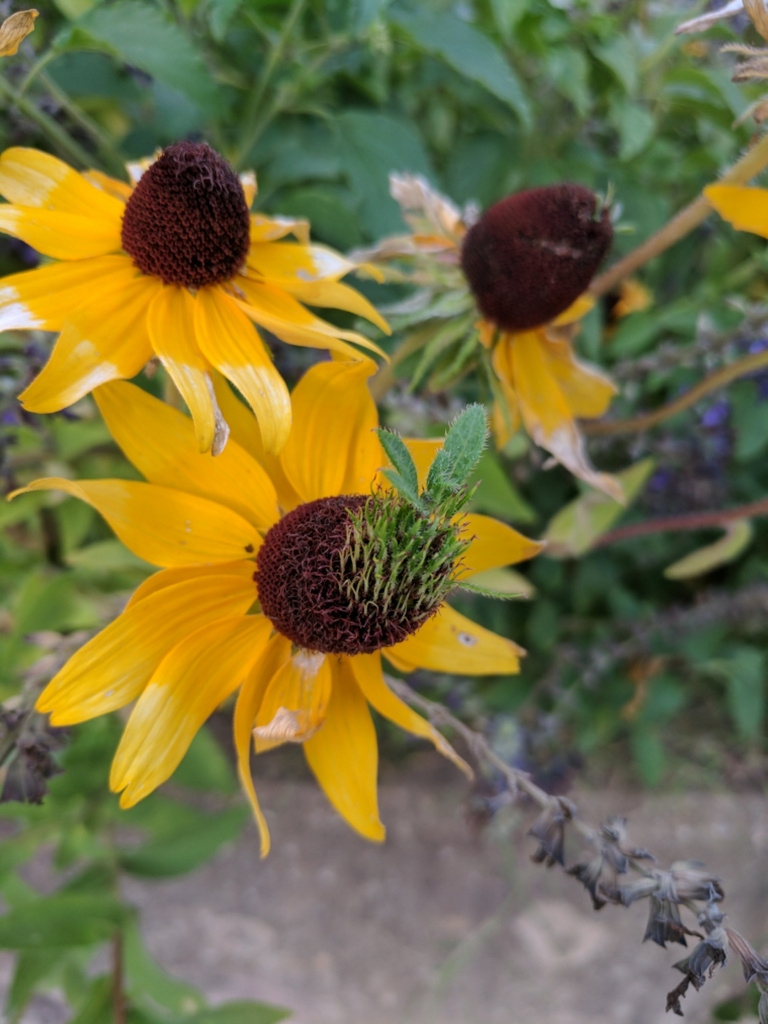
Les rudbeckias sont des plantes vivaces joyeuses, aimant le soleil, qui apportent un air de prairie classique à tout jardin. Elles produisent des fleurs semblables à des marges avec des centres foncés qui attirent les pollinisateurs tout au long de l'été. Ces plantes sont très adaptables et prospèrent dans diverses conditions de sol.

En un coup d'œil
- Niveau d'entretien
- Facile
- Type de plante
- Vivace herbacée
- Lumière
- Plein soleil
- Lumière en intérieur
- Soleil direct
- Arrosage
- Tous les 5 à 10 jours
- Taille adulte
- 60 à 90 cm
- Croissance
- Rapide
- Rusticité
- USDA 3 à 9
- Floraison
- Début de l'été à la mi-automne
Entretien
Plantez dans un endroit ensoleillé et assurez-vous que le sol draine bien. Retirez les fleurs fanées pour encourager plus de floraisons, et surveillez l'oïdium si la circulation de l'air est médiocre. Elles sont assez rustiques mais apprécient une bonne humidité pendant les périodes sèches.
- Arrosage
- Gardez le sol uniformément humide mais pas détrempé, surtout pendant la première saison de croissance.
- Engrais
- Appliquez un engrais équilibré à libération lente une fois au début du printemps pour favoriser une croissance saine.
- Taille
- Coupez le feuillage mort jusqu'au sol à la fin de l'hiver ou au début du printemps avant que la nouvelle croissance n'apparaisse.
- Rempotage
- Si vous cultivez en pots, renouvelez le mélange de terreau et transplantez dans un pot légèrement plus grand tous les deux ans.
- Sol
- Sol bien drainé, limoneux
- pH du sol
- 6.0 à 7.5
- Température
- -20 à 35°C
- Humidité
- 40 à 70%
- Résistance à la sécheresse
- Moyenne
- Durée de vie
- Vivace de courte durée, généralement de 2 à 3 ans.
- Résistance aux chevreuils et lapins
- Moyenne
Signes qu'il faut rempoter
- Des racines sortent des trous de drainage.
- L'eau traverse le pot sans s'infiltrer.
- Croissance ralentie pendant la saison active.
Sécurité
- Humains
- La plante est généralement considérée comme peu toxique mais peut provoquer une irritation cutanée chez les personnes sensibles.
- Animaux
- Cette plante est généralement considérée comme non toxique pour les chats et les chiens.
- Enfants
- La plante n'est pas intrinsèquement dangereuse pour les enfants, mais le feuillage poilu peut être rugueux s'il est manipulé.
- Allergènes de contact
- Les poils rugueux sur les tiges et les feuilles peuvent provoquer une irritation mécanique de la peau.
- Allergènes aéroportés
- Le pollen peut déclencher des réactions allergiques chez les personnes sensibles pendant la floraison de fin d'été.
- Comestibilité
- Cette plante n'est pas considérée comme comestible et peut provoquer une légère détresse gastrique si ingérée.
Comment l'identifier
- Pétales jaunes ressemblant à des marges
- Cône central brun foncé
- Tiges rugueuses et poilues
- Feuilles vertes en forme de lance
- Hauteur
- 0,3 à 0,9m
- Envergure
- 0,3 à 0,6m
- Feuilles
- vert, caduc
- Fleurs
- jaune, marron, 5 à 10cm
Problèmes à surveiller
- OïdiumCourant
- Taches foliairesCourant
- Jaunisse de l'asterPeu courant
- Pourriture des racinesPeu courant
- PuceronsPeu courant
Par symptôme
Vérifie la santé de ta plante en photo
Pocket Botanist analyse une photo de ta plante et te dit ce qui ne va pas et quoi essayer en premier.
La cultiver
- Multiplication
- semis
- Quand planter
- printemps, automne
- Hivernage
- Laissez les têtes de fleurs séchées debout pendant l'hiver pour fournir de la nourriture aux oiseaux et de l'intérêt dans le jardin. Taillez au ras du sol au début du printemps.
- En pot
- Elle pousse bien en conteneur à condition de lui fournir un pot d'au moins 30 cm de profondeur et un bon drainage.
Semis
- Collectez les têtes de graines sèches à la fin de l'automne.
- Semez les graines directement dans un sol préparé en automne ou au début du printemps.
- Recouvrez légèrement de terre car elles ont besoin d'un peu de lumière pour germer.
Plantez en groupes pour créer un fort impact visuel et fournir une meilleure cible pour les pollinisateurs.
Bonnes associations
- Échinacée pourpre — Ils partagent des besoins similaires en lumière et en humidité tout en offrant un joli contraste de couleurs.
- Liatris à épis — Les épis verticaux du Liatris complètent la forme arrondie de la Susan aux yeux noirs.
Espèces similaires
- Rudbeckia triloba — Elle a des fleurs plus petites et un port plus ramifié que R. hirta.
Science
- Famille
- Asteraceae
- Genre
- Rudbeckia
- Ordre
- Asterales
- Classe
- Magnoliopsida
- Région d'origine
- Amérique du Nord
- Préservation
- Cette espèce est répandue et stable dans son aire de répartition indigène.
C'est une espèce pionnière qui colonise rapidement les terrains perturbés et les prairies ouvertes.
- Intérêt pour la faune
- source de nectar, source de graines pour les oiseaux
- Pollinisateurs
- abeilles, papillons, papillons de nuit
- Utilisations
- jardins pour pollinisateurs, plantations en prairie, fleurs coupées
Au fil des saisons
Repères écologiques
- Salinité
- 2/9
- Réaction du sol
- 5/9
- Lumière
- 7/9
- Température
- 5/9
- Nutriments
- 4/9
- Humidité
- 5/9
Taxonomie vérifiée avec le GBIF.
Ce qu'on demande souvent
- Est-ce une vivace ?
- C'est techniquement une vivace de courte durée qui se comporte souvent comme une annuelle ou une bisannuelle.
- Faut-il supprimer les fleurs fanées ?
- La suppression des fleurs fanées encourage plus de floraisons, mais les laisser permet aux oiseaux de manger les graines.
D'où vient le nom
Le genre honore Olof Rudbeck, un botaniste suédois, tandis que hirta fait référence à la texture velue des feuilles.
Bon à savoir
- C'est la fleur d'État du Maryland.
- Le centre sombre est en fait un amas de minuscules fleurons en forme de disque.
- Elle prospère dans les sols perturbés et les champs ouverts.
Garde ta plante en pleine forme
Cette page est un guide général. Enregistre ta plante dans Pocket Botanist et tu reçois des rappels d'entretien adaptés à cette plante, ainsi qu'un historique d'entretien qui montre ce qui a marché.
Ce guide a été généré par IA et vérifié avec la taxonomie du GBIF. Il s'agit d'informations générales, et non de conseils horticoles ou vétérinaires. Découvre comment nous concevons ces guides.