 Pocket Botanist
Guide botanique
Arrowhead Vine.
Syngonium podophyllum
Prononciation sin-GO-nee-um po-do-FILL-um
Aussi appelée African evergreen, American Evergreen, Arrow-Head Vine, Arrowhead Plant, Arrowhead Vine, Arrowhead plant, Arrowhead vine, Arrowhead philodendron, Goosefoot, African evergreen, American evergreen, Nephthytis, Emerald jewel, Patte d'oie, Plante patte d'oie


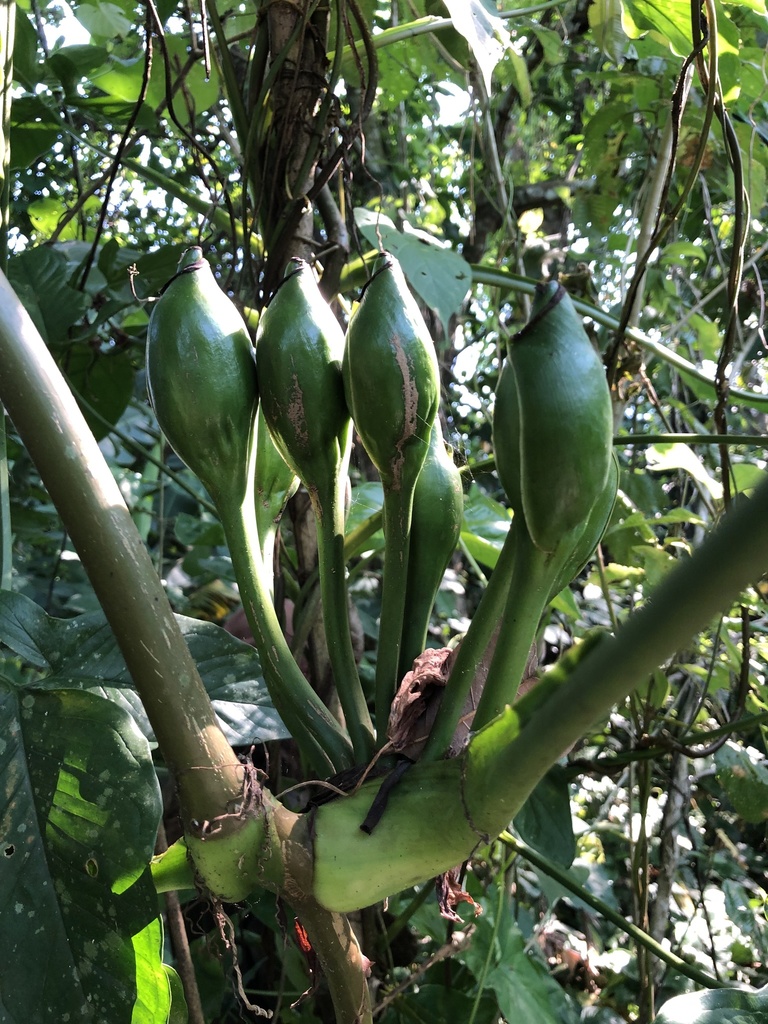
Cette charmante plante tropicale grimpante est appréciée pour la forme changeante de ses feuilles à maturité. Elle prospère dans les endroits chauds et humides et est superbe dans un panier suspendu ou grimpant sur un tuteur en mousse. Vous constaterez qu'elle s'adapte assez bien à la vie intérieure.
En un coup d'œil
- Niveau d'entretien
- Facile
- Type de plante
- Plante vivace tropicale grimpante
- Lumière
- Une lumière vive et indirecte est préférable.
- Lumière en intérieur
- Lumière vive indirecte
- Arrosage
- Tous les 5 à 10 jours
- Taille adulte
- 100 à 150 cm
- Croissance
- Rapide
- Rusticité
- USDA 10 à 12
- Floraison
- Fleur rarement à l'intérieur
Entretien
Gardez le sol constamment humide, mais jamais détrempé pour éviter les problèmes de racines. Surveillez les feuilles pendantes comme signe qu'elle a soif, et essuyez le feuillage de temps en temps pour le dépoussiérer. Si la plante devient trop longue, taillez simplement les tiges pour encourager une forme plus touffue.
- Arrosage
- Arrosez lorsque le premier centimètre de terre est sec au toucher.
- Engrais
- Nourrissez avec un engrais liquide équilibré pendant la saison de croissance.
- Taille
- Taillez les longues tiges pour maintenir une forme compacte.
- Rempotage
- Rempotez lorsque les racines remplissent le pot actuel.
- Sol
- Mélange de terreau à base de tourbe bien drainant.
- pH du sol
- 6.0 à 7.0
- Température
- 15 à 29°C
- Humidité
- 60 à 90%
- Résistance à la sécheresse
- Faible
- Durée de vie
- Vivace, généralement de 5 à 10 ans avec des soins appropriés.
- Résistance aux chevreuils et lapins
- Faible
Signes qu'il faut rempoter
- Racines sortant des trous de drainage.
- L'eau traverse directement le pot sans s'infiltrer.
- Croissance ralentie malgré une lumière et une alimentation appropriées.
Sécurité
- Humains
- Toutes les parties de la plante contiennent des cristaux d'oxalate de calcium qui provoquent une irritation sévère de la bouche, de la gorge et du tube digestif.
- Animaux
- Cette plante est toxique pour les chats et les chiens en cas d'ingestion.
- Enfants
- Gardez cette plante hors de portée des enfants car les feuilles sont très toxiques si elles sont mâchées ou avalées.
- Allergènes de contact
- La sève laiteuse peut provoquer une irritation cutanée ou des éruptions cutanées chez les personnes sensibles.
- Allergènes aéroportés
- Il n'y a aucune preuve significative que cette plante provoque des allergies respiratoires.
- Comestibilité
- Cette plante est toxique si ingérée et ne doit jamais être consommée par les humains ou les animaux domestiques.
Comment l'identifier
- Feuilles juvéniles en forme de flèche
- Feuilles lobées avec l'âge
- Habitude de croissance rampante ou grimpante
- Motifs panachés courants sur le feuillage
- Hauteur
- 0,3 à 1,5m
- Envergure
- 0,3 à 0,9m
- Feuilles
- vert, blanc, crème, evergreen
- Fleurs
- blanc, vert, 5 à 10cm
- Fruits
- red, rarely produced in cultivation
Problèmes à surveiller
- Pourriture des racinesCourant
- TétranyquesCourant
- Brunissement du bord des feuillesPeu courant
- Chute des feuillesPeu courant
- Cochenilles farineusesPeu courant
- Mouches du terreauPeu courant
- Acariens — Ces minuscules nuisibles prospèrent dans l'air sec des maisons et provoquent des piqûres sur les feuilles.
Par symptôme
Vérifie la santé de ta plante en photo
Pocket Botanist analyse une photo de ta plante et te dit ce qui ne va pas et quoi essayer en premier.
La cultiver
- Multiplication
- boutures de tige, division
- Quand planter
- printemps, été
- Hivernage
- Gardez la plante dans un endroit chaud, à l'abri des courants d'air froids, et réduisez légèrement l'arrosage à mesure que la croissance ralentit pendant les mois d'hiver.
- En pot
- Elle pousse très bien en pots et préfère un pot avec des trous de drainage qui est juste un peu plus grand que la motte.
Boutures de tige
- Sélectionnez une vigne saine avec au moins un nœud.
- Coupez juste en dessous du nœud avec des cisailles propres.
- Placez la bouture dans un bocal d'eau ou un terreau humide.
- Gardez-la à la lumière vive et indirecte jusqu'à ce que les racines se forment.
Regroupez les plantes ayant des besoins en eau similaires pour faciliter l'entretien.
Bonnes associations
- Spathiphyllum — Ils partagent des exigences similaires en matière de lumière indirecte et d'humidité constante.
- Pothos doré — Les deux plantes prospèrent dans les mêmes conditions intérieures et sont magnifiques ensemble dans des présentations mixtes.
Espèces similaires
- Philodendron Néon — Ils ont une habitude grimpante et une texture de feuille similaires.
- Ailes d'ange — Features similarly shaped leaves with striking color patterns.
Science
- Famille
- Araceae
- Genre
- Syngonium
- Ordre
- Alismatales
- Classe
- Liliopsida
- Région d'origine
- Régions tropicales du Mexique à l'Amérique du Sud.
- Préservation
- Il n'est actuellement pas inscrit comme espèce menacée ou en danger.
Il pousse comme épiphyte ou grimpeur dans le sous-étage des forêts tropicales, utilisant les arbres pour se soutenir afin d'atteindre une meilleure lumière.
- Intérêt pour la faune
- provides dense cover
- Pollinisateurs
- abeilles, coléoptères
- Utilisations
- ornementale d'intérieur, plante pour panier suspendu, plante pour terrarium
Au fil des saisons
Repères écologiques
- Salinité
- 2/9
- Réaction du sol
- 6/9
- Lumière
- 4/9
- Humidité
- 6/9
- Nutriments
- 5/9
- Température
- 8/9
Taxonomie vérifiée avec le GBIF.
Ce qu'on demande souvent
- Pourquoi les feuilles jaunissent-elles?
- Le jaunissement des feuilles indique généralement un arrosage excessif ou un mauvais drainage.
- A-t-elle besoin de lumière directe?
- Elle préfère une lumière vive et indirecte et brûlera au soleil direct.
D'où vient le nom
Le nom du genre Syngonium vient des mots grecs pour ovaires joints, tandis que podophyllum fait référence aux feuilles en forme de pied.
Bon à savoir
- On l'appelle souvent la plante flèche en raison de la forme de ses feuilles.
- C'est une plante grimpante qui adore s'accrocher si on lui donne un tuteur en mousse.
- Elle peut pousser dans l'eau seule pendant de longues périodes.
- La plante est originaire des forêts tropicales humides d'Amérique latine.
Aussi dans
Garde ta plante en pleine forme
Cette page est un guide général. Enregistre ta plante dans Pocket Botanist et tu reçois des rappels d'entretien adaptés à cette plante, ainsi qu'un historique d'entretien qui montre ce qui a marché.
Ce guide a été généré par IA et vérifié avec la taxonomie du GBIF. Il s'agit d'informations générales, et non de conseils horticoles ou vétérinaires. Découvre comment nous concevons ces guides.