 Pocket Botanist
Guide botanique
Mock orange.
Philadelphus coronarius
Prononciation fil-uh-DEL-fus kor-oh-NAIR-ee-us
Aussi appelée European mock-orange, Mock Orange, Mock-orange, Philadelphia mock-orange, Sweet mock orange



The mock orange is a lovely deciduous shrub known for its intensely fragrant, white flowers that bloom in late spring. It is a classic garden favorite that brings a sweet, citrusy scent to your outdoor space. You will find it is quite hardy and easy to grow in most temperate climates.
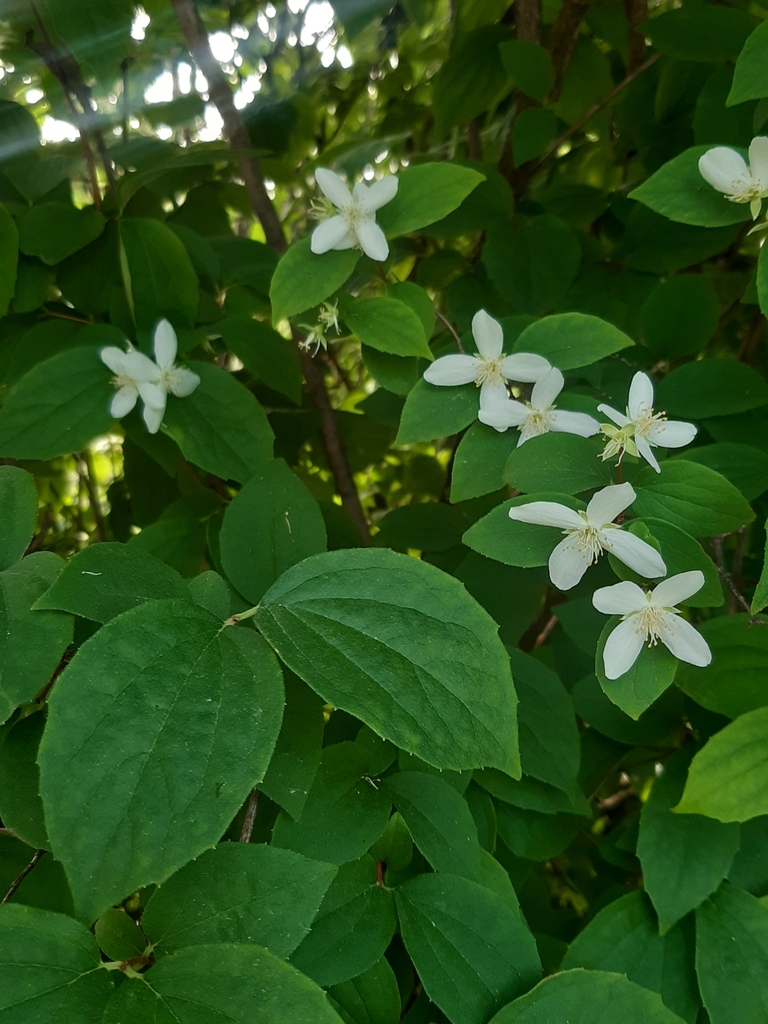
En un coup d'œil
- Niveau d'entretien
- Facile
- Type de plante
- Deciduous shrub
- Lumière
- Full sun to partial shade
- Lumière en intérieur
- Lumière vive indirecte
- Arrosage
- Tous les 7 à 14 jours
- Taille adulte
- 8 to 10 feet
- Croissance
- Moyenne
- Rusticité
- USDA 4 à 8
- Floraison
- Late spring to early summer
Entretien
Plant this shrub in well draining soil and provide plenty of space for its arching branches to spread. Keep an eye out for aphids on new growth and prune immediately after flowering to encourage next year's blooms. If the leaves start to yellow, check that your soil is not staying too soggy.
- Arrosage
- Water deeply whenever the top inch of soil feels dry to the touch.
- Engrais
- Apply a balanced, slow release fertilizer in early spring before new growth appears.
- Taille
- Prune back flowered stems by about a third immediately after the blossoms fade.
- Rempotage
- If growing in a container, move to a larger pot every few years to refresh the soil and provide more room for roots.
- Sol
- Well draining, fertile loam
- pH du sol
- 6.0 to 7.5
- Température
- -25 à 35°C
- Humidité
- 40 à 70%
- Résistance à la sécheresse
- Moyenne
- Durée de vie
- Perennial, typically 20 to 30 years
- Parfum
- Fort
- Résistance aux chevreuils et lapins
- Moyenne
Signes qu'il faut rempoter
- Roots growing out of the drainage holes.
- Stunted growth despite regular feeding.
- Water running straight through the pot.
Sécurité
- Humains
- All parts of the plant are considered mildly toxic if ingested.
- Enfants
- Keep away from small children as the plant parts are not meant for consumption.
- Allergènes de contact
- Handling the foliage may cause mild skin irritation in sensitive individuals.
- Allergènes aéroportés
- The strong fragrance can trigger respiratory discomfort for those sensitive to heavy floral scents.
- Comestibilité
- The plant is not considered edible and ingestion may cause mild digestive upset.
Comment l'identifier
- Opposite, ovate, dark green leaves
- Fragrant, four petaled white flowers
- Exfoliating, papery bark on older stems
- Upright, arching branch habit
- Hauteur
- 1,5 à 3m
- Envergure
- 1,5 à 2,5m
- Feuilles
- mid-green, deciduous
- Fleurs
- white, creamy-white, 2 à 4cm
- Fruits
- brown, Autumn
Problèmes courants
- Powdery mildew — A white fungal growth appears on leaves during humid, stagnant conditions.
- Aphids — Small insects that cluster on new growth and suck plant sap.
La cultiver
- Multiplication
- cuttings, division
- Quand planter
- spring, autumn
- Hivernage
- No special protection is needed as it is fully hardy. Mulch around the base in late autumn to protect roots.
- En pot
- It can grow in large containers, but it prefers being in the ground for long term health.
Softwood cuttings
- Take 10cm cuttings in early summer.
- Remove lower leaves and dip in rooting hormone.
- Place in moist potting mix and keep in a humid spot until rooted.
Plant near a seating area to fully enjoy the sweet fragrance during its short blooming window.
Bonnes associations
- Lavande d'Angleterre — They share similar sun and soil requirements.
- Peony — They provide a beautiful textural contrast during the late spring bloom.
Espèces similaires
- Philadelphus lewisii — A North American native with similar white, fragrant flowers.
Science
- Famille
- Hydrangeaceae
- Genre
- Philadelphus
- Ordre
- Cornales
- Classe
- Magnoliopsida
- Région d'origine
- Southern Europe and parts of Western Asia.
- Préservation
- Not of conservation concern.
It thrives in woodland edges and thickets where it benefits from moderate moisture and light.
- Intérêt pour la faune
- nectar source
- Pollinisateurs
- abeilles, papillons
- Utilisations
- ornamental shrub, fragrance garden, hedging
Au fil des saisons
Repères écologiques
- Salinité
- 2/9
- Réaction du sol
- 6/9
- Lumière
- 6/9
- Température
- 5/9
- Humidité
- 5/9
- Nutriments
- 5/9
Taxonomie vérifiée avec le GBIF.
Ce qu'on demande souvent
- Does it need full sun?
- It blooms best in full sun but tolerates partial shade.
- How do I prune it?
- Remove one third of the oldest stems right after flowering to maintain vigor.
D'où vient le nom
The genus name Philadelphus honors the Egyptian King Ptolemy Philadelphus, while coronarius refers to its use in garlands or crowns.
Bon à savoir
- It is commonly known as mock orange because of its scent.
- The flowers were historically used in wedding bouquets.
- It is a very hardy shrub that tolerates a wide range of soil types.
- Pruning immediately after flowering encourages better blooms next year.
Ta plante a mauvaise mine ?
Cette page est un guide général. Pocket Botanist diagnostique les problèmes directement à partir d'une photo de ta plante, adapte l'arrosage à sa luminosité et te prévient quand il faut t'en occuper.
Ce guide a été généré par IA et vérifié avec la taxonomie du GBIF. Il s'agit d'informations générales, et non de conseils horticoles ou vétérinaires. Découvre comment nous concevons ces guides.