 Pocket Botanist
Guide botanique
Oxalis des quatre feuilles.
Oxalis
Prononciation ok-SAL-iss
Aussi appelée Sorrel, Sorrels, Suurings, Wood Sorrel, Wood-sorrels, Woodsorrel, Woodsorrels, billy goat grass


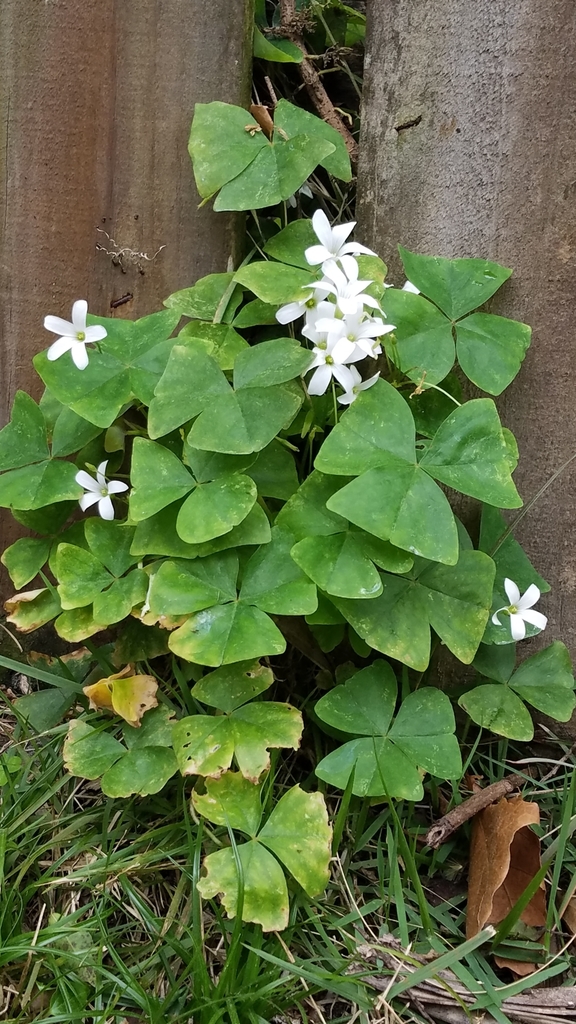
Les oxalis sont de charmantes plantes connues pour leurs feuilles semblables à du trèfle qui se replient souvent la nuit. Elles existent en de nombreuses variétés, y compris celles au feuillage d'un violet ou d'un vert éclatant. Ces plantes sont un plaisir à cultiver à l'intérieur ou dans le jardin.

En un coup d'œil
- Niveau d'entretien
- Facile
- Type de plante
- Bulbe vivace
- Lumière
- Une lumière vive et indirecte est préférable pour garder le feuillage compact et coloré.
- Lumière en intérieur
- Lumière vive indirecte
- Arrosage
- Tous les 5 à 10 jours
- Taille adulte
- 12 pouces
- Croissance
- Moyenne
- Rusticité
- USDA 6 à 10
- Floraison
- Printemps à début d'été
Entretien
Gardez le sol légèrement humide mais jamais détrempé pour éviter que les bulbes ne pourrissent. Surveillez les feuilles qui s'affaissent, ce qui signale généralement que la plante a besoin de plus de lumière ou d'une boisson. Elles apprécient une période de dormance pendant laquelle vous devriez réduire considérablement l'arrosage.
- Arrosage
- Arrosez lorsque le premier centimètre de terre est sec au toucher.
- Engrais
- Appliquez un engrais liquide équilibré une fois par mois pendant la saison de croissance active.
- Taille
- Taillez les tiges jaunies ou mortes pour encourager une nouvelle croissance.
- Rempotage
- Rempotez au printemps si les bulbes sont trop serrés dans leur contenant.
- Sol
- Mélange de terreau bien drainant
- pH du sol
- 6,0 à 7,0
- Température
- 5 à 25°C
- Humidité
- 40 à 60%
- Résistance à la sécheresse
- Moyenne
- Durée de vie
- Vivace, généralement 3 à 5 ans avec une dormance appropriée.
- Résistance aux chevreuils et lapins
- Moyenne
Signes qu'il faut rempoter
- Les racines sortent des trous de drainage.
- La plante devient à l'étroit et cesse de produire de nouvelles pousses.
- Le sol sèche beaucoup plus rapidement que d'habitude.
Sécurité
- Humains
- La plante est considérée comme légèrement toxique en raison de sa teneur élevée en oxalates solubles.
- Animaux
- Cette plante est toxique pour les chats et les chiens si ingérée en raison des oxalates de calcium solubles.
- Enfants
- Tenez-les hors de portée des jeunes enfants car les feuilles ressemblent à du trèfle et peuvent être tentantes à manger.
- Allergènes de contact
- La sève peut provoquer une légère irritation cutanée chez les personnes sensibles.
- Allergènes aéroportés
- Il n'y a pas de rapports significatifs d'allergies respiratoires associées à cette plante.
- Comestibilité
- L'Oxalis contient de l'acide oxalique, qui peut être nocif s'il est consommé en grandes quantités.
Comment l'identifier
- Trois folioles en forme de cœur par feuille
- Les feuilles se replient la nuit
- Petites fleurs en trompette à cinq pétales
- Pousse à partir de petits bulbes souterrains
- Hauteur
- 0,1 à 0,3m
- Envergure
- 0,15 à 0,45m
- Feuilles
- vert, violet, bordeaux, caduc
- Fleurs
- blanc, rose, jaune, 1 à 3cm
Problèmes à surveiller
- PuceronsCourant
- RouilleCourant
- BotrytisPeu courant
- Cochenilles farineusesPeu courant
- Pourriture des racinesPeu courant
- TétranyquesPeu courant
Par symptôme
Vérifie la santé de ta plante en photo
Pocket Botanist analyse une photo de ta plante et te dit ce qui ne va pas et quoi essayer en premier.
La cultiver
- Multiplication
- division, bulbilles
- Quand planter
- printemps, automne
- Hivernage
- Si vous cultivez dans des régions froides, laissez le feuillage mourir naturellement en automne. Gardez le sol principalement sec pendant la phase de dormance jusqu'à ce que de nouvelles pousses apparaissent au printemps.
- En pot
- Elles prospèrent en pots et sont charmantes dans les paniers suspendus, à condition que le pot ait un excellent drainage.
Division
- 1. Soulevez délicatement la plante de son pot pendant la saison de dormance.
- 2. Séparez les petites bulbilles ou rhizomes de la touffe principale.
- 3. Replantez les sections dans un terreau frais et bien drainant.
Plantez-les au premier plan de plantes d'ombre plus grandes pour créer un aspect luxuriant et stratifié.
Bonnes associations
- Polystic à feuilles de sabre — Elles partagent des exigences similaires en matière de lumière et d'humidité dans les environnements forestiers.
- Hosta — Leurs larges feuilles offrent un joli contraste de texture avec le feuillage délicat de l'Oxalis.
Espèces similaires
- Trèfle blanc — Souvent confondu en raison de la forme similaire des feuilles, bien qu'ils ne soient pas apparentés.
Science
- Famille
- Oxalidaceae
- Genre
- Oxalis
- Ordre
- Oxalidales
- Classe
- Magnoliopsida
- Région d'origine
- On les trouve dans le monde entier, en particulier dans les régions tropicales et tempérées chaudes.
- Préservation
- La plupart des espèces sont communes et ne préoccupent pas en matière de conservation.
Ces plantes poussent souvent sur les sols ombragés des forêts ou dans les crevasses rocheuses, où elles peuvent rapidement coloniser les zones dégagées.
- Intérêt pour la faune
- source de nectar
- Pollinisateurs
- abeilles, papillons
- Utilisations
- couvre-sol, plante en pot, jardin de rocaille
Au fil des saisons
Repères écologiques
- Salinité
- 2/9
- Réaction du sol
- 5/9
- Lumière
- 5/9
- Température
- 5/9
- Humidité
- 4/9
- Nutriments
- 3/9
Taxonomie vérifiée avec le GBIF.
Ce qu'on demande souvent
- Pourquoi mes feuilles se ferment-elles ?
- C'est une réaction naturelle aux conditions de faible luminosité ou nocturnes.
- Ont-elles besoin d'une période de dormance ?
- Oui, de nombreuses espèces nécessitent une période de repos sèche et fraîche après la floraison.
D'où vient le nom
Le nom Oxalis vient du mot grec oxys, signifiant piquant ou acide, en raison de sa teneur en acide oxalique. Le nom commun oseille des bois fait référence à son habitat et à son goût.
Bon à savoir
- Le nom vient du grec pour 'acide', faisant référence au goût acidulé des feuilles.
- Certaines espèces sont connues sous le nom de trèfles et sont associées à la Saint-Patrick.
- Elles sont incroyablement résilientes et peuvent pousser dans des sols très pauvres.
Aussi dans
Garde ta plante en pleine forme
Cette page est un guide général. Enregistre ta plante dans Pocket Botanist et tu reçois des rappels d'entretien adaptés à cette plante, ainsi qu'un historique d'entretien qui montre ce qui a marché.
Ce guide a été généré par IA et vérifié avec la taxonomie du GBIF. Il s'agit d'informations générales, et non de conseils horticoles ou vétérinaires. Découvre comment nous concevons ces guides.