 Pocket Botanist
Guide botanique
Monstera.
Monstera adansonii adansonii
Prononciation mon-STAIR-uh ad-an-SO-nee-eye
Aussi appelée Monstera d'Adanson



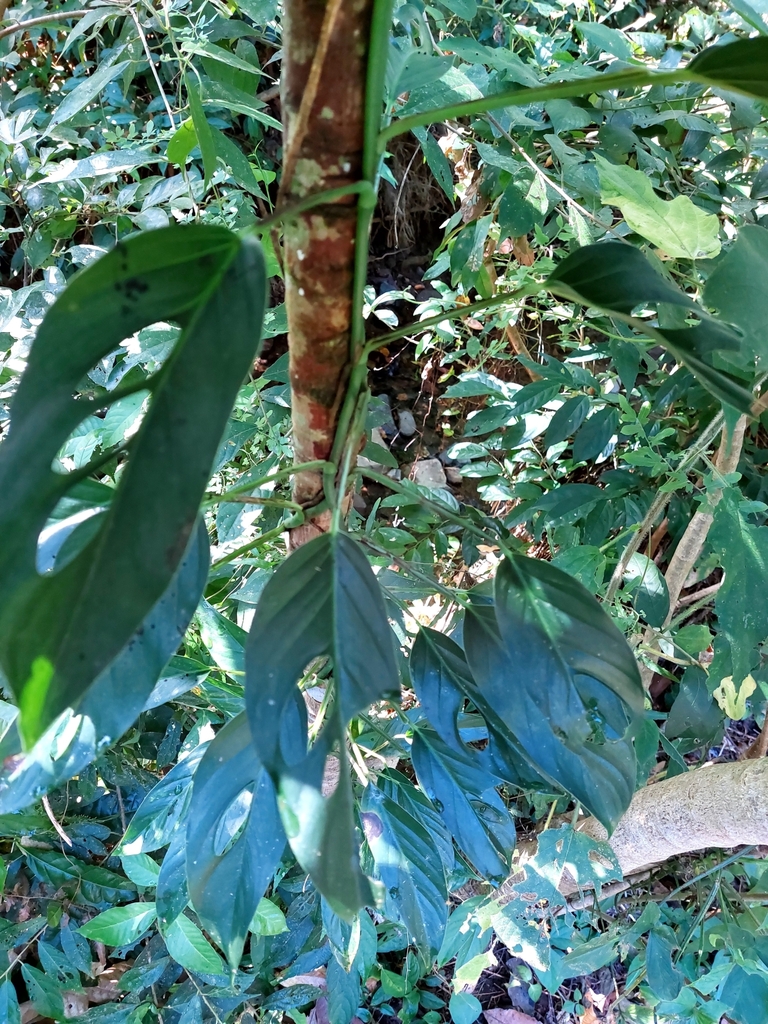
Cette charmante plante grimpante est célèbre pour les trous uniques de ses feuilles. C'est un choix fantastique si vous voulez un look tropical chez vous. Elle pousse rapidement et adore grimper.
En un coup d'œil
- Niveau d'entretien
- Facile
- Type de plante
- Plante grimpante tropicale
- Lumière
- Une lumière vive et indirecte est idéale.
- Lumière en intérieur
- Lumière vive indirecte
- Arrosage
- Tous les 7 à 10 jours
- Taille adulte
- 1 à 2.5 mètres à l'intérieur
- Croissance
- Rapide
- Rusticité
- USDA 10 à 12
- Floraison
- Rarement en intérieur, généralement de la fin du printemps à l'été
Entretien
Gardez le sol constamment humide mais jamais détrempé. Surveillez le jaunissement des feuilles qui signale souvent un arrosage excessif. Fournissez un tuteur en mousse pour encourager une plus grande croissance des feuilles.
- Arrosage
- Arrosez lorsque le premier centimètre de sol est sec au toucher.
- Engrais
- Nourrissez avec un engrais liquide équilibré pendant la saison de croissance.
- Taille
- Taille les longues tiges pour garder la plante touffue et soignée.
- Rempotage
- Rempotez lorsque les racines commencent à sortir des trous de drainage.
- Sol
- Mélange bien drainant pour aracées
- pH du sol
- 5.5 à 7.0
- Température
- 15 à 27°C
- Humidité
- 60 à 90%
- Résistance à la sécheresse
- Faible
- Durée de vie
- Plante vivace, généralement 5 à 10 ans avec des soins appropriés.
- Résistance aux chevreuils et lapins
- Moyenne
Signes qu'il faut rempoter
- Des racines sortent des trous de drainage.
- L'eau traverse le pot sans s'infiltrer.
- La plante cesse de pousser malgré une bonne lumière et des soins.
Sécurité
- Humains
- Cette plante est toxique pour l'homme en cas d'ingestion et peut provoquer une irritation cutanée au contact de la sève.
- Animaux
- Cette plante est toxique pour les chats et les chiens en cas d'ingestion.
- Enfants
- Gardez cette plante hors de portée des enfants car l'ingestion de toute partie peut provoquer un gonflement douloureux et des difficultés à avaler.
- Allergènes de contact
- La sève contient des cristaux d'oxalate de calcium qui peuvent provoquer une irritation cutanée ou des éruptions.
- Allergènes aéroportés
- Il n'y a pas de preuves significatives d'allergies respiratoires associées à cette plante.
- Comestibilité
- La plante contient des cristaux d'oxalate de calcium qui provoquent une sévère irritation de la bouche et de la gorge en cas d'ingestion.
Comment l'identifier
- Feuilles en forme de cœur avec des trous
- Couleur de feuille vert foncé
- Habitude de croissance grimpante
- Surface de feuille texturée
- Hauteur
- 1 à 3m
- Envergure
- 0,3 à 0,6m
- Feuilles
- vert foncé, evergreen
- Fleurs
- crème, blanc, 5 à 10cm
- Fruits
- vert, jaune, Rarement produit en culture
Problèmes à surveiller
- Brunissement du bord des feuillesCourant
- Mouches du terreauCourant
- Pourriture des racinesCourant
- TétranyquesCourant
- ChlorosePeu courant
- CochenillesPeu courant
- Cochenilles farineusesPeu courant
- ThripsPeu courant
- Acariens — De minuscules parasites qui sucent la sève et créent une fine toile sur la face inférieure des feuilles.
Par symptôme
Vérifie la santé de ta plante en photo
Pocket Botanist analyse une photo de ta plante et te dit ce qui ne va pas et quoi essayer en premier.
La cultiver
- Multiplication
- boutures, division
- Quand planter
- printemps, été
- Hivernage
- Rentrez la plante si vous la gardez dehors pendant l'été. Éloignez-la des courants d'air froids et réduisez légèrement l'arrosage à mesure que la croissance ralentit en hiver.
- En pot
- Elle pousse très bien en pots et est excellente dans les paniers suspendus, à condition que le conteneur ait des trous de drainage.
Boutures de tige
- 1. Identifiez une tige avec au moins un nœud et une feuille saine.
- 2. Utilisez des cisailles propres pour couper juste en dessous du nœud.
- 3. Placez la bouture dans un bocal d'eau ou directement dans un terreau humide.
- 4. Gardez-la à la lumière vive et indirecte jusqu'à ce que les racines se développent.
Regroupez les plantes tropicales pour créer un microclimat qui augmente naturellement l'humidité locale.
Bonnes associations
- Spathiphyllum — Ils partagent des exigences similaires en matière d'humidité et de lumière.
- Philodendron Néon — Ce sont toutes deux des plantes tropicales grimpantes qui prospèrent dans le même environnement.
Espèces similaires
- Monstera — Un parent plus grand avec des feuilles beaucoup plus grandes et fendues.
- Pothos doré — Une plante d'intérieur grimpante courante avec des besoins de soins similaires.
Science
- Famille
- Araceae
- Genre
- Monstera
- Ordre
- Alismatales
- Classe
- Liliopsida
- Région d'origine
- Amérique centrale et du Sud
- Préservation
- Non répertoriée comme en danger actuellement, mais la collecte sauvage devrait être évitée pour protéger les populations locales.
Elle pousse comme une épiphyte dans les forêts tropicales humides, utilisant ses racines aériennes pour escalader les arbres vers la lumière de la canopée.
- Intérêt pour la faune
- source de nectar
- Pollinisateurs
- abeilles, coléoptères
- Utilisations
- plante d'intérieur, panier suspendu, grimpante d'intérieur
Au fil des saisons
Repères écologiques
- Salinité
- 2/9
- Réaction du sol
- 6/9
- Lumière
- 5/9
- Température
- 7/9
- Humidité
- 6/9
- Nutriments
- 5/9
Taxonomie vérifiée avec le GBIF.
Ce qu'on demande souvent
- Pourquoi mes feuilles jaunissent-elles ?
- Les feuilles qui jaunissent sont souvent un signe d'arrosage excessif ou d'un mauvais drainage.
- A-t-elle besoin de soleil direct ?
- Non, elle préfère une lumière vive et indirecte pour conserver sa couleur vert vif.
D'où vient le nom
Le nom Monstera fait référence à l'apparence inhabituelle et monstrueuse des feuilles, tandis qu'adansonii honore le botaniste français Michel Adanson.
Bon à savoir
- Elle est souvent appelée la 'Vigne du fromage suisse' en raison des trous uniques de ses feuilles.
- Cette plante est une épiphyte grimpante qui escalade naturellement les arbres dans la nature.
- Elle pousse beaucoup plus vite si on lui donne un tuteur en mousse pour grimper.
Aussi dans
Garde ta plante en pleine forme
Cette page est un guide général. Enregistre ta plante dans Pocket Botanist et tu reçois des rappels d'entretien adaptés à cette plante, ainsi qu'un historique d'entretien qui montre ce qui a marché.
Ce guide a été généré par IA et vérifié avec la taxonomie du GBIF. Il s'agit d'informations générales, et non de conseils horticoles ou vétérinaires. Découvre comment nous concevons ces guides.