 Pocket Botanist
Guide botanique
Cleavers.
Galium aparine
Prononciation GAL-ee-um ah-pah-REE-nee
Aussi appelée Bedstraw, Bedstraw, Cleavers, Bobby Buttons, Catchweed Bedstraw, Cleavers, Cleaverwort, Clivers, Goose Grass


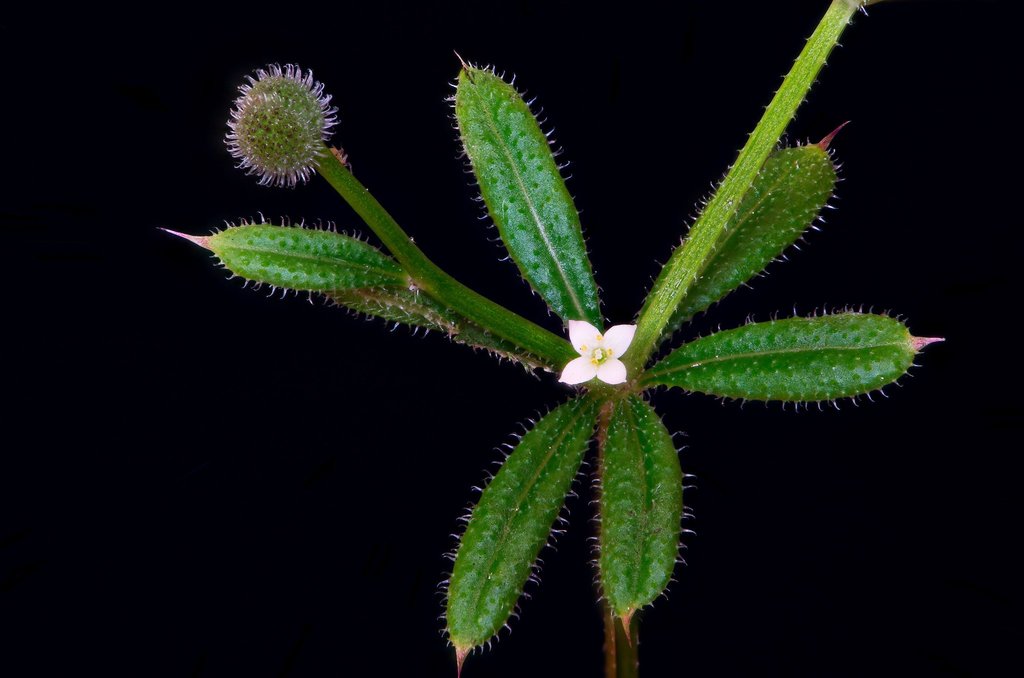
Cleavers is a common annual plant known for its sticky, clinging stems. It often grows in tangled mats across hedges and garden beds. You'll recognize it by its whorled leaves and tiny white flowers.

En un coup d'œil
- Niveau d'entretien
- Facile
- Type de plante
- Annual herb
- Lumière
- Partial shade to full sun
- Lumière en intérieur
- Lumière vive indirecte
- Arrosage
- Tous les 3 à 7 jours
- Taille adulte
- 3 to 5 feet long
- Croissance
- Rapide
- Rusticité
- USDA 3 à 9
- Floraison
- Late spring to early summer
Entretien
This plant is often considered a weed, so it needs little care beyond removal if you want to control its spread. Watch for it choking out smaller plants in your garden. It thrives in moist, nitrogen rich soil.
- Arrosage
- Keep the soil consistently moist but not waterlogged.
- Engrais
- This plant does not require supplemental fertilizer as it grows vigorously in most conditions.
- Taille
- Remove stems regularly to prevent the plant from spreading its seeds.
- Rempotage
- As an annual, this plant completes its life cycle in one year and does not typically need repotting.
- Sol
- Moist, fertile, well draining soil
- pH du sol
- 6.0 to 7.5
- Température
- -20 à 30°C
- Humidité
- 40 à 80%
Sécurité
- Humains
- This plant is generally considered non-toxic but may cause contact dermatitis in sensitive individuals.
- Enfants
- The hooked hairs can be irritating to a child's skin if handled frequently.
- Allergènes de contact
- The tiny hooked hairs on the stems and leaves can cause mechanical skin irritation or a rash upon contact.
- Allergènes aéroportés
- The pollen is not considered a significant allergen.
- Comestibilité
- While young leaves are sometimes eaten, they have tiny hooked hairs that can irritate the throat if not cooked thoroughly.
Comment l'identifier
- Square stems with tiny hooked hairs
- Narrow leaves in whorls of six
- Small white four petaled flowers
- Round burr like seeds that cling
- Hauteur
- 0,3 à 1,2m
- Envergure
- 0,3 à 0,6m
- Feuilles
- bright green, deciduous
- Fleurs
- white, 0,2 à 0,3cm
- Fruits
- green, brown, Summer
Problèmes courants
- Aphids — Small insects that cluster on the stems and suck plant sap.
La cultiver
- Multiplication
- seed
- Quand planter
- spring, autumn
This plant is usually considered an antagonist to garden crops due to its rapid growth and competitive nature.
Bonnes associations
- Stinging Nettle — They often share the same moist, nutrient rich habitats.
- Common Chickweed — Both are common cool season weeds that thrive in similar conditions.
Espèces similaires
- Galium odoratum — It is a related, non-weedy species often grown as an ornamental ground cover.
Science
- Famille
- Rubiaceae
- Genre
- Galium
- Ordre
- Gentianales
- Classe
- Magnoliopsida
- Région d'origine
- Europe, Asia, and North Africa.
- Préservation
- This plant is a common weed and is not of conservation concern.
It thrives in moist, shaded areas and disturbed soils where it can climb over other vegetation for light.
- Intérêt pour la faune
- larval host plant, nectar source
- Pollinisateurs
- abeilles, coléoptères
- Utilisations
- foraging, medicinal tea, ground cover
Au fil des saisons
Repères écologiques
- Salinité
- 2/9
- Réaction du sol
- 6/9
- Lumière
- 5/9
- Température
- 5/9
- Humidité
- 6/9
- Nutriments
- 7/9
Taxonomie vérifiée avec le GBIF.
Ce qu'on demande souvent
- Is it a weed?
- Yes, it is often considered an aggressive weed in gardens and agricultural fields.
- How do I control it?
- Hand pulling before it sets seed is the most effective method.
D'où vient le nom
The genus name Galium comes from the Greek word gala, meaning milk, as some species were used to curdle milk. The species name aparine is from the Greek word for to seize or grasp.
Bon à savoir
- It is a member of the coffee family.
- The seeds were historically roasted and used as a coffee substitute.
- The plant is also known as stickywilly due to its clinging nature.
Ta plante a mauvaise mine ?
Cette page est un guide général. Pocket Botanist diagnostique les problèmes directement à partir d'une photo de ta plante, adapte l'arrosage à sa luminosité et te prévient quand il faut t'en occuper.
Ce guide a été généré par IA et vérifié avec la taxonomie du GBIF. Il s'agit d'informations générales, et non de conseils horticoles ou vétérinaires. Découvre comment nous concevons ces guides.