 Pocket Botanist
Guía de plantas
Cleavers.
Galium aparine
Pronunciación GAL-ee-um ah-pah-REE-nee
También se conoce como Bedstraw, Bedstraw, Cleavers, Bobby Buttons, Catchweed Bedstraw, Cleavers, Cleaverwort, Clivers, Goose Grass


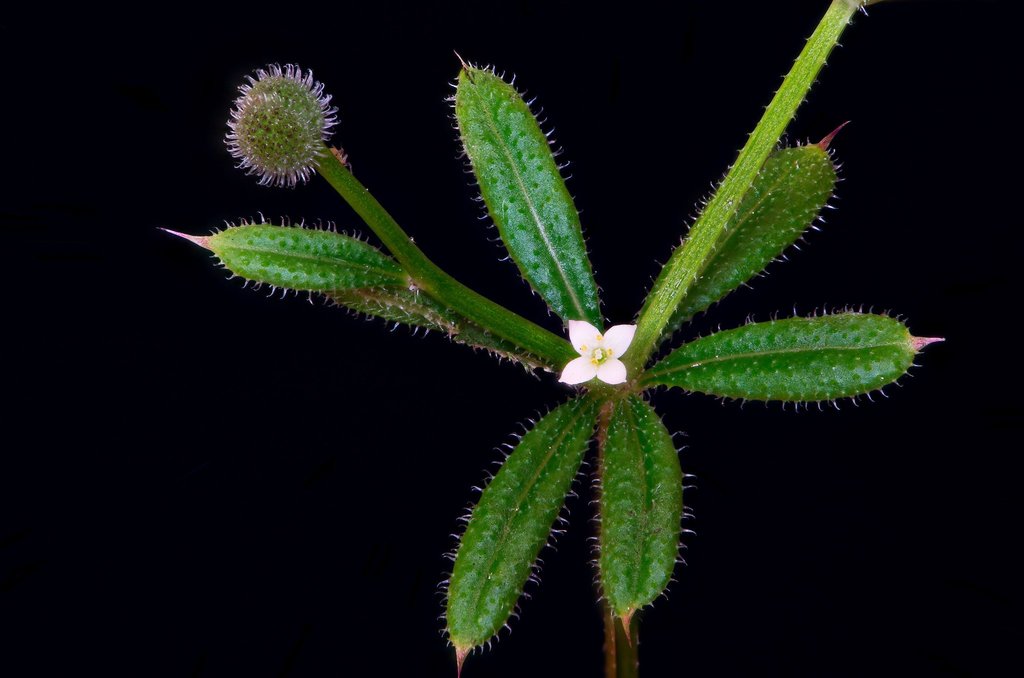
Cleavers is a common annual plant known for its sticky, clinging stems. It often grows in tangled mats across hedges and garden beds. You'll recognize it by its whorled leaves and tiny white flowers.

De un vistazo
- Nivel de cuidados
- Fácil
- Tipo de planta
- Annual herb
- Luz
- Partial shade to full sun
- Luz en interior
- Luz indirecta brillante
- Riego
- Cada 3 a 7 días
- Tamaño adulto
- 3 to 5 feet long
- Ritmo de crecimiento
- Rápido
- Rusticidad
- USDA 3 a 9
- Floración
- Late spring to early summer
Cuidados
This plant is often considered a weed, so it needs little care beyond removal if you want to control its spread. Watch for it choking out smaller plants in your garden. It thrives in moist, nitrogen rich soil.
- Riego
- Keep the soil consistently moist but not waterlogged.
- Abonado
- This plant does not require supplemental fertilizer as it grows vigorously in most conditions.
- Poda
- Remove stems regularly to prevent the plant from spreading its seeds.
- Trasplante
- As an annual, this plant completes its life cycle in one year and does not typically need repotting.
- Suelo
- Moist, fertile, well draining soil
- pH del suelo
- 6.0 to 7.5
- Temperatura
- -20 a 30°C
- Humedad
- 40 a 80%
Seguridad
- Personas
- This plant is generally considered non-toxic but may cause contact dermatitis in sensitive individuals.
- Niños
- The hooked hairs can be irritating to a child's skin if handled frequently.
- Alérgenos por contacto
- The tiny hooked hairs on the stems and leaves can cause mechanical skin irritation or a rash upon contact.
- Alérgenos en el aire
- The pollen is not considered a significant allergen.
- Comestibilidad
- While young leaves are sometimes eaten, they have tiny hooked hairs that can irritate the throat if not cooked thoroughly.
Cómo identificarla
- Square stems with tiny hooked hairs
- Narrow leaves in whorls of six
- Small white four petaled flowers
- Round burr like seeds that cling
- Altura
- 0,3 a 1,2m
- Anchura
- 0,3 a 0,6m
- Hojas
- bright green, deciduous
- Flores
- white, 0,2 a 0,3cm
- Frutos
- green, brown, Summer
Problemas frecuentes
- Aphids — Small insects that cluster on the stems and suck plant sap.
Cómo cultivarla
- Propagación
- seed
- Cuándo plantar
- spring, autumn
This plant is usually considered an antagonist to garden crops due to its rapid growth and competitive nature.
Buenas compañeras
- Stinging Nettle — They often share the same moist, nutrient rich habitats.
- Common Chickweed — Both are common cool season weeds that thrive in similar conditions.
Especies parecidas
- Galium odoratum — It is a related, non-weedy species often grown as an ornamental ground cover.
Ciencia
- Familia
- Rubiaceae
- Género
- Galium
- Orden
- Gentianales
- Clase
- Magnoliopsida
- Distribución natural
- Europe, Asia, and North Africa.
- Conservación
- This plant is a common weed and is not of conservation concern.
It thrives in moist, shaded areas and disturbed soils where it can climb over other vegetation for light.
- Valor para la fauna
- larval host plant, nectar source
- Polinizadores
- abejas, escarabajos
- Usos
- foraging, medicinal tea, ground cover
A lo largo del año
Indicadores ecológicos
- Salinidad
- 2/9
- Reacción del suelo
- 6/9
- Luz
- 5/9
- Temperatura
- 5/9
- Humedad
- 6/9
- Nutrientes
- 7/9
Taxonomía cotejada con GBIF.
Lo que más preguntan
- Is it a weed?
- Yes, it is often considered an aggressive weed in gardens and agricultural fields.
- How do I control it?
- Hand pulling before it sets seed is the most effective method.
De dónde viene el nombre
The genus name Galium comes from the Greek word gala, meaning milk, as some species were used to curdle milk. The species name aparine is from the Greek word for to seize or grasp.
Bueno saberlo
- It is a member of the coffee family.
- The seeds were historically roasted and used as a coffee substitute.
- The plant is also known as stickywilly due to its clinging nature.
¿Tu cleavers tiene mal aspecto?
Esta página es una guía general. Pocket Botanist diagnostica problemas a partir de una foto de tu propia planta, calcula el riego según tu luz y tus condiciones, y te avisa cuando toca cuidarla.
Esta guía se ha generado con IA y se ha cotejado con la taxonomía de GBIF. Es información general, no asesoramiento botánico ni veterinario. Descubre cómo elaboramos estas guías.