 Pocket Botanist
Guide botanique
Cape marguerite.
Dimorphotheca ecklonis
Prononciation os-tee-oh-SPER-mum EK-lon-iss
Aussi appelée Vanstaden's river daisy



Scanne le code avec l'appareil photo de ton téléphone pour télécharger l'appli
Ou va sur pocketbotanist.app/get depuis ton téléphone
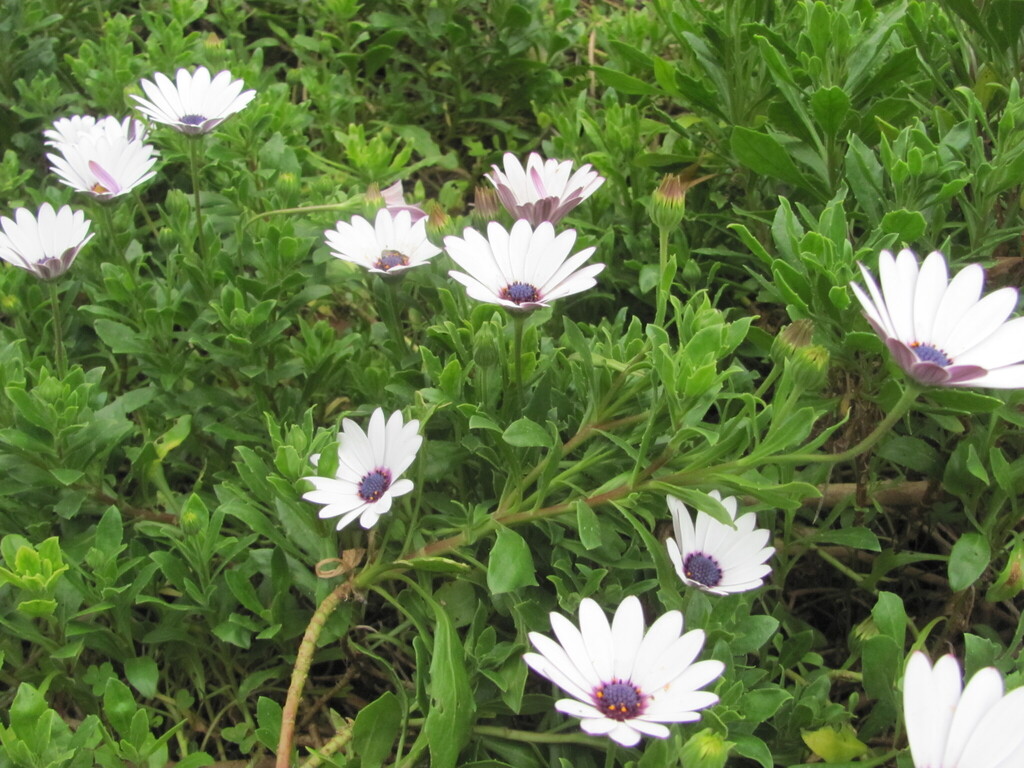
The Cape marguerite is a cheerful, daisy like perennial that brings a splash of color to sunny gardens. It thrives in warm climates and produces an abundance of blooms throughout the growing season. You will love how it attracts pollinators to your outdoor space.
En un coup d'œil
- Niveau d'entretien
- Facile
- Type de plante
- Perennial
- Lumière
- Full sun
- Lumière en intérieur
- Soleil direct
- Arrosage
- Tous les 3 à 7 jours
- Taille adulte
- 2 to 3 feet
- Croissance
- Rapide
- Rusticité
- USDA 9 à 11
- Floraison
- Late spring to early autumn
Entretien
Plant in well draining soil and provide plenty of sunlight to encourage consistent flowering. Deadhead spent blooms to keep the plant tidy and promote new growth. Watch for wilting, which often signals that the plant needs a deep soak.
- Arrosage
- Water when the top inch of soil feels dry to the touch.
- Engrais
- Apply a balanced liquid fertilizer during the active growing season.
- Taille
- Regularly remove faded flowers to encourage continuous blooming.
- Rempotage
- Repot when the roots become crowded or the plant outgrows its container.
- Sol
- Well draining sandy or loamy soil
- pH du sol
- 6.0 to 7.5
- Température
- -4 à 35°C
- Humidité
- 20 à 50%
- Résistance à la sécheresse
- Élevée
- Durée de vie
- Short lived perennial, often grown as an annual.
- Résistance aux chevreuils et lapins
- Moyenne
Signes qu'il faut rempoter
- Roots growing out of the drainage holes.
- Water sitting on the surface for too long.
- Plant growth has slowed significantly.
Sécurité
- Humains
- The plant is generally considered non-toxic, though ingestion of large quantities is not recommended.
- Animaux
- This plant is generally considered non toxic to cats and dogs.
- Enfants
- Keep away from small children to prevent accidental ingestion of plant parts.
- Allergènes de contact
- The sap may cause mild skin irritation in sensitive individuals.
- Allergènes aéroportés
- The pollen can trigger hay fever symptoms in susceptible people during the flowering season.
- Comestibilité
- This plant is not considered edible and may cause stomach upset if ingested.
Comment l'identifier
- Daisy like flowers with prominent centers
- Serrated or lobed green leaves
- Bushy and spreading growth habit
- Petals often show contrasting undersides
- Hauteur
- 0,3 à 0,6m
- Envergure
- 0,45 à 0,9m
- Feuilles
- green, evergreen
- Fleurs
- white, purple, blue, 5 à 8cm
Problèmes à surveiller
- Powdery mildew · A fungal infection that appears as white dusty spots on the leaves.
- Aphids · Small insects that suck sap from new growth and flower buds.
Vérifie la santé de cape marguerite en photo
Pocket Botanist analyse une photo de ta plante et te dit ce qui ne va pas et quoi essayer en premier.
Scanne le code avec l'appareil photo de ton téléphone pour télécharger l'appli
Ou va sur pocketbotanist.app/get depuis ton téléphone
La cultiver
- Multiplication
- cuttings, seed
- Quand planter
- spring
- Hivernage
- In colder regions, bring containers indoors to a bright, cool spot. If planted in the ground, provide a thick layer of mulch to protect the roots from freezing temperatures.
- En pot
- It grows very well in containers, provided you use a fast draining potting mix and a pot at least 30 centimeters wide.
Stem Cuttings
- 1. Take a 10 centimeter cutting from non flowering growth.
- 2. Remove the lower leaves.
- 3. Dip the end in rooting hormone.
- 4. Plant in a moist, sandy medium.
- 5. Keep in bright, indirect light until rooted.
Pair this daisy with other drought tolerant plants to maintain a consistent watering schedule across the bed.
Bonnes associations
- lavande anglaise · Both plants enjoy the same sunny, well drained conditions.
- Gazanie · They share similar water and light requirements for a vibrant display.
Espèces similaires
- Osteospermum ecklonis · Often confused with this species, it shares a very similar appearance and growth habit.
Science
- Famille
- Asteraceae
- Genre
- Dimorphotheca
- Ordre
- Asterales
- Classe
- Magnoliopsida
- Région d'origine
- South Africa
- Préservation
- This species is not currently listed as endangered or threatened in its native range.
It is adapted to dry, sunny environments and relies on pollinators to ensure seed set in its native habitat.
- Intérêt pour la faune
- nectar source
- Pollinisateurs
- abeilles, papillons
- Utilisations
- container gardening, rock gardens, borders, ground cover
Au fil des saisons
Repères écologiques
- Salinité
- 2/9
- Réaction du sol
- 6/9
- Lumière
- 8/9
- Température
- 7/9
- Humidité
- 3/9
- Nutriments
- 3/9
Taxonomie vérifiée avec le GBIF.
Ce qu'on demande souvent
- Why are my flowers closed?
- The plant closes its blooms when it is cloudy or dark, as they only open in bright sunlight.
- Can I grow this in a pot?
- Yes, it makes an excellent container plant as long as the pot has good drainage.
D'où vient le nom
The genus name Dimorphotheca refers to the two forms of fruit produced by the plant, while ecklonis honors the botanist Christian Friedrich Ecklon.
Bon à savoir
- It is commonly known as the Cape Daisy.
- The flowers close up during cloudy weather or at night.
- It thrives in poor, sandy soils where other plants might struggle.
Aussi dans
Garde cape marguerite en pleine forme
Cette page est un guide général. Enregistre ta plante dans Pocket Botanist et tu reçois des rappels d'entretien adaptés à cette plante, ainsi qu'un historique d'entretien qui montre ce qui a marché.
Scanne le code avec l'appareil photo de ton téléphone pour télécharger l'appli
Ou va sur pocketbotanist.app/get depuis ton téléphone
Ce guide a été généré par IA le et vérifié avec la taxonomie du GBIF. Il s'agit d'informations générales, et non de conseils horticoles ou vétérinaires. Découvre comment nous concevons ces guides.