 Pocket Botanist
Guide botanique
Lady's slipper orchid.
Cypripedium calceolus
Prononciation sip-ri-PEE-dee-um kal-SEE-oh-lus
Aussi appelée Lady's slipper orchid, Lady's-Slipper, Lady's-slipper orchid, Lady’s slipper orchid


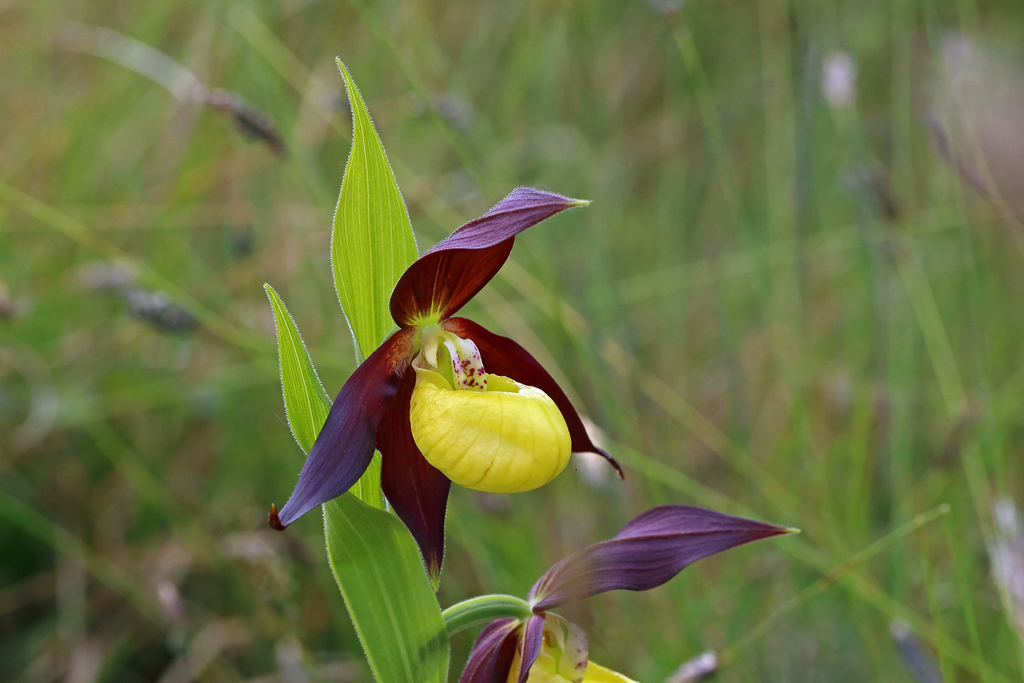
This beautiful orchid is a rare woodland treasure known for its unique, pouch shaped flowers. It thrives in cool, shaded environments with rich, well draining soil. You'll find it's quite a challenge to grow outside of its natural habitat.

En un coup d'œil
- Niveau d'entretien
- Difficile
- Type de plante
- Perennial orchid
- Lumière
- Partial shade
- Lumière en intérieur
- Lumière vive indirecte
- Arrosage
- Tous les 5 à 10 jours
- Taille adulte
- 1 to 2 feet
- Croissance
- Lente
- Rusticité
- USDA 3 à 7
- Floraison
- Late spring to early summer
Entretien
Keep the soil consistently moist but never waterlogged to mimic its forest floor home. Watch for yellowing leaves, which often signal that the soil is too wet or lacks proper drainage. It prefers cool temperatures and high humidity to stay happy.
- Arrosage
- Keep the substrate damp to the touch without letting it sit in standing water.
- Engrais
- Use a very diluted, balanced orchid fertilizer during the active growing season.
- Taille
- Remove dead foliage only after the plant has fully entered dormancy in late autumn.
- Rempotage
- Repot only when the plant has clearly outgrown its container or the medium has broken down.
- Sol
- Rich, calcareous, well draining woodland soil
- pH du sol
- Neutral to slightly alkaline
- Température
- -30 à 25°C
- Humidité
- 50 à 70%
Sécurité
- Humains
- The plant contains irritant compounds that can cause dermatitis in sensitive individuals.
- Enfants
- Keep children away from the plant as ingestion can cause gastrointestinal distress.
- Allergènes de contact
- Handling the foliage can cause skin irritation or rashes due to glandular hairs.
- Allergènes aéroportés
- There is no significant evidence of respiratory allergies associated with this species.
- Comestibilité
- This plant is not edible and may cause stomach upset if ingested.
Comment l'identifier
- Large, inflated, slipper shaped yellow lip
- Dark purple or brown twisted petals
- Broad, pleated, alternate green leaves
- Grows from a creeping rhizome
- Hauteur
- 0,2 à 0,6m
- Envergure
- 0,15 à 0,3m
- Feuilles
- green, deciduous
- Fleurs
- yellow, brown, 5 à 8cm
Problèmes courants
- Slugs and snails — These pests can quickly devour the tender new shoots in spring.
- Root rot — Poorly drained soil often leads to fungal decay of the root system.
La cultiver
- Multiplication
- division, seed
- Quand planter
- spring, autumn
Plant in groups with other woodland perennials that appreciate cool, moist, and alkaline soil.
Bonnes associations
- Dryopteris — They provide the dappled shade and moisture levels this orchid prefers.
- Helleborus orientalis — They share similar woodland soil and light requirements.
Espèces similaires
- Cypripedium reginae — It is a related North American species with similar growth habits.
Science
- Famille
- Orchidaceae
- Genre
- Cypripedium
- Ordre
- Asparagales
- Classe
- Liliopsida
- Région d'origine
- Temperate regions of Europe and Asia.
- Préservation
- This species is protected in many parts of its range and should never be collected from the wild.
It thrives in calcareous woodlands where it forms symbiotic relationships with soil fungi.
- Intérêt pour la faune
- nectar source
- Pollinisateurs
- abeilles
- Utilisations
- ornamental garden plant, botanical collection
Au fil des saisons
Repères écologiques
- Salinité
- 0/9
- Réaction du sol
- 8/9
- Lumière
- 3/9
- Température
- 3/9
- Humidité
- 6/9
- Nutriments
- 4/9
Taxonomie vérifiée avec le GBIF.
Ce qu'on demande souvent
- Can I grow this in a regular garden bed?
- It requires specialized soil conditions, usually a woodland setting with high organic matter.
- How often should I water it?
- Keep the soil consistently moist but never waterlogged.
D'où vient le nom
The name Cypripedium comes from Greek words meaning Venus and shoe, referring to the slipper shape.
Bon à savoir
- It is the largest orchid species native to Europe.
- The flower uses a trap mechanism to ensure bees pollinate it.
- It requires a specific mycorrhizal fungus in the soil to germinate from seed.
- The name refers to the slipper shaped labellum of the flower.
Aussi dans
Ta plante a mauvaise mine ?
Cette page est un guide général. Pocket Botanist diagnostique les problèmes directement à partir d'une photo de ta plante, adapte l'arrosage à sa luminosité et te prévient quand il faut t'en occuper.
Ce guide a été généré par IA et vérifié avec la taxonomie du GBIF. Il s'agit d'informations générales, et non de conseils horticoles ou vétérinaires. Découvre comment nous concevons ces guides.